
Significance
38 measured / 38 eligible · 0 missing · 0 not applicable
score (0 to 1) · Event-level distribution, not a Situation risk score.
across all 38 events
Pakistan’s armed forces struck 10 sites in Afghanistan on 24 September, with the Afghan Taliban named as the target; the account appeared under “Pakistan launches airstrikes on Afghan targets as Taliban threaten retaliation.” On 25 September, Pakistani security forces exchanged fire with Afghan Taliban fighters, and Zabihullah Mujahid accused Pakistan of aggression in Kandahar. On 1 October, Pakistani military airstrikes hit two houses in Helmand; “Pakistan says airstrikes on Afghanistan hideouts killed 22 fighters” and “Pakistani airstrikes kill 10 civilians in Afghanistan, Kabul and UN say” gave different accounts of the dead and their status. On 12 October, Pakistan urged Afghanistan’s Taliban government to curb cross-border militant attacks; on 14 October, Afghanistan’s government kept Durand Line crossings closed until Pakistan accepted its demands. In late October, events included Afghan Taliban regime shelling at Angoor Adda that killed a civilian, attacks on civilians reported on both sides of the border, and a Pakistan Army operation against Afghan Taliban posts after cross-border firing. On 1 November, Pakistan welcomed a US offer to facilitate dialogue, while a separate Event describes Pakistan Armed Forces firing missiles at homes in Paktika; on 2 November, the Pakistan Army struck Afghan Taliban positions along the border.
Footnotes[45][16][35][49][18][32][10][9][40][5][39][4]The Events establish distinct strikes, clashes, official accusations and diplomatic measures; they do not establish one continuous operation or a single cause for the cross-border violence. The Helmand accounts conflict: one Pakistani account says 22 fighters were killed, while a report attributing its account to Kabul and the UN says 10 civilians died; the Event lists nine fatalities and 11 injuries. Pakistan’s claim that the Kohat attackers had Afghan roots remains an attributed claim, and the Events and reports do not establish that the Kohat attack caused later strikes. Reports of civilians harmed near the border and returning refugees at risk broaden the impact beyond security forces, while the US dialogue offer and Sergei Lavrov’s statement about normalization establish diplomatic activity, not a resolution.
Footnotes[32][10][9][24][26][28][2][53][1][54][7]Explanation originally captured 2026-11-05 · Evidence through 2026-11-05 UTC · Source edition sed_6a1b7358b03dd1f58a681098c9adaba3
A 46-day Situation represented by 38 coded Events carried across 150 member Stories.
The coded activity is led by ARMED CLASH (8) and AIR/DRONE STRIKE (5).
Taliban, Zabihullah Mujahid, and Pakistan Army are prominent in the retained actor and relationship evidence.
204 canonical Entities are linked to this edition.
Metric coverage. 38 coded Events · 15 CAMEO+ · 23 conflict. The four dimensions describe the CAMEO+ subset; conflict Events do not carry these scores.
Dot = mean · shaded span = observed range · position uses each metric’s defined scale.
How the coder scored the full retained Event set
38 coded events — 15 CAMEO+ (15 political) · 23 conflict
Quad class over those 38 events · Material Conflict 24 · Verbal Conflict 9 · Verbal Cooperation 5. The four CAMEO+ scores are over the 15 CAMEO+ events only; the 23 conflict events have no such column.
38 measured / 38 eligible · 0 missing · 0 not applicable
score (0 to 1) · Event-level distribution, not a Situation risk score.
across all 38 events
15 measured / 15 eligible · 0 missing · 23 not applicable
score (0 to 10) · Event-level distribution, not a Situation risk score.
across the 15 of 38 events coded in the CAMEO+ family; the conflict family has no such column
15 measured / 15 eligible · 0 missing · 23 not applicable
score (0 to 1) · Event-level distribution, not a Situation risk score.
across the 15 of 38 events coded in the CAMEO+ family; the conflict family has no such column
15 measured / 15 eligible · 0 missing · 23 not applicable
score (0 to 1) · Event-level distribution, not a Situation risk score.
across the 15 of 38 events coded in the CAMEO+ family; the conflict family has no such column
15 measured / 15 eligible · 0 missing · 23 not applicable
score (0 to 1) · Event-level distribution, not a Situation risk score.
across the 15 of 38 events coded in the CAMEO+ family; the conflict family has no such column
38 measured / 38 eligible · 0 missing · 0 not applicable
score (-10 to 10) · Event-level distribution, not a Situation risk score.
across the 38 of 38 events Goldstein is defined on — CAMEO+ POLITICAL and the conflict family; the other nine CAMEO+ domains have no Goldstein semantics
23 measured / 23 eligible · 0 missing · 15 not applicable
reported people · Reports may overlap; these are Event-level reports, not an additive unique human toll.
across the 23 of 38 events that report a toll — the conflict family only, and never 0 on a CAMEO+ event
38 measured / 38 eligible · 0 missing · 0 not applicable
score (0 to 1) · Event-level distribution, not a Situation risk score.
across all 38 events
This retained edition, independent of graph and page limits. Different dimensions, not a blended risk score; reported tolls may overlap.
2026-11-02from the recordslatest
Pakistan Army strikes Afghan Taliban positions along the border
5 Stories and 1 coded Event (+2 / -1 against the day before). Widest coverage: Pakistani airstrike kills one and injures students in Afghanistan's Paktika (5 articles). Recorded acting: Pakistan Army.
What kind of event · 14 coded types
over 38 coded events on this edition
Countries · where it happened
Countries · who is acting
Selected from the complete retained edition
Pakistan’s strikes and border clashes, Afghan accounts of Pakistani actions, and reported attacks on civilians form the central security thread; the accounts of casualties and responsibility are not fully consistent.
Pakistani and Afghan officials made accusations, demands and protest statements; Russia and the United States also appear in diplomatic accounts.
Separate Events describe attacks on police and Pakistani security operations in Kohat and Hangu; the supplied accounts do not establish that these incidents caused the cross-border actions.
Events and reports describe civilian deaths and injuries in Afghanistan and Pakistan, as well as danger to returning refugees near a crossing.
The Taliban is named as the target of Pakistan’s 24 September strike and the Pakistan Army’s 30 October operation, and as the actor in an Event describing an attack on civilians in Pakistan on 28 October.
The Pakistan Army is identified as actor in Events describing the Hangu firefight, its accusation against Mullah Shireen, and strikes on Afghan Taliban positions on 2 November.

An Event dates a suicide bombing at a Pakistani police complex to 18 September and lists 17 fatalities; a linked Story reports at least 20.

On 24 September, Pakistan’s armed forces struck 10 sites in Afghanistan, with the Afghan Taliban named as the target; the linked Story reports threatened retaliation.

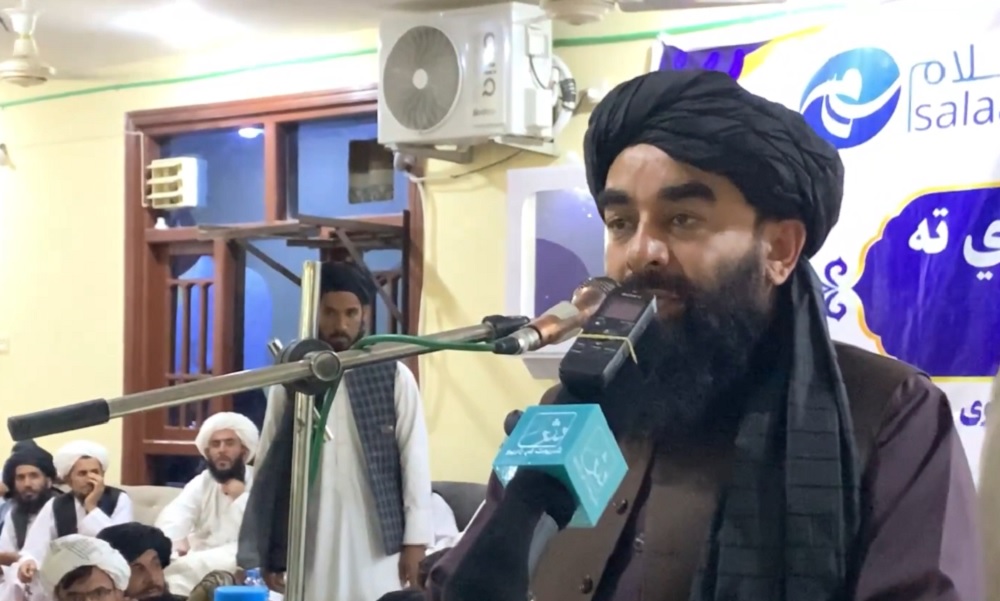
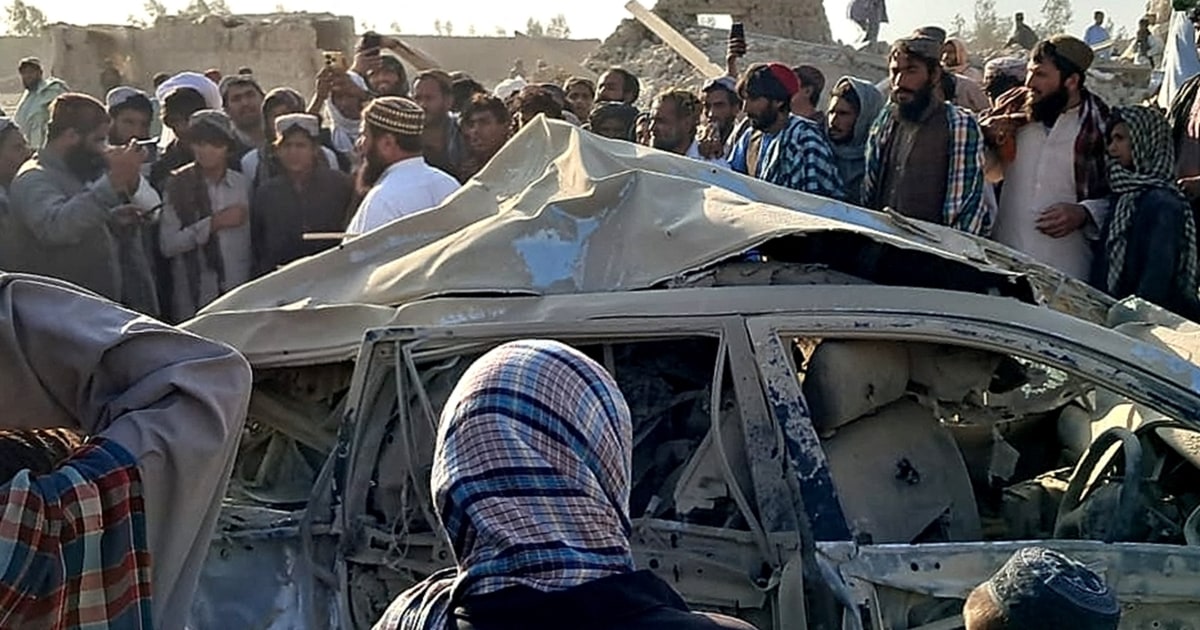
On 1 October, Pakistani military airstrikes hit two houses in Helmand; the Event lists nine fatalities and 11 injuries, while linked accounts differ on toll and target.
Evidenced relationships involving significant participants beyond the central cast.
The Event identifies Pakistan Army as actor and Afghan Taliban as target.
This edition freezes the complete served membership and analysis available through its UTC cutoff. Later repairs or identity changes do not rewrite what this edition showed.
Stories are reporting clusters. Events are coded occurrences within that reporting. The cast contains 204 canonical people and organizations linked to the retained evidence.
Story-to-Event edges identify supporting reporting. Entity-to-Event edges identify recorded actor or target participation. Mentions and analytical roles stay visibly distinct from recorded participation.
Core, precursor, and continuation labels organize the reading. They do not by themselves establish causation. Collapsed graph groups and paginated evidence change presentation only; counts use the complete retained edition.