
Significance
175 measured / 175 eligible · 0 missing · 0 not applicable
score (0 to 1) · Event-level distribution, not a Situation risk score.
across all 175 events
A report dated 2026-08-30 said China sent rescue experts and aid to Nepal; a separate 2026-08-31 event record dates the tunnel-expert deployment, linked to “537 workers missing in Nepal floods at Rasuwa and Nuwakot hydropower projects.” On 2026-09-02, Nepal formally sought climate compensation from major emitters; “Nepal Himalayan flood death toll rises; 4,462 still missing” gave a separate missing-person estimate. The Chinese People’s Liberation Army deployment to Gyirong county after the Xizang mudslide is dated 2026-09-04, while “Mudslide strands Nepalese border residents in China's Tibet; aid delivered” describes the border-area impacts. On 2026-09-15, the Nepal Army dug through the flooded Chilime tunnel to rescue workers and Nepal Police launched a Bhotekoshi rehabilitation campaign; “Bhotekoshi floods leave Nepal’s private sector bearing most losses” describes the wider local impact. On 2026-09-19, the Nepal Electricity Authority described flood damage to hydropower projects while maintaining electricity exports. Recovery milestones included the start of Betrawati Bailey bridge installation, reported in “Bailey bridge installation begins in Betrawati, Nepal” on 2026-10-02, and the bridge’s opening, reported in “Bailey bridge opens in Nepal to replace flood-damaged Betrawati bridge” on 2026-10-11.
Footnotes[19][12][16][10][20][6][21][24][4][17][3][2]The core is a severe Nepal flood emergency that extended from rescue and searches into damage response and specific recovery works: the tunnel operations and hydropower effects are distinct parts of that account. The Jilong/Tibet mudslide had its own affected residents and response, while a Gyirong glacial-lake burst sent renewed flooding toward Nepal; the cross-border hazard is connected, but its toll should not be combined with Nepal’s. “Nepal Himalayan flood death toll rises; 4,462 still missing” and “More than 5,000 missing after Nepal flood disaster” give different dated estimates, not a reconciled total. Likewise, “537 workers missing in Nepal floods at Rasuwa and Nuwakot hydropower projects” and “Nepal flash floods trap 46 hydropower tunnel workers at Rasuwagadhi plant” do not establish that the figures describe the same group. Nepal’s compensation request and the foreign minister’s reported rejection of a climate-compensation demand are distinct positions; the reports do not settle their relationship. The Betrawati reports establish bridge installation and opening milestones, not completion of wider recovery.
Footnotes[19][21][17][6][13][10][7][12][9][16][11][8]Explanation originally captured 2026-10-25 · Evidence through 2026-10-26 UTC · Source edition sed_d0cac3b39893ca205f63f30633d0fe99
A 54-day Situation represented by 175 coded Events carried across 375 member Stories.
The coded activity is led by EN02 · Meteorological Hazard (64) and EN01 · Geophysical Hazard (20).
United Nations, China, and Nepal Police are prominent in the retained actor and relationship evidence.
743 canonical Entities are linked to this edition.
Metric coverage. 175 coded Events · 174 CAMEO+ · 1 conflict. The four dimensions describe the CAMEO+ subset; conflict Events do not carry these scores.
Dot = mean · shaded span = observed range · position uses each metric’s defined scale.
How the coder scored the full retained Event set
175 coded events — 174 CAMEO+ (46 political) · 1 conflict
Quad class over those 47 events · Verbal Cooperation 20 · Material Cooperation 16 · Verbal Conflict 10 · Material Conflict 1. 128 sit outside POLITICAL, where Goldstein and quad class are undefined. The four CAMEO+ scores are over the 174 CAMEO+ events only; the 1 conflict events have no such column.
175 measured / 175 eligible · 0 missing · 0 not applicable
score (0 to 1) · Event-level distribution, not a Situation risk score.
across all 175 events
174 measured / 174 eligible · 0 missing · 1 not applicable
score (0 to 10) · Event-level distribution, not a Situation risk score.
across the 174 of 175 events coded in the CAMEO+ family; the conflict family has no such column
174 measured / 174 eligible · 0 missing · 1 not applicable
score (0 to 1) · Event-level distribution, not a Situation risk score.
across the 174 of 175 events coded in the CAMEO+ family; the conflict family has no such column
174 measured / 174 eligible · 0 missing · 1 not applicable
score (0 to 1) · Event-level distribution, not a Situation risk score.
across the 174 of 175 events coded in the CAMEO+ family; the conflict family has no such column
174 measured / 174 eligible · 0 missing · 1 not applicable
score (0 to 1) · Event-level distribution, not a Situation risk score.
across the 174 of 175 events coded in the CAMEO+ family; the conflict family has no such column
47 measured / 47 eligible · 0 missing · 128 not applicable
score (-10 to 10) · Event-level distribution, not a Situation risk score.
across the 47 of 175 events Goldstein is defined on — CAMEO+ POLITICAL and the conflict family; the other nine CAMEO+ domains have no Goldstein semantics
1 measured / 1 eligible · 0 missing · 174 not applicable
reported people · Reports may overlap; these are Event-level reports, not an additive unique human toll.
across the 1 of 175 events that report a toll — the conflict family only, and never 0 on a CAMEO+ event
175 measured / 175 eligible · 0 missing · 0 not applicable
score (0 to 1) · Event-level distribution, not a Situation risk score.
across all 175 events
This retained edition, independent of graph and page limits. Different dimensions, not a blended risk score; reported tolls may overlap.
2026-10-18from the recordslatest
Nepal's Tatopani border crossing to open for three days
1 Story and 0 coded Events (-2 / 0 against the day before). Widest coverage: Nepal's Tatopani border crossing to open for three days (4 articles).
What kind of event · 42 coded types
over 175 coded events on this edition
Countries · where it happened
Countries · who is acting
Selected from the complete retained edition
Reports describe trapped or missing hydropower workers, tunnel searches and rescue activity; the reported worker figures are not reconciled.
Nepal’s compensation requests and the foreign minister’s reported position are distinct claims; their relationship is unresolved.
Recorded as actor in 1 coded Event, including United Nations requests aid for flood-hit Nepal.
Recorded as actor in 1 coded Event, including United Nations requests aid for flood-hit Nepal.
Footnotes[?]Recorded as actor in 3 coded Events, including Nepal Police launch rehabilitation campaign in Bhotekoshi flood zone.
Recorded as actor in 3 coded Events, including Nepal Police launch rehabilitation campaign in Bhotekoshi flood zone.
Footnotes[?][24][?]Recorded as actor in 1 coded Event, including Nepal foreign minister praises China’s disaster assistance.
Recorded as actor in 1 coded Event, including Nepal foreign minister praises China’s disaster assistance.
Footnotes[?]Recorded as actor and target in 4 coded Events, including Nepal formally seeks climate compensation from major emitters.
Recorded as actor and target in 4 coded Events, including Nepal formally seeks climate compensation from major emitters.
Footnotes[16][?][?][?]
China sent tunnel experts to Nepal’s rescue operation on 2026-08-31.
China sent tunnel experts to Nepal’s rescue operation on 2026-08-31.
Footnotes[19]
China provided Nepal with disaster information and rescue support; the event is dated 2026-08-31.
China provided Nepal with disaster information and rescue support; the event is dated 2026-08-31.
Footnotes[23]Nepal formally sought climate compensation from major emitters on 2026-09-02.
Nepal formally sought climate compensation from major emitters on 2026-09-02.
Footnotes[16]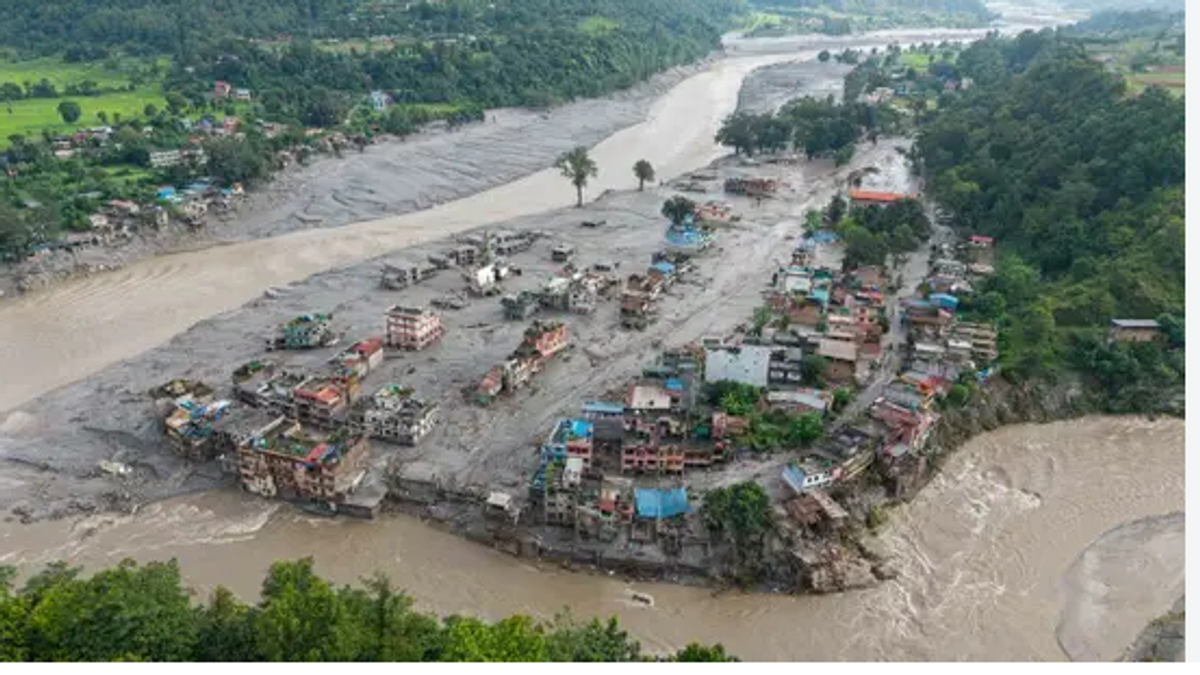
The Chinese People’s Liberation Army deployment to Gyirong county after the Xizang mudslide is dated 2026-09-04.
The Chinese People’s Liberation Army deployment to Gyirong county after the Xizang mudslide is dated 2026-09-04.
Footnotes[20]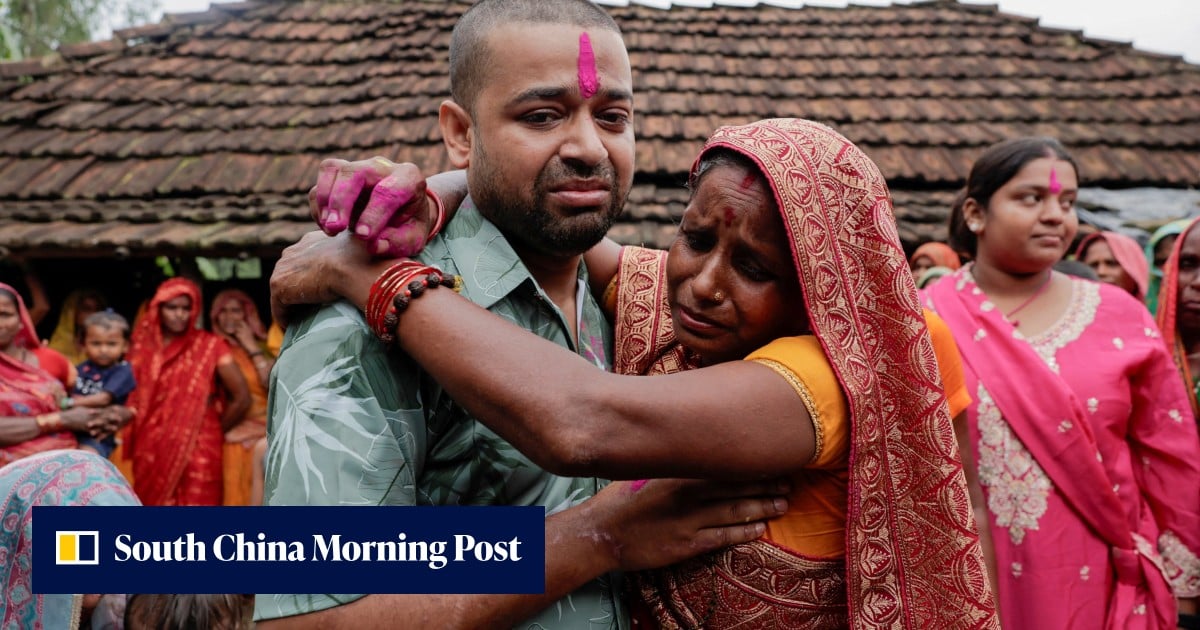
The Nepali Army cleared tunnel debris after the floods on 2026-09-13.
The Nepali Army cleared tunnel debris after the floods on 2026-09-13.
Footnotes[18]Evidenced relationships involving significant participants beyond the central cast.
The linked headline reports missing workers; it does not establish that the experts addressed every worker named.
The linked headline concerns Rasuwagadhi workers; it does not reconcile their figure with the separate 537-worker report.
The linked Story also reports a missing-person estimate; it does not reconcile that estimate with other reports.
The linked Story concerns Tibet border-region effects and aid; it does not make that disaster part of Nepal’s flood toll.
The Story recounts a survivor’s experience; it does not establish that the survivor was among the workers in every other tunnel account.
This edition freezes the complete served membership and analysis available through its UTC cutoff. Later repairs or identity changes do not rewrite what this edition showed.
Stories are reporting clusters. Events are coded occurrences within that reporting. The cast contains 743 canonical people and organizations linked to the retained evidence.
Story-to-Event edges identify supporting reporting. Entity-to-Event edges identify recorded actor or target participation. Mentions and analytical roles stay visibly distinct from recorded participation.
Core, precursor, and continuation labels organize the reading. They do not by themselves establish causation. Collapsed graph groups and paginated evidence change presentation only; counts use the complete retained edition.