
Significance
20 measured / 20 eligible · 0 missing · 0 not applicable
score (0 to 1) · Event-level distribution, not a Situation risk score.
across all 20 events
On 1 November, “Youth-led protests enter third weekend in France as rallies spread across Europe” described youth-led demonstrations in France and rallies across Europe, while “Clashes erupt as hundreds of thousands protest across France” reported demonstrations and clashes in France. On 31 October, radical left-wing and pro-Palestinian groups clashed with Berlin police at Rosenthaler Platz, and demonstrators threw bottles and ignited barricades in Zurich. On 1 November in Berlin, youths threw Molotov cocktails and stones at German police. On 2 November, “Students resume high-school blockades across France over government proposals” described renewed school blockades, while the Haute-Garonne prefecture rejected Toulouse trade unions’ proposed protest route. German ministers also threatened penalties for people who destroyed shops during the Frankfurt protests. On 3 November, the National Union of Students of France (UNEF) appealed to French university students to blockade universities, and local reports described student action in Martigues and an unsuccessful attempt to block a school in Périgueux.
Footnotes[9][8][17][16][14][4][12][11][13][2][3]The reports establish a broad spread of protests and distinct local actions, not a single coordinated campaign or one shared set of demands. French school blockades and UNEF’s appeal are different forms of student action; the route dispute in Toulouse and German ministers’ threatened penalties are separate official actions. French reports also describe different aspects of the protests: “320,000 people join France's third weekend of protests” gives a turnout figure, “France braces for another week of social unrest despite dwindling protest turnout” describes waning turnout, and “Students resume high-school blockades across France over government proposals” reports renewed blockades. Those accounts do not establish one consistent measure of participation or violence. The Berlin and Zurich confrontations and the reported student rioting in Tours are distinct incidents; they do not establish that student actions generally were violent.
Footnotes[9][5][4][6][7][14][16]Explanation originally captured 2026-11-04 · Evidence through 2026-11-04 UTC · Source edition sed_4f873930aebbc6c2eaada8ce1fd7d194
A 5-day Situation represented by 20 coded Events carried across 62 member Stories.
The coded activity is led by PEACEFUL PROTEST (8) and VIOLENT DEMONSTRATION (6).
🇫🇷France, 🇩🇪Germany, and 🇨🇭Switzerland are prominent in the retained actor and relationship evidence.
138 canonical Entities are linked to this edition.
Metric coverage. 20 coded Events · 4 CAMEO+ · 16 conflict. The four dimensions describe the CAMEO+ subset; conflict Events do not carry these scores.
Dot = mean · shaded span = observed range · position uses each metric’s defined scale.
How the coder scored the full retained Event set
20 coded events — 4 CAMEO+ (3 political) · 16 conflict
Quad class over those 19 events · Verbal Conflict 10 · Material Conflict 8 · Verbal Cooperation 1. 1 sit outside POLITICAL, where Goldstein and quad class are undefined. The four CAMEO+ scores are over the 4 CAMEO+ events only; the 16 conflict events have no such column.
20 measured / 20 eligible · 0 missing · 0 not applicable
score (0 to 1) · Event-level distribution, not a Situation risk score.
across all 20 events
4 measured / 4 eligible · 0 missing · 16 not applicable
score (0 to 10) · Event-level distribution, not a Situation risk score.
across the 4 of 20 events coded in the CAMEO+ family; the conflict family has no such column
4 measured / 4 eligible · 0 missing · 16 not applicable
score (0 to 1) · Event-level distribution, not a Situation risk score.
across the 4 of 20 events coded in the CAMEO+ family; the conflict family has no such column
4 measured / 4 eligible · 0 missing · 16 not applicable
score (0 to 1) · Event-level distribution, not a Situation risk score.
across the 4 of 20 events coded in the CAMEO+ family; the conflict family has no such column
4 measured / 4 eligible · 0 missing · 16 not applicable
score (0 to 1) · Event-level distribution, not a Situation risk score.
across the 4 of 20 events coded in the CAMEO+ family; the conflict family has no such column
19 measured / 19 eligible · 0 missing · 1 not applicable
score (-10 to 10) · Event-level distribution, not a Situation risk score.
across the 19 of 20 events Goldstein is defined on — CAMEO+ POLITICAL and the conflict family; the other nine CAMEO+ domains have no Goldstein semantics
16 measured / 16 eligible · 0 missing · 4 not applicable
reported people · Reports may overlap; these are Event-level reports, not an additive unique human toll.
across the 16 of 20 events that report a toll — the conflict family only, and never 0 on a CAMEO+ event
20 measured / 20 eligible · 0 missing · 0 not applicable
score (0 to 1) · Event-level distribution, not a Situation risk score.
across all 20 events
This retained edition, independent of graph and page limits. Different dimensions, not a blended risk score; reported tolls may overlap.
2026-11-04from the recordslatest
Lycée students injure school official with mortar fire
16 Stories and 1 coded Event (+3 / -2 against the day before). Widest coverage: Student and high school protests return with blockades and an unauthorized march in Paris (9 articles).
What kind of event · 7 coded types
over 20 coded events on this edition
Countries · where it happened
Countries · who is acting
Selected from the complete retained edition
Reporting places French youth protests alongside demonstrations elsewhere in Europe, while the local incidents and demands remain distinct.
French coverage describes large demonstrations, renewed school blockades, local variations in student action and an appeal for university blockades.
The supplied Berlin Event describes a clash between radical left-wing and pro-Palestinian groups and Berlin police; a separate Event describes youths throwing Molotov cocktails and stones at German police.
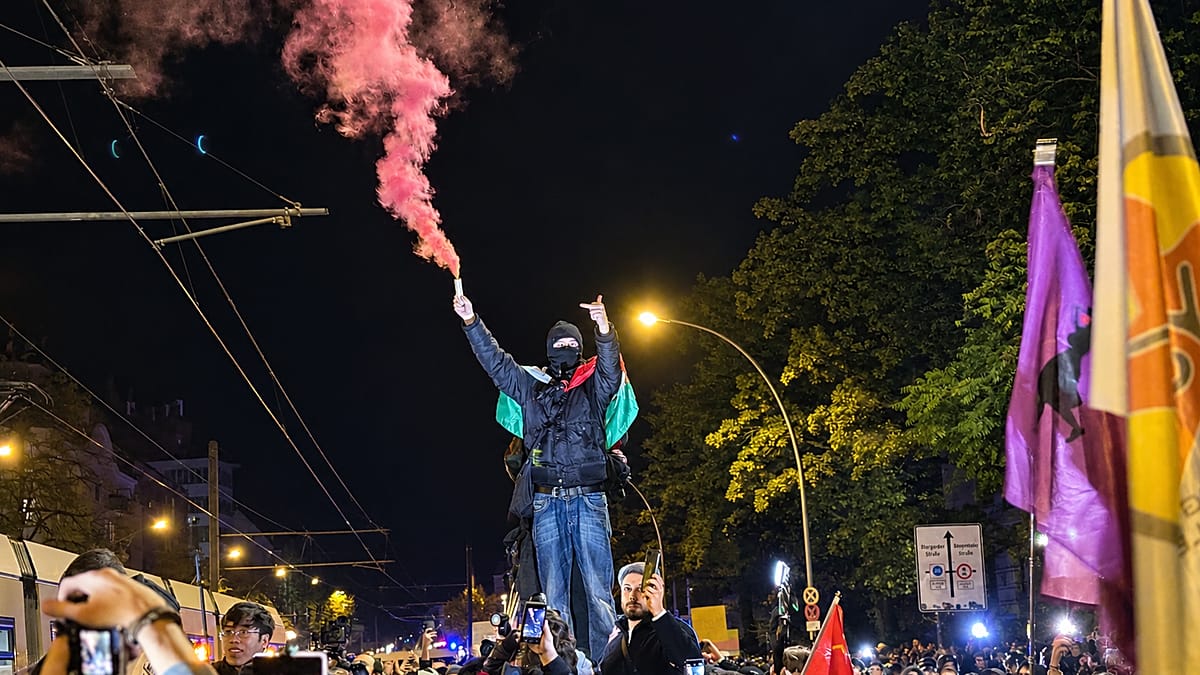
On 31 October, radical left-wing and pro-Palestinian groups clashed with Berlin police at Rosenthaler Platz.
On 31 October, radical left-wing and pro-Palestinian groups clashed with Berlin police at Rosenthaler Platz.
Footnotes[17]
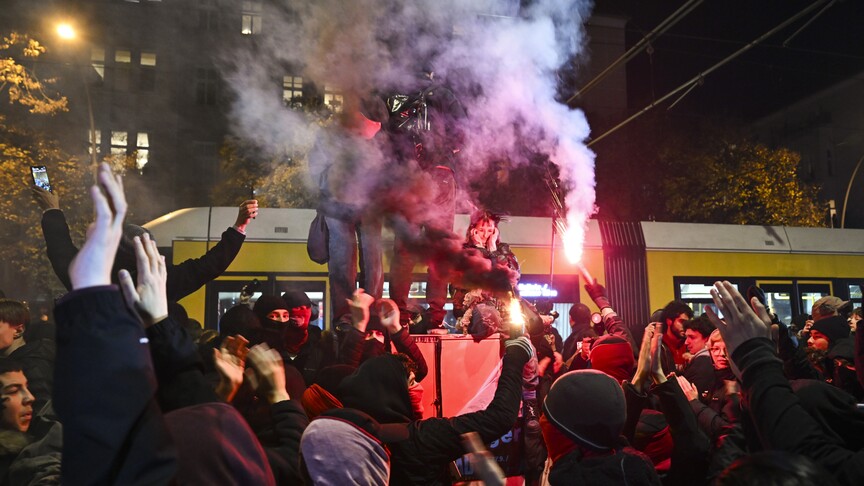
On 1 November, youths threw Molotov cocktails and stones at German police in Berlin.
On 1 November, youths threw Molotov cocktails and stones at German police in Berlin.
Footnotes[14]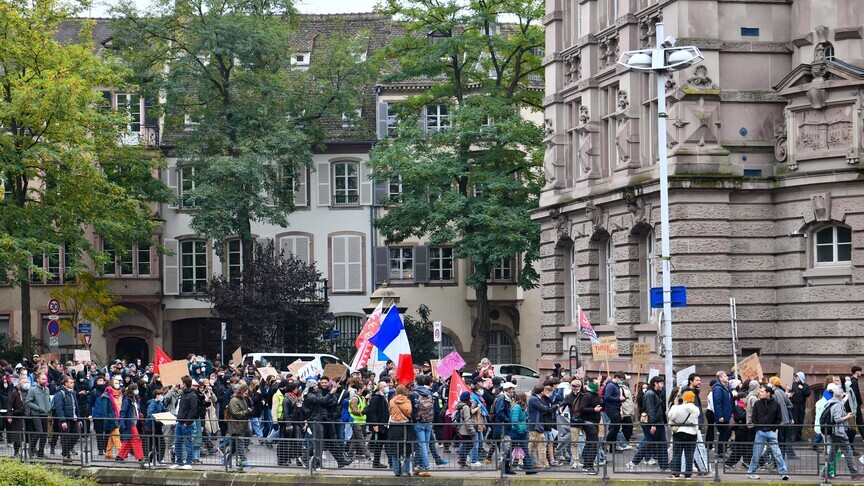
On 2 November, the Haute-Garonne prefecture rejected Toulouse trade unions’ proposed protest route.
On 2 November, the Haute-Garonne prefecture rejected Toulouse trade unions’ proposed protest route.
Footnotes[12]
On 2 November, German ministers threatened penalties for people who destroyed shops during the Frankfurt protests.
On 2 November, German ministers threatened penalties for people who destroyed shops during the Frankfurt protests.
Footnotes[11]Evidenced relationships involving significant participants beyond the central cast.
The Event lists this Story as a linked report.
The Event lists this Story as a linked report.
Footnotes[17]The Event lists this Zurich Story as a linked report.
The Event lists this Story as a linked report.
This edition freezes the complete served membership and analysis available through its UTC cutoff. Later repairs or identity changes do not rewrite what this edition showed.
Stories are reporting clusters. Events are coded occurrences within that reporting. The cast contains 138 canonical people and organizations linked to the retained evidence.
Story-to-Event edges identify supporting reporting. Entity-to-Event edges identify recorded actor or target participation. Mentions and analytical roles stay visibly distinct from recorded participation.
Core, precursor, and continuation labels organize the reading. They do not by themselves establish causation. Collapsed graph groups and paginated evidence change presentation only; counts use the complete retained edition.