
Significance
6 measured / 6 eligible · 0 missing · 0 not applicable
score (0 to 1) · Event-level distribution, not a Situation risk score.
across all 6 events
Germany’s 20 September state elections produced contrasting outcomes: the AfD narrowly won Mecklenburg-Western Pomerania, while Die Linke won Berlin but needed coalition allies. Friedrich Merz had mobilized CDU members at Konrad-Adenauer-Haus in Berlin on 19 September, before Berlin regional election authorities opened polling stations on 20 September. On 20 September, Merz acknowledged the CDU defeat and refused to resign, while AfD leaders demanded governing influence and cooperation with the CDU. Alice Weidel separately demanded Merz’s resignation.
Footnotes[9][6][1][13][15][14][2][12]The material establishes a reported AfD victory in Mecklenburg-Western Pomerania, a Die Linke victory in Berlin, and a CDU result below the electoral threshold in Mecklenburg-Vorpommern. It also establishes a leadership conflict: Friedrich Merz acknowledged defeat but refused to resign, while AfD leaders pressed for governing influence and Alice Weidel demanded his resignation. Exit-poll accounts and later result headlines are both present, so the election reporting includes a transition from predictions to reported results. These facts do not establish that the AfD entered government, that coalition talks produced an agreement, or that Merz resigned.
Footnotes[9][6][10][7][14][2][12]Explanation originally captured 2026-09-21 · Evidence through 2026-09-21 UTC · Source edition sed_8c1c62a114b22cc80b2c224d5007140e
A 3-day Situation represented by 6 coded Events carried across 26 member Stories.
The coded activity is led by 01 · Make Public Statement (3) and 015 · Acknowledge/claim Responsibility (1).
Friedrich Merz, Christian Democratic Union of Germany, and Alternative for Germany are prominent in the retained actor and relationship evidence.
38 canonical Entities are linked to this edition.
Metric coverage. 6 coded Events · 6 CAMEO+ · 0 conflict. The four dimensions describe the CAMEO+ subset; conflict Events do not carry these scores.
Dot = mean · shaded span = observed range · position uses each metric’s defined scale.
How the coder scored the full retained Event set
6 coded events — 6 CAMEO+ (6 political)
Quad class over those 6 events · Verbal Cooperation 5 · Verbal Conflict 1. No conflict-family event here, so nothing carries a fatality count — a missing column, not a toll of zero.
6 measured / 6 eligible · 0 missing · 0 not applicable
score (0 to 1) · Event-level distribution, not a Situation risk score.
across all 6 events
6 measured / 6 eligible · 0 missing · 0 not applicable
score (0 to 10) · Event-level distribution, not a Situation risk score.
across all 6 events — every one of them CAMEO+
6 measured / 6 eligible · 0 missing · 0 not applicable
score (0 to 1) · Event-level distribution, not a Situation risk score.
across all 6 events — every one of them CAMEO+
6 measured / 6 eligible · 0 missing · 0 not applicable
score (0 to 1) · Event-level distribution, not a Situation risk score.
across all 6 events — every one of them CAMEO+
6 measured / 6 eligible · 0 missing · 0 not applicable
score (0 to 1) · Event-level distribution, not a Situation risk score.
across all 6 events — every one of them CAMEO+
6 measured / 6 eligible · 0 missing · 0 not applicable
score (-10 to 10) · Event-level distribution, not a Situation risk score.
across the 6 of 6 events Goldstein is defined on — CAMEO+ POLITICAL and the conflict family; the other nine CAMEO+ domains have no Goldstein semantics
6 measured / 6 eligible · 0 missing · 0 not applicable
score (0 to 1) · Event-level distribution, not a Situation risk score.
across all 6 events
This retained edition, independent of graph and page limits. Different dimensions, not a blended risk score; reported tolls may overlap.
2026-09-21from the recordslatest
AfD wins Mecklenburg-Western Pomerania state election
8 Stories and 1 coded Event (-10 / -3 against the day before). Widest coverage: Merz calls CDU's Mecklenburg-Western Pomerania election result catastrophic (47 articles). Recorded acting: Alternative for Germany.
What kind of event · 4 coded types
over 6 coded events on this edition
Countries · where it happened
Countries · who is acting
Selected from the complete retained edition
The principal thread combines the AfD’s Mecklenburg-Western Pomerania victory, the CDU’s reported failure to clear the electoral threshold there, and Die Linke’s Berlin victory requiring coalition allies.
Friedrich Merz’s refusal to resign appears alongside AfD demands for governing influence, cooperation with the CDU, and his resignation.
Friedrich Merz mobilized CDU members in Berlin on 19 September, and Berlin regional election authorities announced the opening of polling stations on 20 September.
Friedrich Merz acted as the source actor for the 19 September mobilisation visit and the 20 September acknowledgment of CDU defeat.
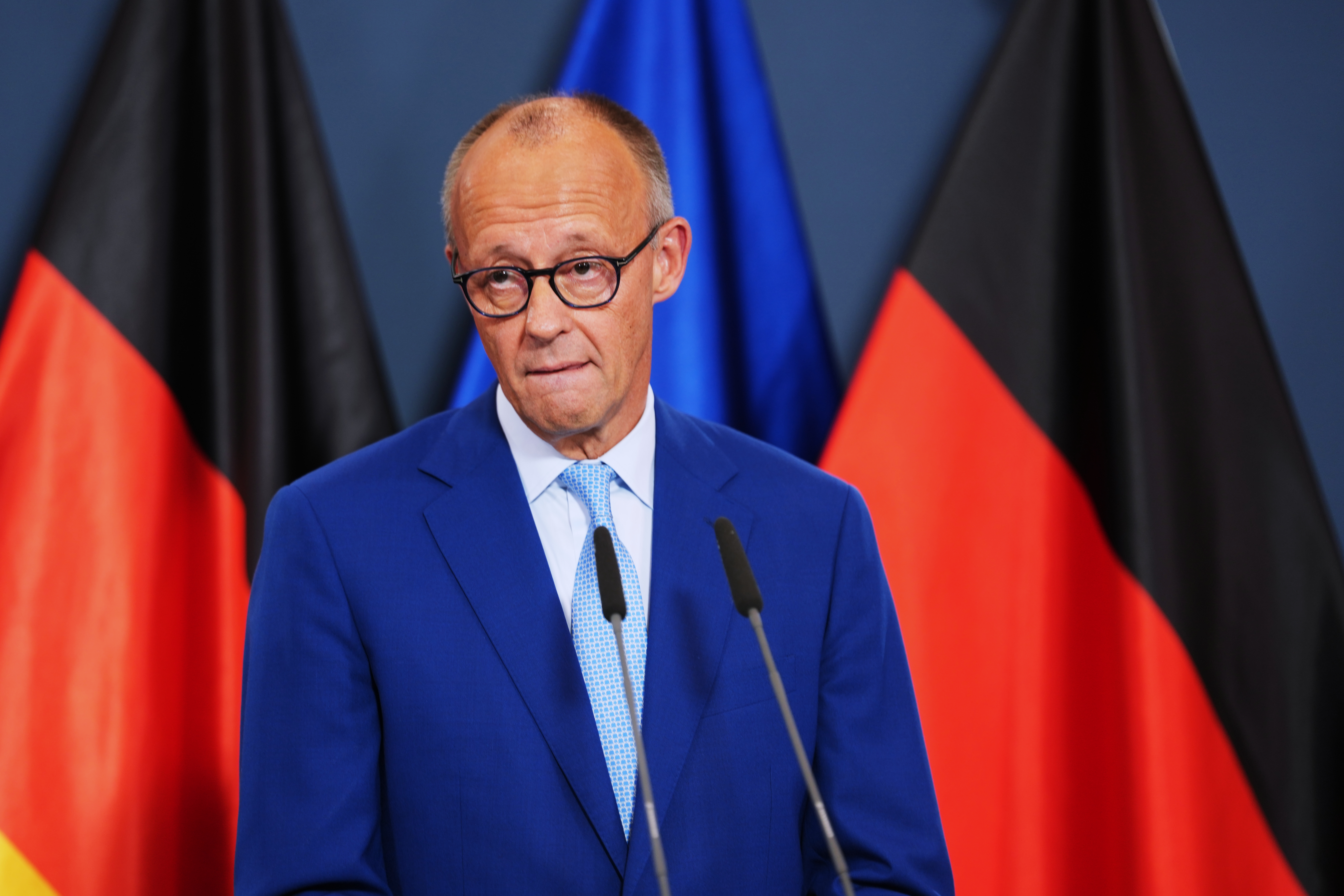
On 19 September, Friedrich Merz visited Konrad-Adenauer-Haus in Berlin to mobilize CDU members.
On 19 September, Friedrich Merz visited Konrad-Adenauer-Haus in Berlin to mobilize CDU members.
Footnotes[13]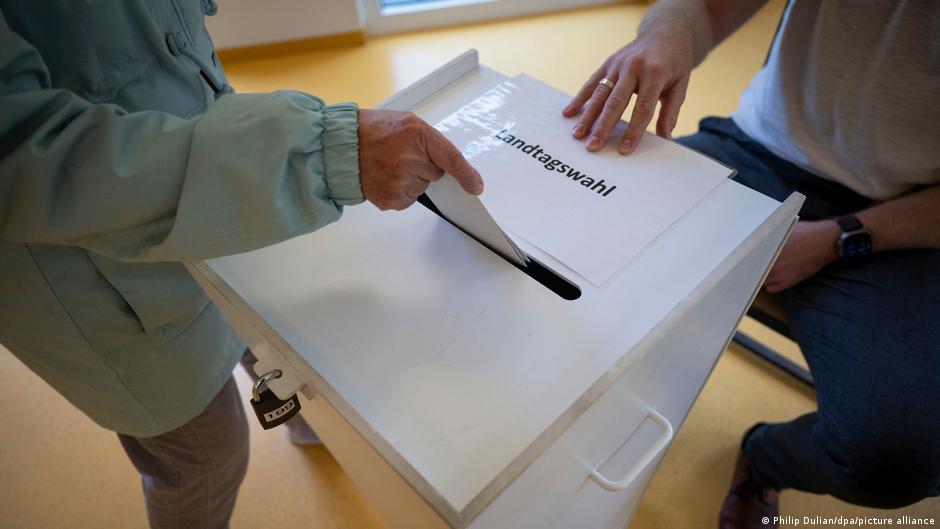
On 20 September, Berlin regional election authorities made a public statement as polling stations opened for regional elections.
On 20 September, Berlin regional election authorities made a public statement as polling stations opened for regional elections.
Footnotes[15]
Evidenced relationships involving significant participants beyond the central cast.
The Event identifies Friedrich Merz as its source actor and CDU members as its target.
The Event identifies Friedrich Merz as its source actor and the CDU as its target.
The Event identifies the Christian Democratic Union of Germany as its target.
“AfD targets another victory in Germany's state elections” is linked to the mobilisation Event.
“High turnout reported in Berlin and Mecklenburg-Western Pomerania elections” is linked to the polling-station Event.
This edition freezes the complete served membership and analysis available through its UTC cutoff. Later repairs or identity changes do not rewrite what this edition showed.
Stories are reporting clusters. Events are coded occurrences within that reporting. The cast contains 38 canonical people and organizations linked to the retained evidence.
Story-to-Event edges identify supporting reporting. Entity-to-Event edges identify recorded actor or target participation. Mentions and analytical roles stay visibly distinct from recorded participation.
Core, precursor, and continuation labels organize the reading. They do not by themselves establish causation. Collapsed graph groups and paginated evidence change presentation only; counts use the complete retained edition.