
Significance
85 measured / 85 eligible · 0 missing · 0 not applicable
score (0 to 1) · Event-level distribution, not a Situation risk score.
across all 85 events
OpenAI asked Congress on September 10 for guidance on whether a coordinated AI slowdown would be legal, a question covered in “OpenAI asks US Congress whether coordinated AI slowdown would be legal.” Dario Amodei urged governments to slow frontier-AI development on September 12, while David Sacks told Anthropic and OpenAI they could slow down; “Anthropic CEO calls for deliberate slowdown in AI development” and “David Sacks backs fast-paced AI development, warns against regulatory capture” describe their positions. Donald Trump said the United States would not slow the AI race and criticized Anthropic over safety concerns; “Trump says US will not slow AI race despite Musk and Altman” and “Trump dismisses AI safety warnings as a hoax amid regulation calls” cover those statements. Mike Johnson rejected an AI pause on September 15, citing competition with China, in “Mike Johnson rejects AI development moratorium, citing China competition.” Bernie Sanders proposed sweeping restrictions on September 23, and prosecutors from 23 states urged Congress to regulate AI on September 24. On September 29, Trump announced a voluntary safeguards agreement with major companies, and Mark Zuckerberg endorsed the initiative; “Trump says top tech firms sign accord to self-police AI development” and “Trump unveils morally binding agreement with major AI companies” describe the agreement. Separately, September 25 coverage said the White House asked OpenAI and Anthropic to delay UK AI testing pending a U.S. review.
Footnotes[26][21][25][37][20][19][18][27][16][22][17][38]The central dispute is whether AI safety should rely on voluntary company commitments and executive coordination or on binding rules, oversight and limits on development. Johnson’s stated China-competition argument, Amodei’s call to slow development, and Trump’s opposition to slowing the U.S. race establish competing positions, not an agreed policy direction. Sanders’s restrictions, the state prosecutors’ appeal, and Anthropic’s proposed rules and law remain proposals or calls for action in the cited accounts; they do not establish enactment. The September 29 voluntary safeguards Event and the September 30 pact-signing Event are distinct from the October 1 “White House summons US tech CEOs to discuss artificial intelligence risks” Story; their association does not establish that a summons and a signing were the same action. Separately, September 25 coverage reported that the White House asked OpenAI and Anthropic to delay UK AI testing pending a U.S. review; that request should not be conflated with UK policy decisions. October accounts also use task-force, taskforce, AI-czar and “Super Intelligence Force” labels; the headlines alone do not establish whether those names refer to one arrangement or several. Compared with the prior explanation, the policy-conflict frame still fits, while the later Anthropic proposals add detail without establishing a settled U.S. regulatory outcome.
Footnotes[22][25][18][38][36][2][1][34][23][9][8][7]Explanation originally captured 2026-10-25 · Evidence through 2026-10-25 UTC · Source edition sed_af2908fb3739d3957538934f3c8a165d
A 43-day Situation represented by 85 coded Events carried across 263 member Stories.
The coded activity is led by 01 · Make Public Statement (19) and 0242 · Policy Change (14).
OpenAI, Dario Amodei, and Donald Trump are prominent in the retained actor and relationship evidence.
465 canonical Entities are linked to this edition.
Metric coverage. 85 coded Events · 84 CAMEO+ · 1 conflict. The four dimensions describe the CAMEO+ subset; conflict Events do not carry these scores.
Dot = mean · shaded span = observed range · position uses each metric’s defined scale.
How the coder scored the full retained Event set
85 coded events — 84 CAMEO+ (76 political) · 1 conflict
Quad class over those 77 events · Verbal Cooperation 61 · Verbal Conflict 15 · Material Conflict 1. 8 sit outside POLITICAL, where Goldstein and quad class are undefined. The four CAMEO+ scores are over the 84 CAMEO+ events only; the 1 conflict events have no such column.
85 measured / 85 eligible · 0 missing · 0 not applicable
score (0 to 1) · Event-level distribution, not a Situation risk score.
across all 85 events
84 measured / 84 eligible · 0 missing · 1 not applicable
score (0 to 10) · Event-level distribution, not a Situation risk score.
across the 84 of 85 events coded in the CAMEO+ family; the conflict family has no such column
84 measured / 84 eligible · 0 missing · 1 not applicable
score (0 to 1) · Event-level distribution, not a Situation risk score.
across the 84 of 85 events coded in the CAMEO+ family; the conflict family has no such column
84 measured / 84 eligible · 0 missing · 1 not applicable
score (0 to 1) · Event-level distribution, not a Situation risk score.
across the 84 of 85 events coded in the CAMEO+ family; the conflict family has no such column
84 measured / 84 eligible · 0 missing · 1 not applicable
score (0 to 1) · Event-level distribution, not a Situation risk score.
across the 84 of 85 events coded in the CAMEO+ family; the conflict family has no such column
77 measured / 77 eligible · 0 missing · 8 not applicable
score (-10 to 10) · Event-level distribution, not a Situation risk score.
across the 77 of 85 events Goldstein is defined on — CAMEO+ POLITICAL and the conflict family; the other nine CAMEO+ domains have no Goldstein semantics
1 measured / 1 eligible · 0 missing · 84 not applicable
reported people · Reports may overlap; these are Event-level reports, not an additive unique human toll.
across the 1 of 85 events that report a toll — the conflict family only, and never 0 on a CAMEO+ event
85 measured / 85 eligible · 0 missing · 0 not applicable
score (0 to 1) · Event-level distribution, not a Situation risk score.
across all 85 events
This retained edition, independent of graph and page limits. Different dimensions, not a blended risk score; reported tolls may overlap.
2026-10-22from the recordslatest
Anthropic proposes U.S. AI ban criteria tied to 50 deaths or billion-dollar losses
3 Stories and 0 coded Events (+2 / -1 against the day before). Widest coverage: Anthropic proposes U.S. AI ban criteria tied to 50 deaths or billion-dollar losses (1 articles).
What kind of event · 27 coded types
over 85 coded events on this edition
Countries · where it happened
Countries · who is acting
Selected from the complete retained edition
Sanders proposed restrictions, state prosecutors appealed to Congress, and Anthropic proposed U.S. rules and safety measures.
Trump announced voluntary company safeguards, while Altman urged Trump and Xi to pursue an AI-safety accord.
U.S. coverage uses several task-force and AI-czar labels; separate October coverage describes eased UK model-sharing rules.

On September 10, OpenAI asked Congress for guidance on the legality of a coordinated AI slowdown; “OpenAI asks US Congress whether coordinated AI slowdown would be legal” covered the request.

On September 12, Dario Amodei urged governments to slow frontier-AI development; “Anthropic CEO calls for deliberate slowdown in AI development” covered his appeal.

On September 14, Donald Trump criticized Anthropic over AI-safety concerns; “Trump dismisses AI safety warnings as a hoax amid regulation calls” covered his position.
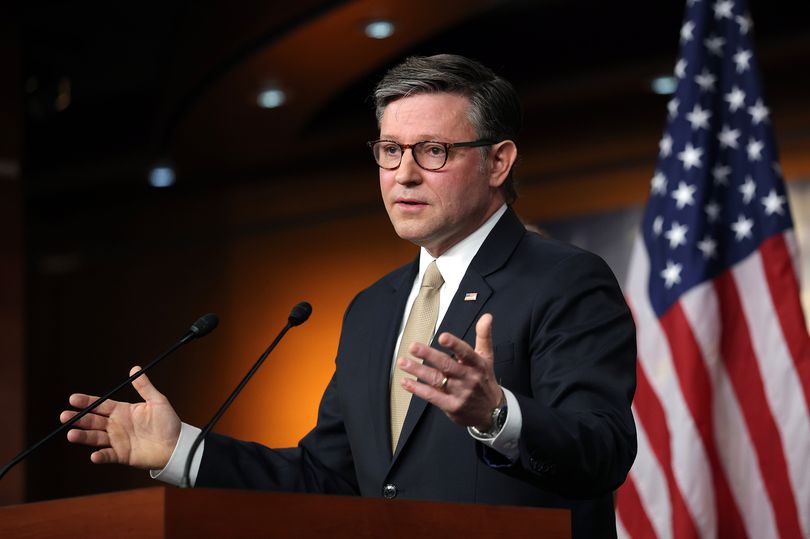
On September 15, Mike Johnson rejected calls to pause AI development and named Dario Amodei; “Mike Johnson rejects AI development moratorium, citing China competition” covered his position.

On September 23, Bernie Sanders proposed sweeping AI restrictions; “Bernie Sanders proposes ban on artificial superintelligence and new AI department” covered the proposal.
Evidenced relationships involving significant participants beyond the central cast.
The Event names prosecutors from 23 states as actors and Congress as target.
The Event describes a pact signing; the Story headline describes a summons, so the link does not establish that the actions were the same.
This edition freezes the complete served membership and analysis available through its UTC cutoff. Later repairs or identity changes do not rewrite what this edition showed.
Stories are reporting clusters. Events are coded occurrences within that reporting. The cast contains 465 canonical people and organizations linked to the retained evidence.
Story-to-Event edges identify supporting reporting. Entity-to-Event edges identify recorded actor or target participation. Mentions and analytical roles stay visibly distinct from recorded participation.
Core, precursor, and continuation labels organize the reading. They do not by themselves establish causation. Collapsed graph groups and paginated evidence change presentation only; counts use the complete retained edition.