
Significance
26 measured / 26 eligible · 0 missing · 0 not applicable
score (0 to 1) · Event-level distribution, not a Situation risk score.
across all 26 events
On 6 September, “Ukraine and US Hold First Round of Talks in Kyiv: What Is Known” reported Ukraine–U.S. talks in Kyiv. On 13 September, Jared Kushner said Ukraine could have secured peace by ceding territory, and “Kushner says peace agreement is nearly finalized, sets condition” reported his claim. The 14 September Event described Russia and Ukraine as expressing intent to halt attacks on energy infrastructure, while “Putin rejects Ukraine deal to halt attacks on energy facilities” reported rejection the next day; “Zelensky signals readiness for energy truce with Russia, rejects Trump claim” reported Volodymyr Zelenskyy’s position on 16 September. On 22 September, Donald Trump demanded that Zelenskyy stop attacks on Russian energy infrastructure, and a separate Event described Trump and Zelenskyy holding peace talks in New York. On 25 September, Kirill Dmitriev met with Steve Witkoff and Jared Kushner in New York, as “Kirill Dmitriev holds secret meeting with Trump envoys in New York” reported. On 23 October, “Putin says Russia is ready to resume trilateral talks on Ukraine” reported Vladimir Putin’s readiness to resume talks.
Footnotes[42][23][43][36][21][44][29][45][19][46][18][49]The talks and contacts establish diplomatic activity, not agreed peace terms: the 14 September headline “Ukraine and Russia still have not agreed a peace deal, FT reports” explicitly said no deal had been agreed at that time, and the later New York talks do not establish an agreement. Energy positions remained distinct and evolved: a September Event describes intent to halt energy-infrastructure attacks, while separate headlines report Putin rejecting a halt and Zelenskyy signaling readiness. Later reports said Zelenskyy had paused Ukrainian strikes on Russian oil refineries (13 October), Trump declared an energy truce (19 October), and Putin rejected an energy truce (21 October); these reported claims do not establish a mutually implemented halt. Kushner’s territorial-cession statement, Putin’s expectation about Donetsk, and Trump’s threat to force a deal are attributed statements, not outcomes. Ukraine’s reported proposal for a Trump–Xi–Ukraine meeting and Marco Rubio’s statement that discussions about a Trump–Putin–Xi meeting took place establish proposals and reported discussions, not that either meeting occurred. Putin’s 23 October reported readiness to resume trilateral talks is a position, not evidence that talks resumed or that a settlement was reached.
Footnotes[29][20][19][18][27][26][36][38][25][2][34][54]Explanation originally captured 2026-10-24 · Evidence through 2026-10-24 UTC · Source edition sed_a6d9b5b4c700ffdf1a371788ca0c6aea
A 51-day Situation represented by 26 coded Events carried across 120 member Stories.
The coded activity is led by 01 · Make Public Statement (7) and 042 · Make A Visit (2).
Donald Trump, Volodymyr Zelenskyy, and Vladimir Putin are prominent in the retained actor and relationship evidence.
532 canonical Entities are linked to this edition.
Metric coverage. 26 coded Events · 24 CAMEO+ · 2 conflict. The four dimensions describe the CAMEO+ subset; conflict Events do not carry these scores.
Dot = mean · shaded span = observed range · position uses each metric’s defined scale.
How the coder scored the full retained Event set
26 coded events — 24 CAMEO+ (23 political) · 2 conflict
Quad class over those 25 events · Verbal Cooperation 19 · Verbal Conflict 4 · Material Conflict 2. 1 sit outside POLITICAL, where Goldstein and quad class are undefined. The four CAMEO+ scores are over the 24 CAMEO+ events only; the 2 conflict events have no such column.
26 measured / 26 eligible · 0 missing · 0 not applicable
score (0 to 1) · Event-level distribution, not a Situation risk score.
across all 26 events
24 measured / 24 eligible · 0 missing · 2 not applicable
score (0 to 10) · Event-level distribution, not a Situation risk score.
across the 24 of 26 events coded in the CAMEO+ family; the conflict family has no such column
24 measured / 24 eligible · 0 missing · 2 not applicable
score (0 to 1) · Event-level distribution, not a Situation risk score.
across the 24 of 26 events coded in the CAMEO+ family; the conflict family has no such column
24 measured / 24 eligible · 0 missing · 2 not applicable
score (0 to 1) · Event-level distribution, not a Situation risk score.
across the 24 of 26 events coded in the CAMEO+ family; the conflict family has no such column
24 measured / 24 eligible · 0 missing · 2 not applicable
score (0 to 1) · Event-level distribution, not a Situation risk score.
across the 24 of 26 events coded in the CAMEO+ family; the conflict family has no such column
25 measured / 25 eligible · 0 missing · 1 not applicable
score (-10 to 10) · Event-level distribution, not a Situation risk score.
across the 25 of 26 events Goldstein is defined on — CAMEO+ POLITICAL and the conflict family; the other nine CAMEO+ domains have no Goldstein semantics
2 measured / 2 eligible · 0 missing · 24 not applicable
reported people · Reports may overlap; these are Event-level reports, not an additive unique human toll.
across the 2 of 26 events that report a toll — the conflict family only, and never 0 on a CAMEO+ event
26 measured / 26 eligible · 0 missing · 0 not applicable
score (0 to 1) · Event-level distribution, not a Situation risk score.
across all 26 events
This retained edition, independent of graph and page limits. Different dimensions, not a blended risk score; reported tolls may overlap.
2026-10-24from the recordslatest
Rubio says Donbas is central to Russia-Ukraine war-ending talks
1 Story and 0 coded Events (-1 / 0 against the day before). Widest coverage: Rubio says Donbas is central to Russia-Ukraine war-ending talks (1 articles).
What kind of event · 16 coded types
over 26 coded events on this edition
Countries · where it happened
Countries · who is acting
Selected from the complete retained edition
Kyiv talks, Kushner’s claim, Trump–Zelenskyy talks, the Dmitriev contact, and later reported proposals and statements form the diplomatic through-line; none establishes agreed settlement terms.
The September Event describes intent to halt energy-infrastructure attacks, while separate headlines report rejection, readiness, and pressure to stop strikes; these do not establish an implemented mutual halt.
Reports describe economic offers to Russia, tariffs on Russian-oil buyers, and U.S. pressure on Kyiv; they show distinct reported measures and positions, not an agreed package.
Donald Trump demanded that Zelenskyy stop attacks on Russian energy infrastructure, held peace talks with Zelenskyy in New York, and later threatened that the United States would force Zelenskyy and Putin into a deal.
Volodymyr Zelenskyy was the target of Trump’s energy-infrastructure demand and a participant in the New York peace talks; he later expressed readiness to meet Putin at the G20.
Vladimir Putin said Russia expected to take all of Donetsk soon and was the target of Zelenskyy’s stated readiness to meet at the G20.
Jared Kushner said Ukraine could have secured peace by ceding territory; the linked headline also reports his claim that a peace agreement was nearly finalized.
Kirill Dmitriev was the source actor in the New York visit Event involving Steve Witkoff; the linked headline reports a meeting with Trump envoys.

On 13 September, Jared Kushner said Ukraine could have secured peace by ceding territory; the linked headline reported his claim about a nearly finalized agreement.

On 14 September, the Event describes Russia and Ukraine as expressing intent to halt energy-infrastructure attacks; the linked 15 September headline reports Putin rejecting a halt.
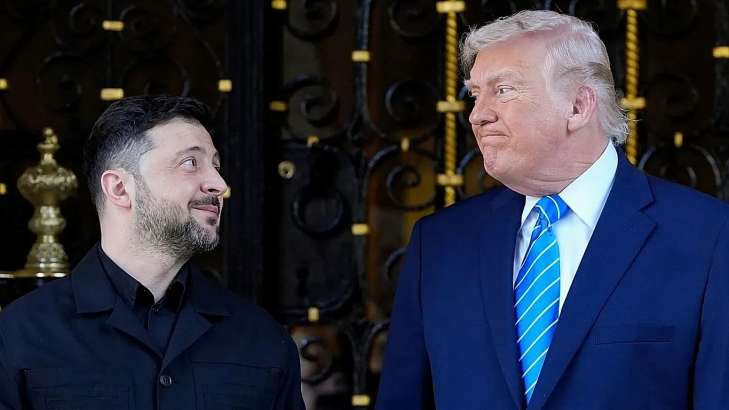
On 22 September, Donald Trump demanded that Volodymyr Zelenskyy stop attacks on Russian energy infrastructure.

On 22 September, Donald Trump and Volodymyr Zelenskyy held peace talks in New York; the Event does not establish agreed terms.
On 22 September, Donald Trump and Volodymyr Zelenskyy held peace talks in New York; the Event does not establish agreed terms.
Footnotes[26]
On 25 September, the Event describes Kirill Dmitriev’s New York visit involving Steve Witkoff; the linked headline reports a meeting with Trump envoys.
Evidenced relationships involving significant participants beyond the central cast.
The Event identifies Trump as its source actor.
The Event identifies Trump as its source actor.
Footnotes[27]The Event identifies Zelenskyy as its target.
The Event identifies Zelenskyy as its target.
Footnotes[27]The Event identifies Trump as its source actor.
The Event identifies Trump as its source actor.
Footnotes[26]The Event identifies Zelenskyy as its target.
The Event identifies Zelenskyy as its target.
Footnotes[26]The Event identifies Witkoff as its target.
The Event identifies Witkoff as its target.
Footnotes[37]This edition freezes the complete served membership and analysis available through its UTC cutoff. Later repairs or identity changes do not rewrite what this edition showed.
Stories are reporting clusters. Events are coded occurrences within that reporting. The cast contains 532 canonical people and organizations linked to the retained evidence.
Story-to-Event edges identify supporting reporting. Entity-to-Event edges identify recorded actor or target participation. Mentions and analytical roles stay visibly distinct from recorded participation.
Core, precursor, and continuation labels organize the reading. They do not by themselves establish causation. Collapsed graph groups and paginated evidence change presentation only; counts use the complete retained edition.