
Significance
39 measured / 39 eligible · 0 missing · 0 not applicable
score (0 to 1) · Event-level distribution, not a Situation risk score.
across all 39 events
Russia’s 2026 State Duma election included electronic voting and voting in occupied Ukrainian regions. “Nearly six million Russians vote electronically in State Duma elections” describes the electronic-voting component, while “Russia holds parliamentary vote in annexed Ukrainian regions” describes voting in those regions. On September 19, 2026, an Event titled “Russia stages sham elections in occupied Kherson” identified Russian occupation authorities as the source actor, and Inna Pagaeva alleged election fraud in Lazarevskoye. On September 20, 2026, Russian authorities closed polling stations early in occupied Donetsk, while Russia admitted Italian observer Angelo d’Orsi to monitor the Duma election. Ilya Yashin urged Russian voters to oppose United Russia, and Vladimir Saldo accused Kyiv of disrupting Kherson elections.
Footnotes[2][1][11][10][6][7][9][5][13]The material covers electronic voting, voting in occupied Ukrainian regions, election-related allegations, observer activity, and security incidents. Russian authorities closed polling stations early in occupied Donetsk, while Russia admitted an Italian observer. Opposition activity and an allegation of election fraud are represented by Ilya Yashin and Inna Pagaeva, but those allegations do not by themselves establish the overall validity of the result. Election-related security incidents included the reported killing of an election commission member in Kherson and a coded strike on a school polling station in Zaporizhzhia; the coded Event does not identify the responsible force for the latter.
Footnotes[6][14][7][9][10][3][12][1]Explanation originally captured 2026-09-21 · Evidence through 2026-09-21 UTC · Source edition sed_8faeaffef153685eb19ef0eadc1cd11c
A 3-day Situation represented by 39 coded Events carried across 50 member Stories.
The coded activity is led by 01 · Make Public Statement (18) and 017 · Symbolic Act (5).
Ilya Yashin, United Russia, and Vladimir Saldo are prominent in the retained actor and relationship evidence.
91 canonical Entities are linked to this edition.
Metric coverage. 39 coded Events · 35 CAMEO+ · 4 conflict. The four dimensions describe the CAMEO+ subset; conflict Events do not carry these scores.
Dot = mean · shaded span = observed range · position uses each metric’s defined scale.
How the coder scored the full retained Event set
39 coded events — 35 CAMEO+ (35 political) · 4 conflict
Quad class over those 39 events · Verbal Cooperation 27 · Verbal Conflict 7 · Material Conflict 4 · Material Cooperation 1. The four CAMEO+ scores are over the 35 CAMEO+ events only; the 4 conflict events have no such column.
39 measured / 39 eligible · 0 missing · 0 not applicable
score (0 to 1) · Event-level distribution, not a Situation risk score.
across all 39 events
35 measured / 35 eligible · 0 missing · 4 not applicable
score (0 to 10) · Event-level distribution, not a Situation risk score.
across the 35 of 39 events coded in the CAMEO+ family; the conflict family has no such column
35 measured / 35 eligible · 0 missing · 4 not applicable
score (0 to 1) · Event-level distribution, not a Situation risk score.
across the 35 of 39 events coded in the CAMEO+ family; the conflict family has no such column
35 measured / 35 eligible · 0 missing · 4 not applicable
score (0 to 1) · Event-level distribution, not a Situation risk score.
across the 35 of 39 events coded in the CAMEO+ family; the conflict family has no such column
35 measured / 35 eligible · 0 missing · 4 not applicable
score (0 to 1) · Event-level distribution, not a Situation risk score.
across the 35 of 39 events coded in the CAMEO+ family; the conflict family has no such column
39 measured / 39 eligible · 0 missing · 0 not applicable
score (-10 to 10) · Event-level distribution, not a Situation risk score.
across the 39 of 39 events Goldstein is defined on — CAMEO+ POLITICAL and the conflict family; the other nine CAMEO+ domains have no Goldstein semantics
4 measured / 4 eligible · 0 missing · 35 not applicable
reported people · Reports may overlap; these are Event-level reports, not an additive unique human toll.
across the 4 of 39 events that report a toll — the conflict family only, and never 0 on a CAMEO+ event
39 measured / 39 eligible · 0 missing · 0 not applicable
score (0 to 1) · Event-level distribution, not a Situation risk score.
across all 39 events
This retained edition, independent of graph and page limits. Different dimensions, not a blended risk score; reported tolls may overlap.
2026-09-21from the recordslatest
Anatoly Lisitsyn wins State Duma election in Yaroslavl
19 Stories and 11 coded Events (-12 / -13 against the day before). Widest coverage: Putin’s United Russia party wins Russian parliamentary election amid fraud claims (144 articles). Recorded acting: Kassym-Jomart Tokayev, Central Election Commission (Russia), Aleksandr Drozdenko, Vladimir Putin.
What kind of event · 15 coded types
over 39 coded events on this edition
Countries · where it happened
Countries · who is acting
Selected from the complete retained edition
“Nearly six million Russians vote electronically in State Duma elections” and “Russia holds parliamentary vote in annexed Ukrainian regions” connect electronic participation with voting in occupied Ukrainian regions.
Inna Pagaeva alleged election fraud, Russian police used force against a Yabloko election observer, and Ilya Yashin urged voters to oppose United Russia.
Russian authorities closed polling stations early in occupied Donetsk, while an election commission member in Kherson was reported killed and a school polling station in Zaporizhzhia was struck.
Russia admitted Italian observer Angelo d’Orsi to monitor the election, while Estonian police dispersed a Russian election protest in Tallinn.

On September 19, 2026, Russian occupation authorities made a public statement about elections in occupied Kherson; the coded title characterizes them as sham elections.
On September 19, 2026, Russian occupation authorities made a public statement about elections in occupied Kherson; the coded title characterizes them as sham elections.
Footnotes[11]On September 19, 2026, Inna Pagaeva alleged election fraud involving Lazarevskoye precinct commissions.
On September 19, 2026, Inna Pagaeva alleged election fraud involving Lazarevskoye precinct commissions.
Footnotes[10]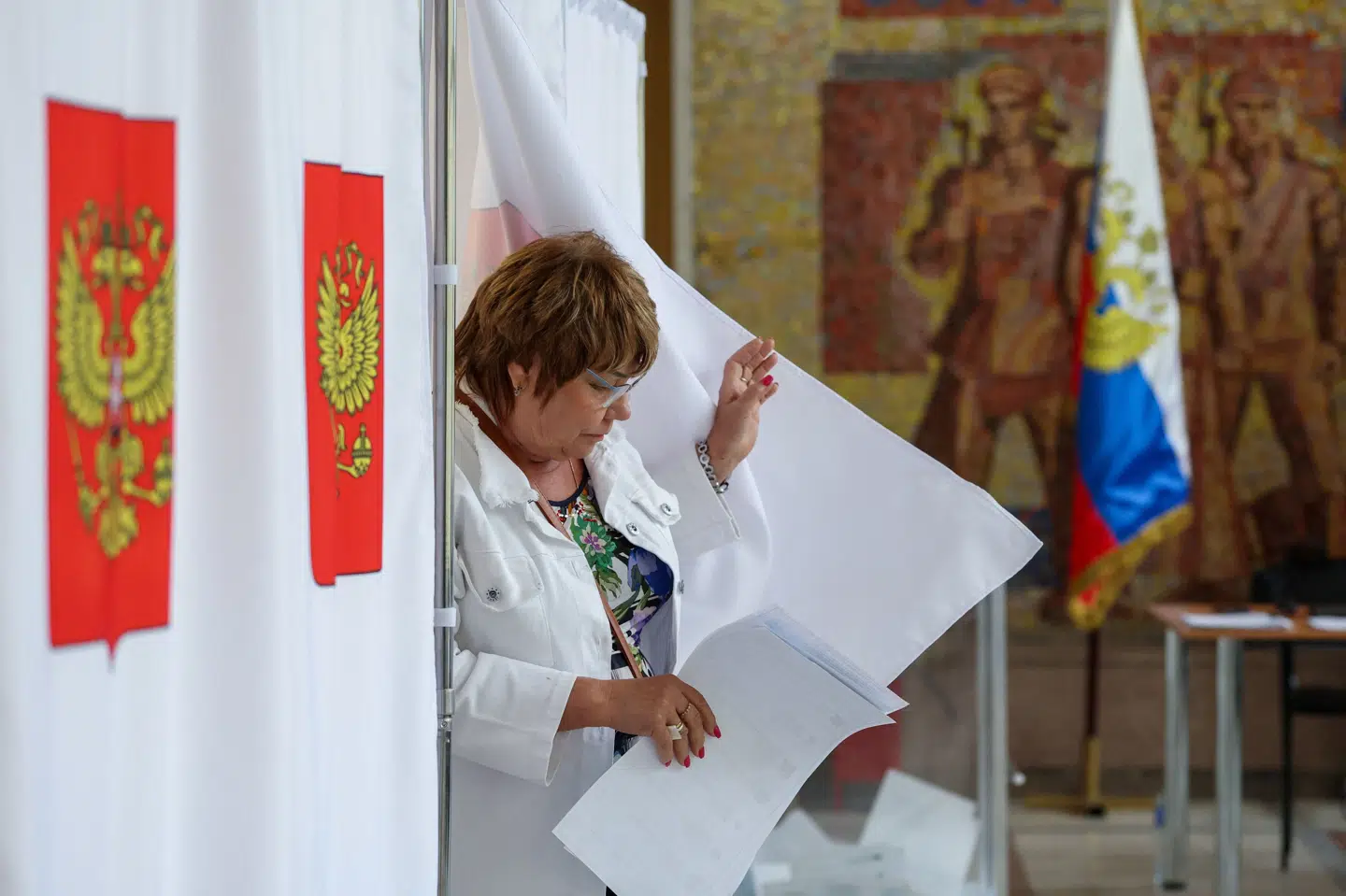
On September 19, 2026, Russian police used force against a Yabloko election observer in St. Petersburg; the Event reports zero fatalities.
On September 20, 2026, Russian authorities closed polling stations early in occupied Donetsk, with voters in occupied Donetsk as the target.

Evidenced relationships involving significant participants beyond the central cast.
The two Stories describe distinct components of the same State Duma election.
The Donetsk Event lists “Russia holds parliamentary vote in annexed Ukrainian regions” among its supporting Stories.
The observer-admission Event is linked to the electronic-voting Story.
This edition freezes the complete served membership and analysis available through its UTC cutoff. Later repairs or identity changes do not rewrite what this edition showed.
Stories are reporting clusters. Events are coded occurrences within that reporting. The cast contains 91 canonical people and organizations linked to the retained evidence.
Story-to-Event edges identify supporting reporting. Entity-to-Event edges identify recorded actor or target participation. Mentions and analytical roles stay visibly distinct from recorded participation.
Core, precursor, and continuation labels organize the reading. They do not by themselves establish causation. Collapsed graph groups and paginated evidence change presentation only; counts use the complete retained edition.