
Significance
21 measured / 21 eligible · 0 missing · 0 not applicable
score (0 to 1) · Event-level distribution, not a Situation risk score.
across all 21 events
On 13 September, Jared Kushner said Ukraine could have secured peace by ceding territory, as “Kushner says peace agreement is nearly finalized, sets condition” reported; that was his stated condition, not a completed agreement. On 14 September, Russia expressed intent to halt attacks on energy infrastructure; on 15 September, “Putin rejects Ukraine deal to halt attacks on energy facilities” reported rejection. Zelenskyy later signaled readiness for an energy truce while rejecting Trump’s claim about one. On 22 September, Donald Trump demanded that Volodymyr Zelenskyy stop attacks on Russian energy infrastructure, and Trump and Zelenskyy held peace talks in New York. On 25 September, Kirill Dmitriev met Trump envoys Steve Witkoff and Jared Kushner in New York, as “Kirill Dmitriev holds secret meeting with Trump envoys in New York” reported. Vladimir Putin said on 1 October that Russia expected to take all of Donetsk soon; on 4 October, Zelenskyy said he was ready to meet Putin at the G20, though the Kremlin had ruled out a Putin–Zelenskyy G20 meeting. On 10 October, “Ushakov says Putin rejects peace talks and expects Ukraine's capitulation” appeared alongside a headline reporting a Trump–Putin agreement over Russian diesel; the latter did not report a peace agreement. On 11 October, “NYT reports US proposed economic concessions to Moscow” described proposals, not implemented concessions. On 13 October, a headline reported that Ukraine had paused strikes on Russian oil refineries, while Trump said the United States would force Zelenskyy and Putin into a deal.
Footnotes[30][21][26][20][24][23][31][15][32][28][9][10]The central tension is between active U.S. diplomacy and reported leverage over Ukraine, on one side, and Russia’s stated or attributed demands, on the other. The 14 September energy-halt Event records Russia expressing intent; later reports describe Putin rejecting a proposed halt, Zelenskyy signaling readiness for an energy truce while rejecting Trump’s claim, and Rubio saying both sides were open to a truce on grain and energy. Together these reports do not establish a mutually accepted or implemented energy truce. Trump and Zelenskyy’s 22 September talks, Dmitriev’s separate contact with Witkoff and Kushner, and Zelenskyy’s stated readiness to meet Putin establish distinct diplomatic contacts, not a single agreed negotiating process. Putin’s Donetsk statement was an expectation, and Zelenskyy’s G20 statement was readiness; neither establishes a territorial outcome or a meeting, and the Kremlin had separately ruled out a Putin–Zelenskyy G20 meeting. The 10 October Ushakov account concerned peace talks; the same-day headline about Trump and Putin reported a Russian-diesel deal, not a peace agreement. Neither establishes accepted peace terms. The economic concessions and threatened limits on U.S. support are described as proposals or threats, while Zelenskyy’s refinery-strike pause is a reported claim; none establishes a final settlement or a broader ceasefire.
Footnotes[26][20][24][23][31][28][32][9][10][6][4][11]Explanation originally captured 2026-10-14 · Evidence through 2026-10-15 UTC · Source edition sed_47091dd783745686ae1582ffc390f9f3
A 41-day Situation represented by 21 coded Events carried across 94 member Stories.
The coded activity is led by 01 · Make Public Statement (5) and 044 · Meet At Third Location (2).
Donald Trump, Volodymyr Zelenskyy, and Vladimir Putin are prominent in the retained actor and relationship evidence.
423 canonical Entities are linked to this edition.
Metric coverage. 21 coded Events · 20 CAMEO+ · 1 conflict. The four dimensions describe the CAMEO+ subset; conflict Events do not carry these scores.
Dot = mean · shaded span = observed range · position uses each metric’s defined scale.
How the coder scored the full retained Event set
21 coded events — 20 CAMEO+ (19 political) · 1 conflict
Quad class over those 20 events · Verbal Cooperation 16 · Verbal Conflict 3 · Material Conflict 1. 1 sit outside POLITICAL, where Goldstein and quad class are undefined. The four CAMEO+ scores are over the 20 CAMEO+ events only; the 1 conflict events have no such column.
21 measured / 21 eligible · 0 missing · 0 not applicable
score (0 to 1) · Event-level distribution, not a Situation risk score.
across all 21 events
20 measured / 20 eligible · 0 missing · 1 not applicable
score (0 to 10) · Event-level distribution, not a Situation risk score.
across the 20 of 21 events coded in the CAMEO+ family; the conflict family has no such column
20 measured / 20 eligible · 0 missing · 1 not applicable
score (0 to 1) · Event-level distribution, not a Situation risk score.
across the 20 of 21 events coded in the CAMEO+ family; the conflict family has no such column
20 measured / 20 eligible · 0 missing · 1 not applicable
score (0 to 1) · Event-level distribution, not a Situation risk score.
across the 20 of 21 events coded in the CAMEO+ family; the conflict family has no such column
20 measured / 20 eligible · 0 missing · 1 not applicable
score (0 to 1) · Event-level distribution, not a Situation risk score.
across the 20 of 21 events coded in the CAMEO+ family; the conflict family has no such column
20 measured / 20 eligible · 0 missing · 1 not applicable
score (-10 to 10) · Event-level distribution, not a Situation risk score.
across the 20 of 21 events Goldstein is defined on — CAMEO+ POLITICAL and the conflict family; the other nine CAMEO+ domains have no Goldstein semantics
1 measured / 1 eligible · 0 missing · 20 not applicable
reported people · Reports may overlap; these are Event-level reports, not an additive unique human toll.
across the 1 of 21 events that report a toll — the conflict family only, and never 0 on a CAMEO+ event
21 measured / 21 eligible · 0 missing · 0 not applicable
score (0 to 1) · Event-level distribution, not a Situation risk score.
across all 21 events
This retained edition, independent of graph and page limits. Different dimensions, not a blended risk score; reported tolls may overlap.
2026-10-14from the recordslatest
US restricts intelligence sharing with Ukraine amid Trump-Putin tensions
1 Story and 0 coded Events (-5 / -3 against the day before). Widest coverage: US restricts intelligence sharing with Ukraine amid Trump-Putin tensions (3 articles).
What kind of event · 15 coded types
over 21 coded events on this edition
Countries · where it happened
Countries · who is acting
Selected from the complete retained edition
Kushner’s territorial-cession statement, Trump and Zelenskyy’s New York talks, and Dmitriev’s meeting with U.S. envoys are separate diplomatic developments; none establishes an agreed settlement process.
The expressed intent to halt energy attacks sits alongside reported pressure over refinery strikes, proposals to halt them, threats concerning U.S. support, and a reported Ukrainian pause; these do not establish an implemented truce.
Putin’s Donetsk statement, Zelenskyy’s stated readiness to meet Putin, and the account attributed to Ushakov describe positions, not a territorial outcome or completed meeting.
Reports of proposed economic concessions to Moscow appeared alongside accounts of Russian resistance to talks and to a ceasefire for wartime elections; they establish competing reported positions, not a concluded bargain.
Donald Trump demanded that Zelenskyy stop attacks on Russian energy infrastructure, took part in New York peace talks with him, and later said the United States would force Zelenskyy and Putin into a deal.
Volodymyr Zelenskyy took part in the New York peace talks, was the target of Trump’s demand, and said he was ready to meet Putin at the G20.
Jared Kushner said Ukraine could have secured peace by ceding territory.
Jared Kushner said Ukraine could have secured peace by ceding territory.
Footnotes[30]Kirill Dmitriev was the actor in the New York visit involving Steve Witkoff and Jared Kushner.
Kirill Dmitriev was the actor in the New York visit involving Steve Witkoff and Jared Kushner.
Footnotes[31]
On 13 September, Jared Kushner said Ukraine could have secured peace by ceding territory; “Kushner says peace agreement is nearly finalized, sets condition” reported his statement.

On 14 September, Russia and Ukraine expressed intent to halt attacks on energy infrastructure; the Event describes intent, not an implemented halt.
On 14 September, Russia and Ukraine expressed intent to halt attacks on energy infrastructure; the Event describes intent, not an implemented halt.
Footnotes[26]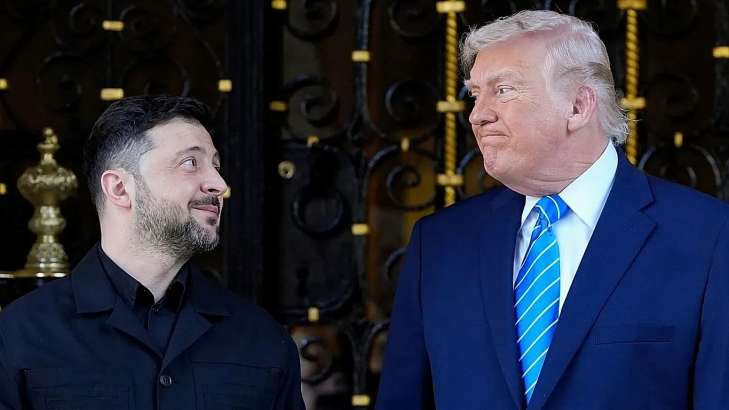
On 22 September, Donald Trump demanded that Volodymyr Zelenskyy stop attacks on Russian energy infrastructure.
On 22 September, Donald Trump demanded that Volodymyr Zelenskyy stop attacks on Russian energy infrastructure.
Footnotes[24]
On 22 September, Donald Trump and Volodymyr Zelenskyy held peace talks in New York; the Event does not establish agreement.
On 22 September, Donald Trump and Volodymyr Zelenskyy held peace talks in New York; the Event does not establish agreement.
Footnotes[23]
On 25 September, Kirill Dmitriev’s New York visit involved Steve Witkoff and Jared Kushner; “Kirill Dmitriev holds secret meeting with Trump envoys in New York” reported the contact.
Evidenced relationships involving significant participants beyond the central cast.
The Event identifies Trump as its source actor.
The Event identifies Trump as its source actor.
Footnotes[24]The Event identifies Zelenskyy as its target.
The Event identifies Zelenskyy as its target.
Footnotes[24]The Event identifies Trump as its source actor.
The Event identifies Trump as its source actor.
Footnotes[23]The Event identifies Zelenskyy as its target.
The Event identifies Zelenskyy as its target.
Footnotes[23]The Event identifies Witkoff as its target.
The Event identifies Witkoff as its target.
Footnotes[31]This edition freezes the complete served membership and analysis available through its UTC cutoff. Later repairs or identity changes do not rewrite what this edition showed.
Stories are reporting clusters. Events are coded occurrences within that reporting. The cast contains 423 canonical people and organizations linked to the retained evidence.
Story-to-Event edges identify supporting reporting. Entity-to-Event edges identify recorded actor or target participation. Mentions and analytical roles stay visibly distinct from recorded participation.
Core, precursor, and continuation labels organize the reading. They do not by themselves establish causation. Collapsed graph groups and paginated evidence change presentation only; counts use the complete retained edition.