
Significance
32 measured / 32 eligible · 0 missing · 0 not applicable
score (0 to 1) · Event-level distribution, not a Situation risk score.
across all 32 events
Protests over voter-list irregularities and demands for Chief Election Commissioner Gyanesh Kumar’s removal or resignation run through “India cracks down on youth protests over voter list revision in New Delhi,” “Indian opposition leaders detained at protests against Chief Election Commissioner” and “Abhijeet Dipke vows renewed protests seeking removal of India's election chief.” On 11 October, Delhi Police detained protesters in Najafgarh, while a New Delhi magistrate court ordered Abhijit Dipke’s release and the Bombay High Court at Goa ordered the release of seven protest detainees; these were separate Events. On 12 October, Ashutosh Ranka gave Delhi Police a 24-hour ultimatum, and Delhi Police removed 300 social-media posts amid protests. That day, the Delhi High Court sought a police report on Nadeem Khan’s confinement claim and a response to a Youth Congress protest plea. The Supreme Court of India directed Delhi Police to investigate an alleged lawyers’ assault, while “Delhi High Court lawyers wear black ribbons to protest police action” and “NAPA seeks probe into alleged police misconduct at Delhi's Bangla Sahib Gurdwara” describe further legal-community protest and calls for inquiry. “Delhi Police announce traffic diversions for Congress protest march to Supreme Court” reports a planned march; a linked Event separately describes Delhi Metro Rail Corporation restoring g
Footnotes[2][3][4][17][12][13][10][14][16][20][15][6]These accounts establish distinct strands: election-related protest and police action, police measures concerning social-media posts, and court proceedings over protest access, alleged confinement and an alleged assault. The release of Abhijit Dipke and the release of seven Goa detainees are separate from the Najafgarh detention and the reported detention of AAP leaders Sanjay Singh and Saurabh Bhardwaj; the accounts do not establish that the same people were released and detained. The Delhi High Court’s requests and the Supreme Court’s investigation direction establish judicial scrutiny, not findings that unlawful confinement or police misconduct occurred. Same-day Story links connect the traffic-diversion coverage to protest coverage and the lawyers’ protest coverage to youth-protest coverage, but do not establish coordination or causation.
Footnotes[12][13][17][21][16][20][15][7][8][6][5][28]Explanation originally captured 2026-10-13 · Evidence through 2026-10-13 UTC · Source edition sed_4ce89c6ffdb52f93c16bc1ec2b126552
A 3-day Situation represented by 32 coded Events carried across 25 member Stories.
The coded activity is led by PROTEST WITH INTERVENTION (6) and 0213 · Judicial (2).
Delhi Police, Delhi High Court, and Supreme Court of India are prominent in the retained actor and relationship evidence.
175 canonical Entities are linked to this edition.
Metric coverage. 32 coded Events · 23 CAMEO+ · 9 conflict. The four dimensions describe the CAMEO+ subset; conflict Events do not carry these scores.
Dot = mean · shaded span = observed range · position uses each metric’s defined scale.
How the coder scored the full retained Event set
32 coded events — 23 CAMEO+ (21 political) · 9 conflict
Quad class over those 30 events · Verbal Conflict 12 · Material Conflict 10 · Verbal Cooperation 6 · Material Cooperation 2. 2 sit outside POLITICAL, where Goldstein and quad class are undefined. The four CAMEO+ scores are over the 23 CAMEO+ events only; the 9 conflict events have no such column.
32 measured / 32 eligible · 0 missing · 0 not applicable
score (0 to 1) · Event-level distribution, not a Situation risk score.
across all 32 events
23 measured / 23 eligible · 0 missing · 9 not applicable
score (0 to 10) · Event-level distribution, not a Situation risk score.
across the 23 of 32 events coded in the CAMEO+ family; the conflict family has no such column
23 measured / 23 eligible · 0 missing · 9 not applicable
score (0 to 1) · Event-level distribution, not a Situation risk score.
across the 23 of 32 events coded in the CAMEO+ family; the conflict family has no such column
23 measured / 23 eligible · 0 missing · 9 not applicable
score (0 to 1) · Event-level distribution, not a Situation risk score.
across the 23 of 32 events coded in the CAMEO+ family; the conflict family has no such column
23 measured / 23 eligible · 0 missing · 9 not applicable
score (0 to 1) · Event-level distribution, not a Situation risk score.
across the 23 of 32 events coded in the CAMEO+ family; the conflict family has no such column
30 measured / 30 eligible · 0 missing · 2 not applicable
score (-10 to 10) · Event-level distribution, not a Situation risk score.
across the 30 of 32 events Goldstein is defined on — CAMEO+ POLITICAL and the conflict family; the other nine CAMEO+ domains have no Goldstein semantics
9 measured / 9 eligible · 0 missing · 23 not applicable
reported people · Reports may overlap; these are Event-level reports, not an additive unique human toll.
across the 9 of 32 events that report a toll — the conflict family only, and never 0 on a CAMEO+ event
32 measured / 32 eligible · 0 missing · 0 not applicable
score (0 to 1) · Event-level distribution, not a Situation risk score.
across all 32 events
This retained edition, independent of graph and page limits. Different dimensions, not a blended risk score; reported tolls may overlap.
2026-10-13from the recordslatest
Delhi Police allegedly bar CJP lawyers from meeting detained leaders
16 Stories and 12 coded Events (+7 / -4 against the day before). Widest coverage: India voter list protests reach Supreme Court as opposition seeks election chief's resignation (72 articles). Recorded acting: Gyanesh Kumar, Delhi Police, Rahul Gandhi, Supreme Court of India.
What kind of event · 22 coded types
over 32 coded events on this edition
Countries · where it happened
Countries · who is acting
Selected from the complete retained edition
These Stories cover voter-list allegations, demands concerning the election chief, protest activity and police action. They also include a planned Congress march and a Supreme Court petition described as alleging voter-list irregularities.
These Stories concern Nadeem Khan’s confinement claim, the Youth Congress protest-permission plea, lawyers’ protest action and a request to investigate alleged police misconduct at Bangla Sahib. The Stories do not establish findings on those allegations.
Delhi Police detained protesters in Najafgarh, detained AAP leaders Sanjay Singh and Saurabh Bhardwaj, removed 300 social-media posts, and were the target of Ashutosh Ranka’s ultimatum and separate court requests.
The Delhi High Court sought a police report on Nadeem Khan’s confinement claim and a Delhi Police response to the Youth Congress protest plea.
Delhi Metro Rail Corporation restored gates and interchange services for passengers; the linked Event places Delhi Metro in this transport strand, not as a central protest or court actor.
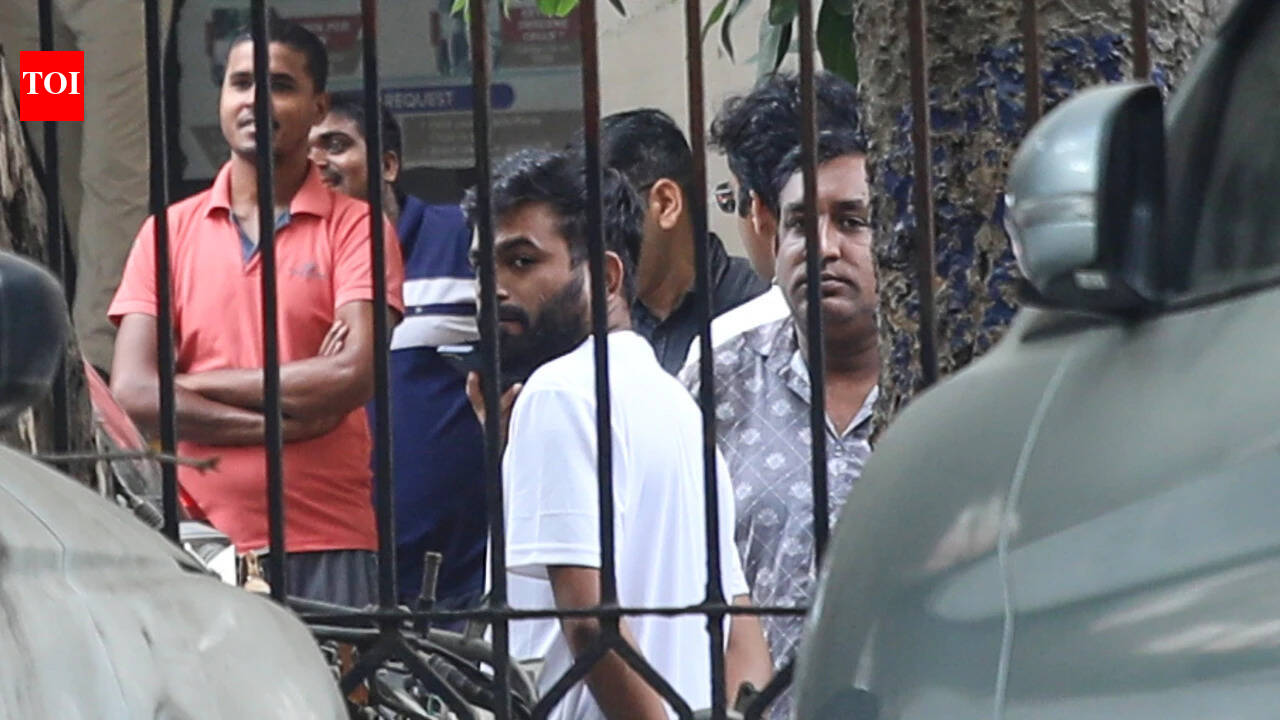
Delhi Police detained protesters in Najafgarh on 11 October.
Delhi Police detained protesters in Najafgarh on 11 October.
Footnotes[17]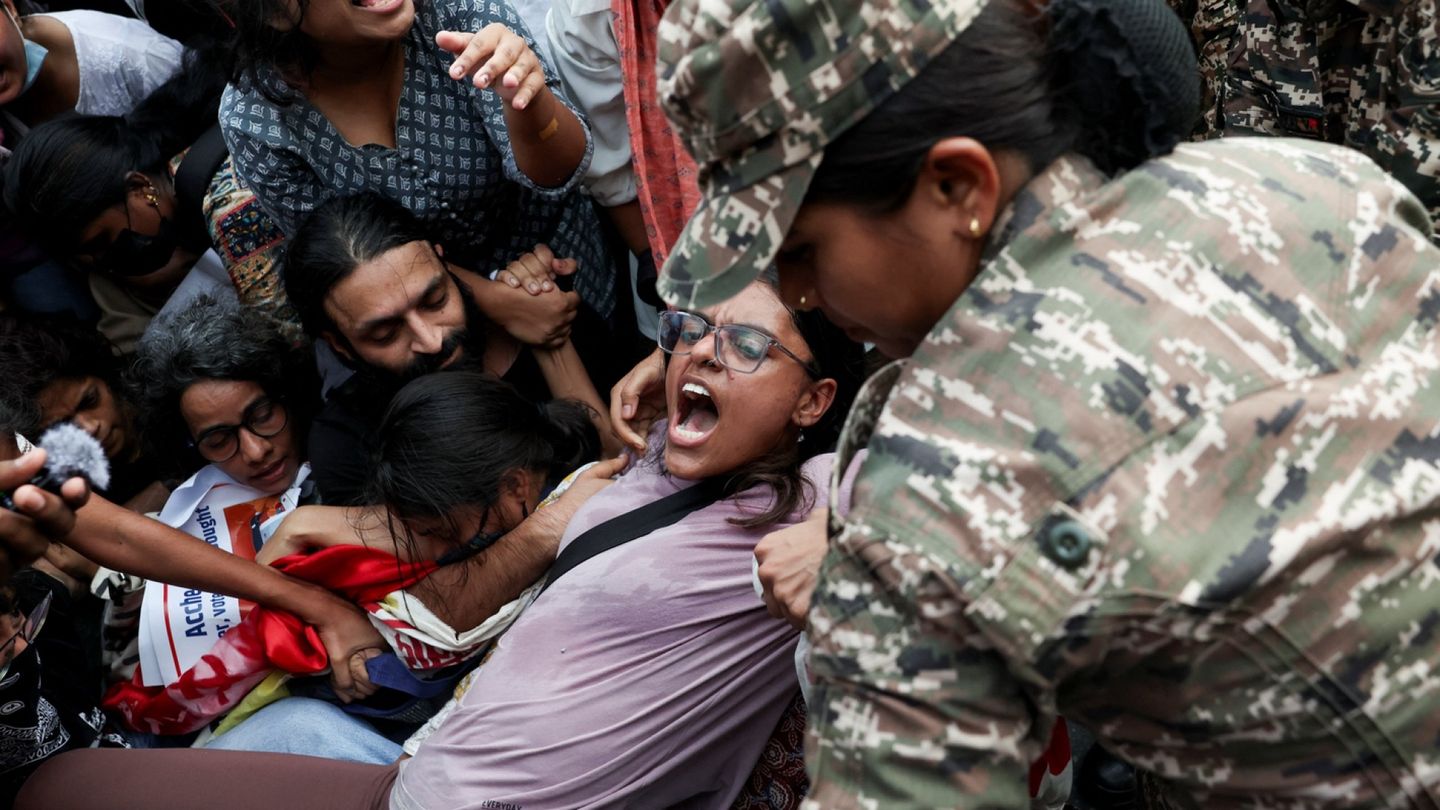
A New Delhi magistrate court ordered Abhijit Dipke’s release on 11 October.
A New Delhi magistrate court ordered Abhijit Dipke’s release on 11 October.
Footnotes[12]The Bombay High Court at Goa ordered the release of seven protest detainees on 11 October.
The Bombay High Court at Goa ordered the release of seven protest detainees on 11 October.
Footnotes[13]
An Event dated 12 October describes Indian protesters demanding the election chief’s resignation.
An Event dated 12 October describes Indian protesters demanding the election chief’s resignation.
Footnotes[18]Delhi Police detained AAP leaders Sanjay Singh and Saurabh Bhardwaj on 12 October.
Delhi Police detained AAP leaders Sanjay Singh and Saurabh Bhardwaj on 12 October.
Footnotes[21]Evidenced relationships involving significant participants beyond the central cast.
The Event binds protesters as source actor and Delhi Police as target.
The Event identifies Ashutosh Ranka as source actor and Delhi Police as target.
The Events identify the Delhi High Court as actor and Delhi Police as target in both proceedings.
The Event identifies the Supreme Court of India as actor and Delhi Police as target.
The Event identifies Delhi Metro Rail Corporation as actor and Delhi Metro passengers as target; its actor Entity is Delhi Metro.
This edition freezes the complete served membership and analysis available through its UTC cutoff. Later repairs or identity changes do not rewrite what this edition showed.
Stories are reporting clusters. Events are coded occurrences within that reporting. The cast contains 175 canonical people and organizations linked to the retained evidence.
Story-to-Event edges identify supporting reporting. Entity-to-Event edges identify recorded actor or target participation. Mentions and analytical roles stay visibly distinct from recorded participation.
Core, precursor, and continuation labels organize the reading. They do not by themselves establish causation. Collapsed graph groups and paginated evidence change presentation only; counts use the complete retained edition.