
Significance
27 measured / 27 eligible · 0 missing · 0 not applicable
score (0 to 1) · Event-level distribution, not a Situation risk score.
across all 27 events
On 4 October, Yemen’s government announced a military campaign against Houthi militia, and Yemen’s Defense Ministry and General Staff launched a general mobilization drive. [cite] On 5 October, Yemeni government forces were reported seizing Houthi positions near Bab el-Mandeb, while Yemeni Armed Forces assaulted Houthi positions in Harad and the Saudi-led coalition launched dawn airstrikes against Houthi targets. [cite] “Yemeni government launches operation to retake Houthi-held territory” and “Yemen’s Giants Brigades reach the outskirts of the Bab al-Mandab area” describe the campaign and reported activity around the strait; the latter is linked to accounts of positions and vehicles seized and a siege on Mayyun Island. [cite] The picture was not one-way: “Iran-backed Houthis seize another town as they advance toward Taiz, Yemen” describes a Houthi advance, while “Yemeni forces regain ground on several fronts in Taiz, inflicting heavy Houthi losses” describes government-side gains. [cite] Separate accounts describe the Yemeni government appealing for international support, Rashad al-Alimi saying Sanaa was nearing liberation, and Houthis claiming they had taken Yemen’s presidential residence. [cite] A report titled “Houthi militia raids homes and abducts civilians in Yemen’s Al-Mokha” also describes direct civilian impact. [cite]
Footnotes[11][17][12][14][13][15][18][1][2][5][4][10]Reports published around 5 October describe Houthi advances and government recaptures, but event records date the Turbah capture and the recapture of three Taiz villages to 4 October. These reports do not establish a single net territorial outcome, and al-Alimi’s statement and the Houthi presidential-residence claim remain attributed claims rather than confirmation of control. [cite] The account of civilian abductions concerns a distinct harm, while the headline-level casualty claims cannot be reconciled with the event-level toll summaries as a comprehensive total. [cite]
Footnotes[11][17][12][13][18][5][4][8][9][6][21][22]Explanation originally captured 2026-10-06 · Evidence through 2026-10-06 UTC · Source edition sed_92f5e7c7249726169d6e86235f842b1e
A 3-day Situation represented by 27 coded Events carried across 42 member Stories.
The coded activity is led by AIR/DRONE STRIKE (5) and GOVERNMENT REGAINS TERRITORY (3).
Houthis and Yemeni Armed Forces are prominent in the retained actor and relationship evidence.
105 canonical Entities are linked to this edition.
Metric coverage. 27 coded Events · 8 CAMEO+ · 19 conflict. The four dimensions describe the CAMEO+ subset; conflict Events do not carry these scores.
Dot = mean · shaded span = observed range · position uses each metric’s defined scale.
How the coder scored the full retained Event set
27 coded events — 8 CAMEO+ (8 political) · 19 conflict
Quad class over those 27 events · Material Conflict 16 · Verbal Cooperation 6 · Verbal Conflict 5. The four CAMEO+ scores are over the 8 CAMEO+ events only; the 19 conflict events have no such column.
27 measured / 27 eligible · 0 missing · 0 not applicable
score (0 to 1) · Event-level distribution, not a Situation risk score.
across all 27 events
8 measured / 8 eligible · 0 missing · 19 not applicable
score (0 to 10) · Event-level distribution, not a Situation risk score.
across the 8 of 27 events coded in the CAMEO+ family; the conflict family has no such column
8 measured / 8 eligible · 0 missing · 19 not applicable
score (0 to 1) · Event-level distribution, not a Situation risk score.
across the 8 of 27 events coded in the CAMEO+ family; the conflict family has no such column
8 measured / 8 eligible · 0 missing · 19 not applicable
score (0 to 1) · Event-level distribution, not a Situation risk score.
across the 8 of 27 events coded in the CAMEO+ family; the conflict family has no such column
8 measured / 8 eligible · 0 missing · 19 not applicable
score (0 to 1) · Event-level distribution, not a Situation risk score.
across the 8 of 27 events coded in the CAMEO+ family; the conflict family has no such column
27 measured / 27 eligible · 0 missing · 0 not applicable
score (-10 to 10) · Event-level distribution, not a Situation risk score.
across the 27 of 27 events Goldstein is defined on — CAMEO+ POLITICAL and the conflict family; the other nine CAMEO+ domains have no Goldstein semantics
19 measured / 19 eligible · 0 missing · 8 not applicable
reported people · Reports may overlap; these are Event-level reports, not an additive unique human toll.
across the 19 of 27 events that report a toll — the conflict family only, and never 0 on a CAMEO+ event
27 measured / 27 eligible · 0 missing · 0 not applicable
score (0 to 1) · Event-level distribution, not a Situation risk score.
across all 27 events
This retained edition, independent of graph and page limits. Different dimensions, not a blended risk score; reported tolls may overlap.
2026-10-06from the recordslatest
Houthi rebels fire missiles and drones at Saudi airports
19 Stories and 3 coded Events (-4 / -13 against the day before). Widest coverage: Saudi-led “Muslim NATO” deploys forces amid Houthi attacks (92 articles).
What kind of event · 17 coded types
over 27 coded events on this edition
Countries · where it happened
Countries · who is acting
Selected from the complete retained edition
The campaign account, Bab al-Mandab-area activity, and reported Taiz gains are linked as parts of the same offensive in the associated Story connections.
The accounts describe Houthi advances toward Taiz alongside Yemeni government claims of regained ground and a Dhubab recapture.
These accounts describe coalition air activity, reported civilian abductions, a government appeal, and competing statements about Sanaa and the presidential residence.
The Houthis appear as targets of government forces near Bab el-Mandeb and in the Mayyun Island siege account; they are also the actor in the siege Event.
On 4 October, Yemen’s government announced a military campaign against Houthi militia.
On 4 October, Yemen’s government announced a military campaign against Houthi militia.
Footnotes[11]On 4 October, Yemen’s Defense Ministry and General Staff launched a general mobilization drive.
On 4 October, Yemen’s Defense Ministry and General Staff launched a general mobilization drive.
Footnotes[17]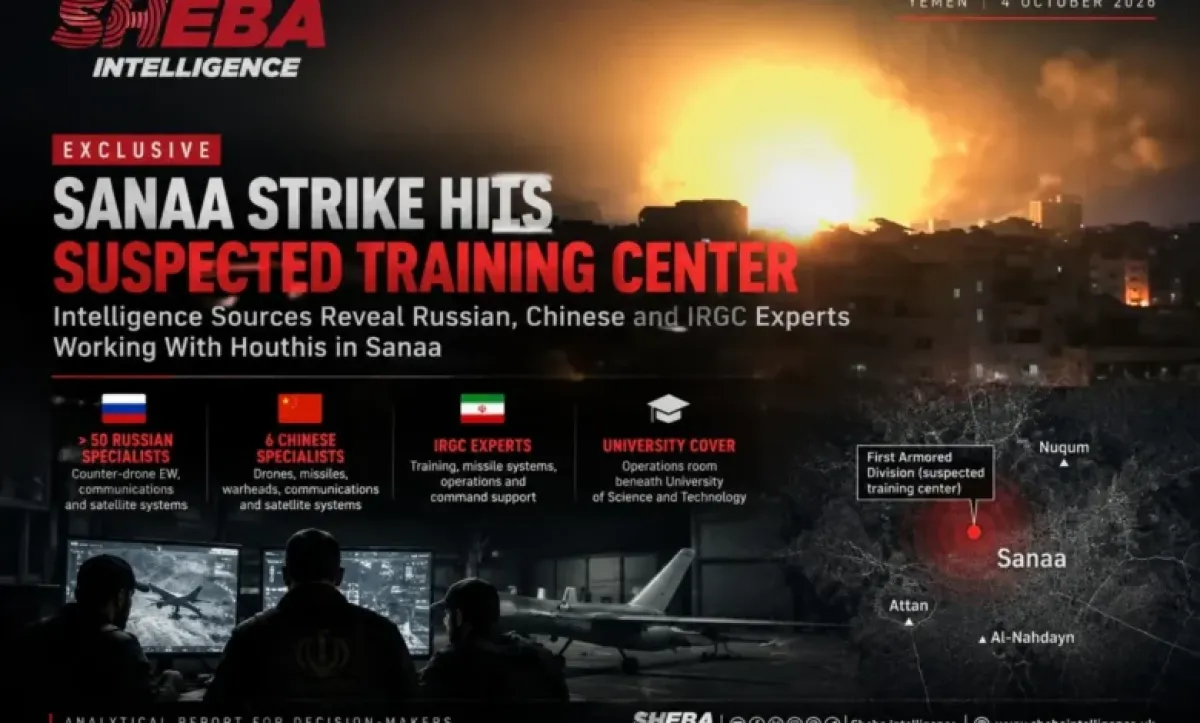
On 4 October, the Yemeni Armed Forces struck a Houthi military training center in Sanaa.
On 4 October, the Yemeni Armed Forces struck a Houthi military training center in Sanaa.
Footnotes[16]On 5 October, Yemeni government forces seized Houthi positions near Bab el-Mandeb.
On 5 October, Yemeni government forces seized Houthi positions near Bab el-Mandeb.
Footnotes[12]On 5 October, Yemeni Armed Forces assaulted Houthi positions in Harad.
On 5 October, Yemeni Armed Forces assaulted Houthi positions in Harad.
Footnotes[14]Evidenced relationships involving significant participants beyond the central cast.
The campaign-announcement Event links to the Story titled “Yemeni government launches operation to retake Houthi-held territory.”
The Event links to the Giants Brigades Story.
The Story connection identifies the Giants Brigades account and the campaign Story as same-day related coverage; it does not establish that one caused the other.
This edition freezes the complete served membership and analysis available through its UTC cutoff. Later repairs or identity changes do not rewrite what this edition showed.
Stories are reporting clusters. Events are coded occurrences within that reporting. The cast contains 105 canonical people and organizations linked to the retained evidence.
Story-to-Event edges identify supporting reporting. Entity-to-Event edges identify recorded actor or target participation. Mentions and analytical roles stay visibly distinct from recorded participation.
Core, precursor, and continuation labels organize the reading. They do not by themselves establish causation. Collapsed graph groups and paginated evidence change presentation only; counts use the complete retained edition.