
Significance
5 measured / 5 eligible · 0 missing · 0 not applicable
score (0 to 1) · Event-level distribution, not a Situation risk score.
across all 5 events
On 8 October, “Kenya confirms first imported Ebola case as Nigeria's NCDC issues warning” reported Kenya’s first imported Ebola case; its headline also reported a warning from Nigeria’s NCDC. [Cited through evidence_ids.] On 7 October, Wajir health officials isolated a 20-year-old patient in Habaswein over suspected viral fever, while Mary Muthoni directed enhanced Ebola screening at Nairobi airport for arrivals from 10 designated African countries. On 8 October, Somalia screened travelers after Kenya confirmed a case, and South Sudan raised an alert after Kenya reported a Bundibugyo virus death. The World Health Organization warned against blanket travel curbs as cases rose in the DRC, while the African Union urged tighter border controls. China provided Kenya $2 million for drought relief and Ebola preparedness; a separate DRC headline reported more than 2,000 children orphaned by the outbreak.
Footnotes[1][4][14][12][5][13][7][6][2][10][11][9]The material joins a Kenyan confirmed-case report to nearby public-health actions and regional alerts, but it does not establish that those measures controlled transmission or were coordinated. A linked assessment associates the Wajir isolation story with the Kenya case story as the same incident; the Wajir Event itself describes suspected illness, not confirmation. The DRC hotspot coverage is presented as an apparent antecedent to the imported case, not proof of its source. The African Union’s call for tighter border controls and the WHO warning against blanket curbs show differing policy positions, but do not establish a direct exchange between them. China’s aid and the reported impact on children add preparedness and humanitarian dimensions without establishing outcomes for either.
Footnotes[1][4][14][19][8][20][10][2][11][9][3]Explanation originally captured 2026-10-09 · Evidence through 2026-10-09 UTC · Source edition sed_26f58aa34d3072c526110b0b659854fc
A 3-day Situation represented by 5 coded Events carried across 14 member Stories.
The coded activity is led by HE04 · Public Health Policy Action (3) and 073 · Provide Humanitarian Aid (1).
🇰🇪Kenya and 🇸🇴Somalia are prominent in the retained actor and relationship evidence.
49 canonical Entities are linked to this edition.
Metric coverage. 5 coded Events · 5 CAMEO+ · 0 conflict. The four dimensions describe the CAMEO+ subset; conflict Events do not carry these scores.
Dot = mean · shaded span = observed range · position uses each metric’s defined scale.
How the coder scored the full retained Event set
5 coded events — 5 CAMEO+ (1 political)
Quad class over that 1 event · Material Cooperation 1. No conflict-family event here, so nothing carries a fatality count — a missing column, not a toll of zero. 4 sit outside POLITICAL, where Goldstein and quad class are undefined.
5 measured / 5 eligible · 0 missing · 0 not applicable
score (0 to 1) · Event-level distribution, not a Situation risk score.
across all 5 events
5 measured / 5 eligible · 0 missing · 0 not applicable
score (0 to 10) · Event-level distribution, not a Situation risk score.
across all 5 events — every one of them CAMEO+
5 measured / 5 eligible · 0 missing · 0 not applicable
score (0 to 1) · Event-level distribution, not a Situation risk score.
across all 5 events — every one of them CAMEO+
5 measured / 5 eligible · 0 missing · 0 not applicable
score (0 to 1) · Event-level distribution, not a Situation risk score.
across all 5 events — every one of them CAMEO+
5 measured / 5 eligible · 0 missing · 0 not applicable
score (0 to 1) · Event-level distribution, not a Situation risk score.
across all 5 events — every one of them CAMEO+
1 measured / 1 eligible · 0 missing · 4 not applicable
score (-10 to 10) · Event-level distribution, not a Situation risk score.
across the 1 of 5 events Goldstein is defined on — CAMEO+ POLITICAL and the conflict family; the other nine CAMEO+ domains have no Goldstein semantics
5 measured / 5 eligible · 0 missing · 0 not applicable
score (0 to 1) · Event-level distribution, not a Situation risk score.
across all 5 events
This retained edition, independent of graph and page limits. Different dimensions, not a blended risk score; reported tolls may overlap.
2026-10-09from the recordslatest
Kenya increases Ebola screening at points of entry
4 Stories and 1 coded Event (-6 / -1 against the day before). Widest coverage: Kenya rules out Ebola in patient who traveled to DR Congo (1 articles).
What kind of event · 3 coded types
over 5 coded events on this edition
Countries · where it happened
Countries · who is acting
Selected from the complete retained edition
The thread combines the reported imported case with Wajir isolation, Nairobi airport screening, and regional screening and alert stories. The Wajir Story is associated with the case Story by a same-incident assessment, while its Event describes suspected illness.
The DRC coverage describes new hotspots, response difficulties, and WHO opposition to blanket travel curbs. The African Union Story separately urges tighter border controls.
A DRC Story reports children orphaned in the outbreak, while a separate Story and Event describe Chinese funding to Kenya for drought relief and Ebola preparedness.
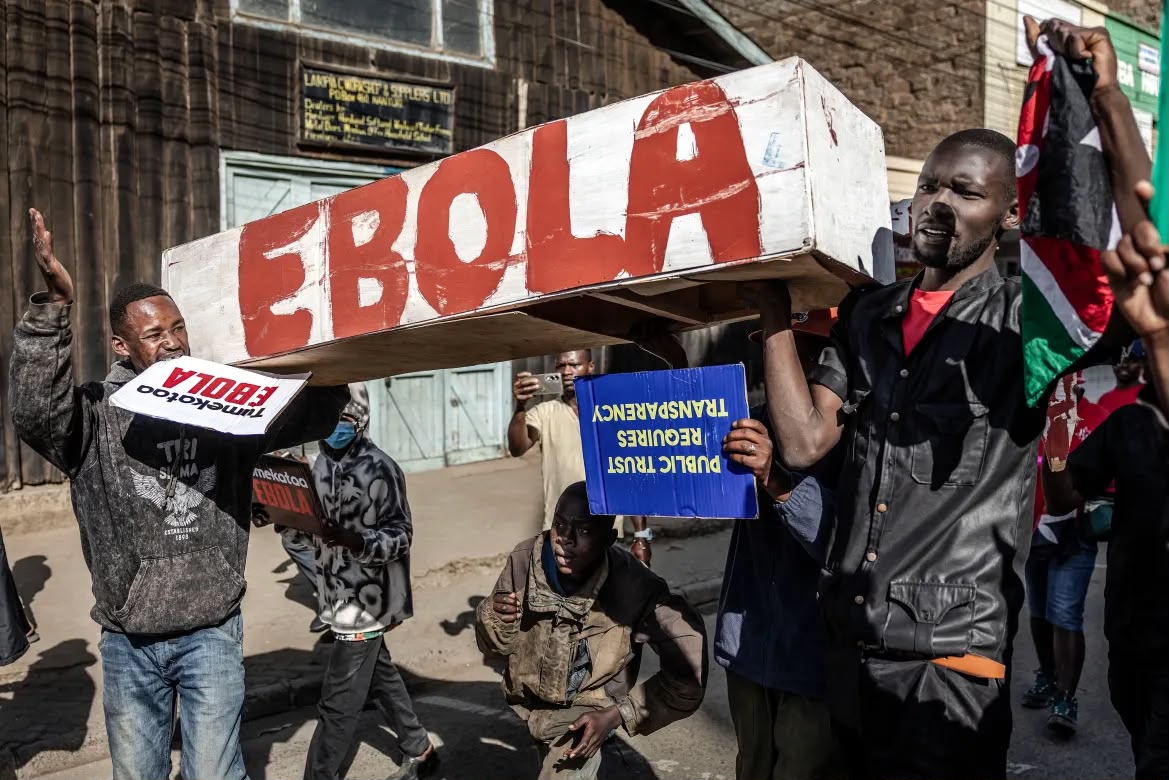
On 7 October, Wajir health officials isolated a 20-year-old patient in Habaswein over suspected viral fever.
On 7 October, Wajir health officials isolated a 20-year-old patient in Habaswein over suspected viral fever.
Footnotes[14]
On 7 October, Mary Muthoni directed enhanced Ebola screening at Nairobi airport for passengers arriving from 10 designated African countries.
On 7 October, Mary Muthoni directed enhanced Ebola screening at Nairobi airport for passengers arriving from 10 designated African countries.
Footnotes[12]
On 8 October, Somalia screened travelers after Kenya confirmed an imported Ebola case.
On 8 October, Somalia screened travelers after Kenya confirmed an imported Ebola case.
Footnotes[13]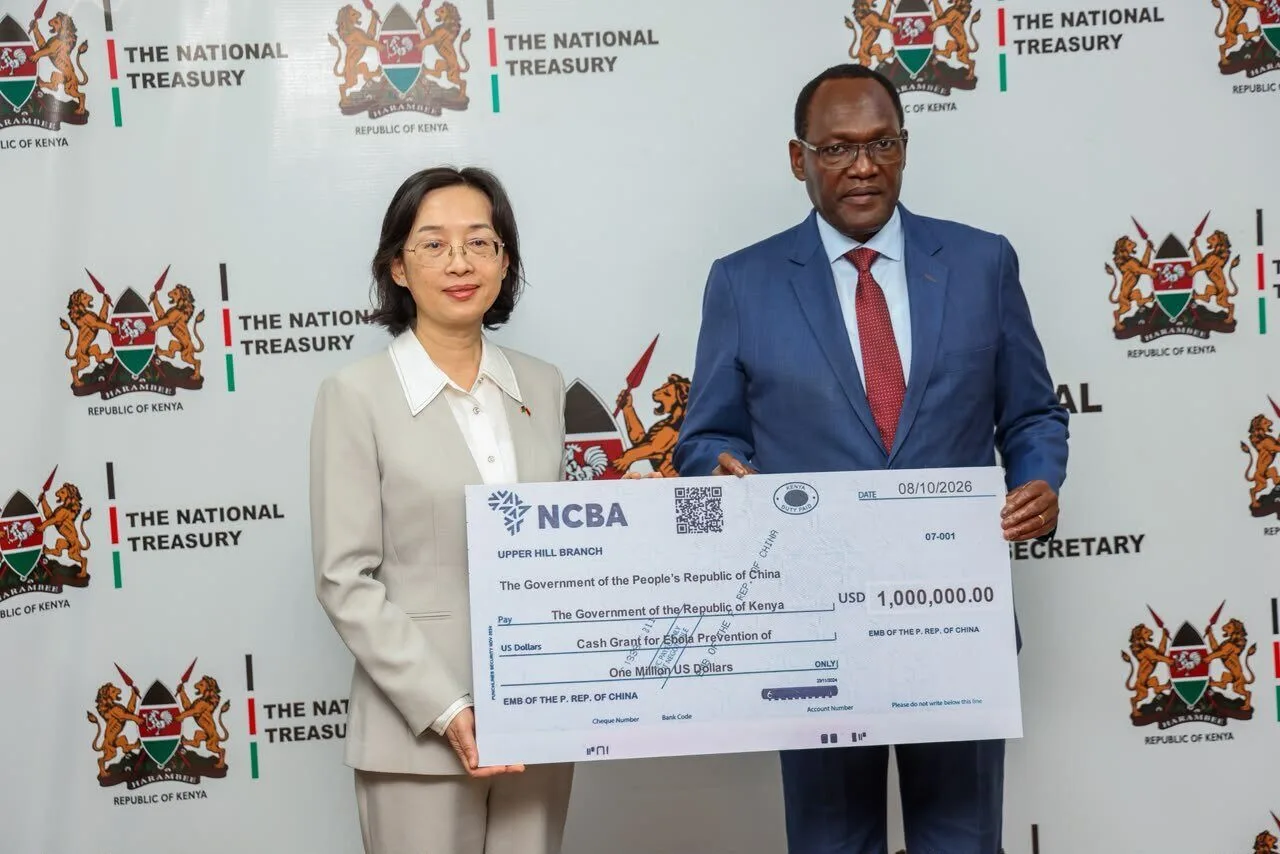
On 8 October, China provided Kenya $2 million for drought and Ebola preparedness.
On 8 October, China provided Kenya $2 million for drought and Ebola preparedness.
Footnotes[11]Evidenced relationships involving significant participants beyond the central cast.
The Event lists the Wajir isolation Story as support.
The Event lists the airport screening Story as support.
The Event lists the Somalia screening Story as support.
The Event lists the aid Story as support.
The Entity is linked to this Story by mention, with no supporting Event participation.
This edition freezes the complete served membership and analysis available through its UTC cutoff. Later repairs or identity changes do not rewrite what this edition showed.
Stories are reporting clusters. Events are coded occurrences within that reporting. The cast contains 49 canonical people and organizations linked to the retained evidence.
Story-to-Event edges identify supporting reporting. Entity-to-Event edges identify recorded actor or target participation. Mentions and analytical roles stay visibly distinct from recorded participation.
Core, precursor, and continuation labels organize the reading. They do not by themselves establish causation. Collapsed graph groups and paginated evidence change presentation only; counts use the complete retained edition.