
Significance
15 measured / 15 eligible · 0 missing · 0 not applicable
score (0 to 1) · Event-level distribution, not a Situation risk score.
across all 15 events
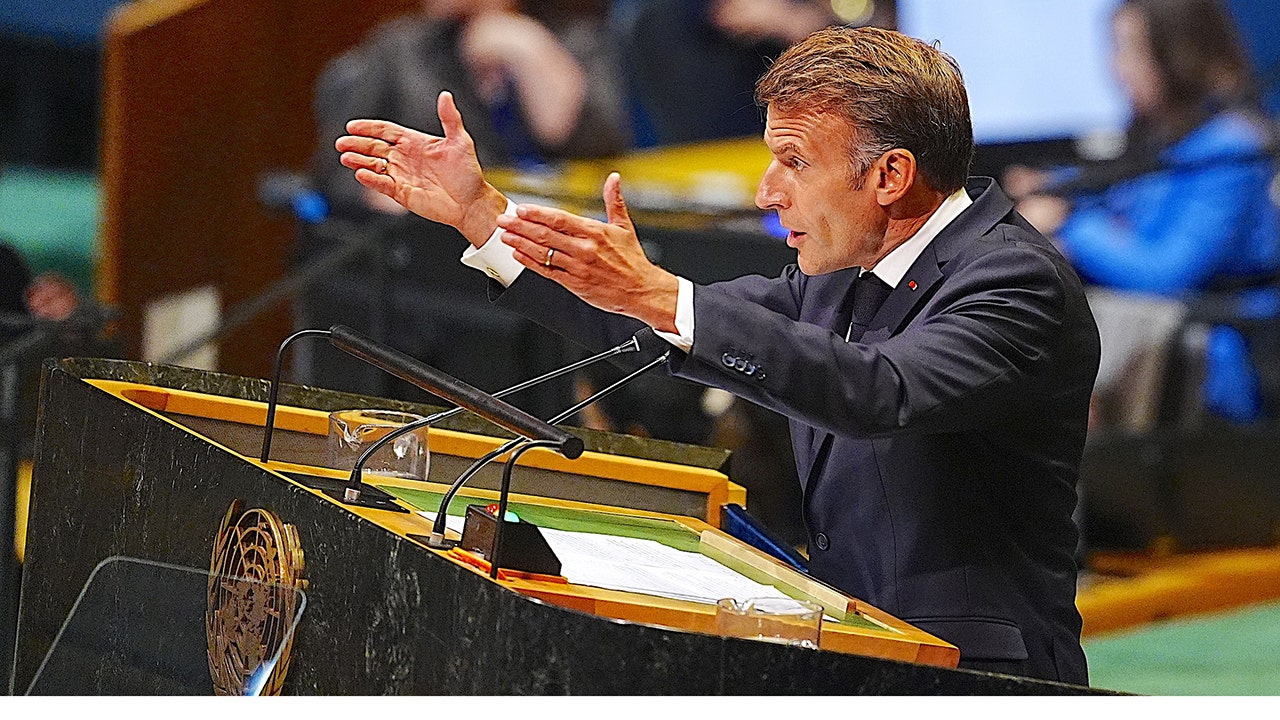
Donald Trump’s Iran message combined a conditional threat with statements favoring a deal: the September 23 headline “Trump threatens to annihilate Iran in UN speech if negotiations fail” reports the threat, while Events dated September 22 describe Trump saying U.S.–Iran talks had momentum and predicting an agreement after the November elections. [citations] A September 23 Story, “Trump says US and Iranian officials held three-hour meeting after UN speech,” reports Trump’s account of a three-hour meeting; its headline identifies U.S. and Iranian officials, and its linked Event describes Witkoff and Kushner talks with an Iranian delegation. [citations] The September 22 Event codes that mediation as Pakistan acting toward the United States, a different attribution that should not be collapsed into the Story’s headline. [citations] On September 23, a separate Event says U.S. sanctions on Iranian airlines took effect. [citations] The September 23 Story “Iran security chief calls Trump’s UN speech clumsy and criminal” reports Iranian security-chief criticism, while “Trump defends US military actions against Iran and Venezuela” covers Trump’s defense of U.S. actions. [citations] A September 24 Story, “Trump touts U.S. economy and Iran policy in UN General Assembly speech,” adds later coverage of the same speech. [citations]
Footnotes[3][10][8][2][7][6][5][4][1]Together these items establish a contrast in Trump’s public posture—threatening action if negotiations fail while also expressing optimism about a possible agreement—and a separately coded sanctions action. [citations] The meeting account is attributed to Trump in the Story headline; the coded mediation Event instead binds Pakistan to the United States, so the two descriptions do not establish who mediated the reported U.S.–Iran meeting. [citations] The Story headlines identify Witkoff, Kushner and an Iranian delegation in the talks, but the supplied Entity records classify the named individuals as mentions, not Event participants. [citations] The security-chief Story establishes criticism of the speech, not a change in Iranian policy; the later speech Story adds reporting but no linked Event. [citations]
Footnotes[3][10][8][6][2][7][13][14][15][5][1]Explanation originally captured 2026-09-24 · Evidence through 2026-09-24 UTC · Source edition sed_b0c8b2234b170922c20992e10097bc0f
A 3-day Situation represented by 15 coded Events carried across 31 member Stories.
The coded activity is led by 01 · Make Public Statement (4) and 013 · Optimistic Comment (1).
Donald Trump and Masoud Pezeshkian are prominent in the retained actor and relationship evidence.
70 canonical Entities are linked to this edition.
Metric coverage. 15 coded Events · 15 CAMEO+ · 0 conflict. The four dimensions describe the CAMEO+ subset; conflict Events do not carry these scores.
Dot = mean · shaded span = observed range · position uses each metric’s defined scale.
How the coder scored the full retained Event set
15 coded events — 15 CAMEO+ (14 political)
Quad class over those 14 events · Verbal Cooperation 10 · Verbal Conflict 3 · Material Conflict 1. No conflict-family event here, so nothing carries a fatality count — a missing column, not a toll of zero. 1 sit outside POLITICAL, where Goldstein and quad class are undefined.
15 measured / 15 eligible · 0 missing · 0 not applicable
score (0 to 1) · Event-level distribution, not a Situation risk score.
across all 15 events
15 measured / 15 eligible · 0 missing · 0 not applicable
score (0 to 10) · Event-level distribution, not a Situation risk score.
across all 15 events — every one of them CAMEO+
15 measured / 15 eligible · 0 missing · 0 not applicable
score (0 to 1) · Event-level distribution, not a Situation risk score.
across all 15 events — every one of them CAMEO+
15 measured / 15 eligible · 0 missing · 0 not applicable
score (0 to 1) · Event-level distribution, not a Situation risk score.
across all 15 events — every one of them CAMEO+
15 measured / 15 eligible · 0 missing · 0 not applicable
score (0 to 1) · Event-level distribution, not a Situation risk score.
across all 15 events — every one of them CAMEO+
14 measured / 14 eligible · 0 missing · 1 not applicable
score (-10 to 10) · Event-level distribution, not a Situation risk score.
across the 14 of 15 events Goldstein is defined on — CAMEO+ POLITICAL and the conflict family; the other nine CAMEO+ domains have no Goldstein semantics
15 measured / 15 eligible · 0 missing · 0 not applicable
score (0 to 1) · Event-level distribution, not a Situation risk score.
across all 15 events
This retained edition, independent of graph and page limits. Different dimensions, not a blended risk score; reported tolls may overlap.
2026-09-24analystlatest
Later speech coverage
A September 24 Story adds coverage of Trump’s U.S. economy and Iran-policy remarks in the UN General Assembly speech; the timeline packet lists no coded Event for this date.
What kind of event · 12 coded types
over 15 coded events on this edition
Countries · where it happened
Countries · who is acting
Selected from the complete retained edition
The conditional threat and defense of U.S. actions are linked as coverage of Trump’s UN speech; the Iranian security-chief Story is linked to the speech as criticism. The September 24 Story supplies later coverage of the speech’s Iran-policy remarks.
A Story reports a three-hour U.S.–Iranian meeting after the speech, while a linked Event codes mediation from Pakistan toward the United States. A separate Event describes U.S. sanctions on Iranian airlines taking effect.
Donald Trump is the recorded actor in Events describing his statement that U.S.–Iran talks had momentum, his prediction of an agreement, and his later claim that deals with Ukraine and Iran were near.

Occurred on September 22: Donald Trump said U.S.–Iran talks had momentum at a leaders’ meeting.
Occurred on September 22: Donald Trump said U.S.–Iran talks had momentum at a leaders’ meeting.
Footnotes[10]Occurred on September 22: the Event describes Witkoff and Kushner talks with an Iranian delegation, but codes Pakistan as source and the United States as target in a mediation Event.
Occurred on September 22: Donald Trump predicted a U.S.–Iran agreement after the November elections.
Occurred on September 22: Donald Trump predicted a U.S.–Iran agreement after the November elections.
Footnotes[8]Occurred on September 23: the Event describes U.S. sanctions on Iranian airlines taking effect.
Occurred on September 23: the Event describes U.S. sanctions on Iranian airlines taking effect.
Footnotes[6]Occurred on September 23: the Event describes Trump repeating a claim that deals with Ukraine and Iran were near.
Occurred on September 23: the Event describes Trump repeating a claim that deals with Ukraine and Iran were near.
Footnotes[9]Evidenced relationships involving significant participants beyond the central cast.
The Event links to the Story; the Story headline reports a three-hour meeting after the UN speech.
The supplied Story edge identifies shared-event coverage between the conditional-threat Story and the military-actions Story.
The accepted connection describes the security chief’s criticism as a reaction to Trump’s speech; the two Story headlines identify the speech and criticism.
The Entity record links Pezeshkian to this Story only as a mention; it does not establish his participation in the reported meeting.
This edition freezes the complete served membership and analysis available through its UTC cutoff. Later repairs or identity changes do not rewrite what this edition showed.
Stories are reporting clusters. Events are coded occurrences within that reporting. The cast contains 70 canonical people and organizations linked to the retained evidence.
Story-to-Event edges identify supporting reporting. Entity-to-Event edges identify recorded actor or target participation. Mentions and analytical roles stay visibly distinct from recorded participation.
Core, precursor, and continuation labels organize the reading. They do not by themselves establish causation. Collapsed graph groups and paginated evidence change presentation only; counts use the complete retained edition.