
Significance
14 measured / 14 eligible · 0 missing · 0 not applicable
score (0 to 1) · Event-level distribution, not a Situation risk score.
across all 14 events
Xi Jinping departed Beijing for his U.S. state visit on September 23, 2026, and Donald Trump said he intended to discuss Iran with Xi during the visit. “Trump welcomes Xi Jinping to Washington for Chinese leader’s state visit” reports the visit, while “China and US extend trade truce through January during Xi visit” reports an extension of the trade truce through January. On September 23, Bessent and He Lifeng negotiated outstanding issues in Washington, and Uyghur and Tibetan exile advocates urged Trump to raise rights with Xi. On September 24, Trump hosted Xi at a White House summit; “Xi and Trump call for 'healthy' competition at White House meeting” describes their public language, and Xi said China and the United States could cooperate. “China and US reach multiple points of consensus in eighth trade talks” reports trade consensus, while “U.S. lawmakers urge tougher Trump stance on China ahead of Xi visit” captures pressure for a harder line. “Xi urges Trump to ensure human control over AI during US visit” reports an AI-governance appeal, alongside the rights concerns and protest captured in “Uyghurs and Tibetans urge Trump to confront Xi over human rights in Washington” and the Washington protest Event.
Footnotes[14][10][1][2][9][12][3][11][4][17][6][8]The visit combined direct U.S.–China engagement, a reported trade-truce extension and reported points of trade consensus with public appeals and political pressure on human rights, AI governance and China policy. The Events establish Trump’s stated intention to discuss Iran, Xi’s cooperative remarks, the advocates’ appeal and the summit; they do not establish that the leaders resolved the issues raised or that their positions converged. The trade Stories report an extension and consensus, but those reports alone do not establish that every outstanding trade issue was settled. The protest Event establishes a Washington demonstration, not a broader account of public views.
Footnotes[10][17][12][11][2][6][15][7][8]Explanation originally captured 2026-09-25 · Evidence through 2026-09-25 UTC · Source edition sed_939229302fb99eb68f0ec3cc9db41830
A 3-day Situation represented by 14 coded Events carried across 38 member Stories.
The coded activity is led by 01 · Make Public Statement (2) and 022 · Appeal for Diplomatic Cooperation (2).
Donald Trump and Xi Jinping are prominent in the retained actor and relationship evidence.
86 canonical Entities are linked to this edition.
Metric coverage. 14 coded Events · 12 CAMEO+ · 2 conflict. The four dimensions describe the CAMEO+ subset; conflict Events do not carry these scores.
Dot = mean · shaded span = observed range · position uses each metric’s defined scale.
How the coder scored the full retained Event set
14 coded events — 12 CAMEO+ (11 political) · 2 conflict
Quad class over those 13 events · Verbal Cooperation 11 · Verbal Conflict 2. 1 sit outside POLITICAL, where Goldstein and quad class are undefined. The four CAMEO+ scores are over the 12 CAMEO+ events only; the 2 conflict events have no such column.
14 measured / 14 eligible · 0 missing · 0 not applicable
score (0 to 1) · Event-level distribution, not a Situation risk score.
across all 14 events
12 measured / 12 eligible · 0 missing · 2 not applicable
score (0 to 10) · Event-level distribution, not a Situation risk score.
across the 12 of 14 events coded in the CAMEO+ family; the conflict family has no such column
12 measured / 12 eligible · 0 missing · 2 not applicable
score (0 to 1) · Event-level distribution, not a Situation risk score.
across the 12 of 14 events coded in the CAMEO+ family; the conflict family has no such column
12 measured / 12 eligible · 0 missing · 2 not applicable
score (0 to 1) · Event-level distribution, not a Situation risk score.
across the 12 of 14 events coded in the CAMEO+ family; the conflict family has no such column
12 measured / 12 eligible · 0 missing · 2 not applicable
score (0 to 1) · Event-level distribution, not a Situation risk score.
across the 12 of 14 events coded in the CAMEO+ family; the conflict family has no such column
13 measured / 13 eligible · 0 missing · 1 not applicable
score (-10 to 10) · Event-level distribution, not a Situation risk score.
across the 13 of 14 events Goldstein is defined on — CAMEO+ POLITICAL and the conflict family; the other nine CAMEO+ domains have no Goldstein semantics
2 measured / 2 eligible · 0 missing · 12 not applicable
reported people · Reports may overlap; these are Event-level reports, not an additive unique human toll.
across the 2 of 14 events that report a toll — the conflict family only, and never 0 on a CAMEO+ event
14 measured / 14 eligible · 0 missing · 0 not applicable
score (0 to 1) · Event-level distribution, not a Situation risk score.
across all 14 events
This retained edition, independent of graph and page limits. Different dimensions, not a blended risk score; reported tolls may overlap.
2026-09-25from the recordslatest
Xi Jinping calls for stronger China-US ties and friendship
19 Stories and 1 coded Event (0 / -7 against the day before). Widest coverage: Trump hosts Xi Jinping for White House dinner, touting a new era in US-China ties (19 articles). Recorded acting: Xi Jinping.
What kind of event · 10 coded types
over 14 coded events on this edition
Countries · where it happened
Countries · who is acting
Selected from the complete retained edition
These Stories connect Xi’s visit and the White House meeting to the reported trade-truce extension, eighth-round trade consensus and summit discussion of AI.
Advocates urged Trump to raise human rights with Xi; related coverage describes a rights warning and U.S. lawmakers urging a tougher stance toward China.
Donald Trump said he would discuss Iran with Xi and was the target of the Uyghur and Tibetan exile advocates’ appeal to raise rights concerns.
Xi Jinping departed for the U.S. visit, voiced confidence that China and the United States could get along, and said the two countries could cooperate.
On September 23, Xi Jinping departed Beijing for a U.S. state visit.
On September 23, Xi Jinping departed Beijing for a U.S. state visit.
Footnotes[14]
On September 23, Donald Trump said he would discuss Iran with Xi during the visit; this was a stated intention.
On September 23, Donald Trump said he would discuss Iran with Xi during the visit; this was a stated intention.
Footnotes[10]
On September 23, Bessent and He Lifeng negotiated outstanding issues in Washington.
On September 23, Bessent and He Lifeng negotiated outstanding issues in Washington.
Footnotes[9]
On September 23, Uyghur and Tibetan exile advocates urged Trump to raise rights with Xi.
On September 23, Uyghur and Tibetan exile advocates urged Trump to raise rights with Xi.
Footnotes[12]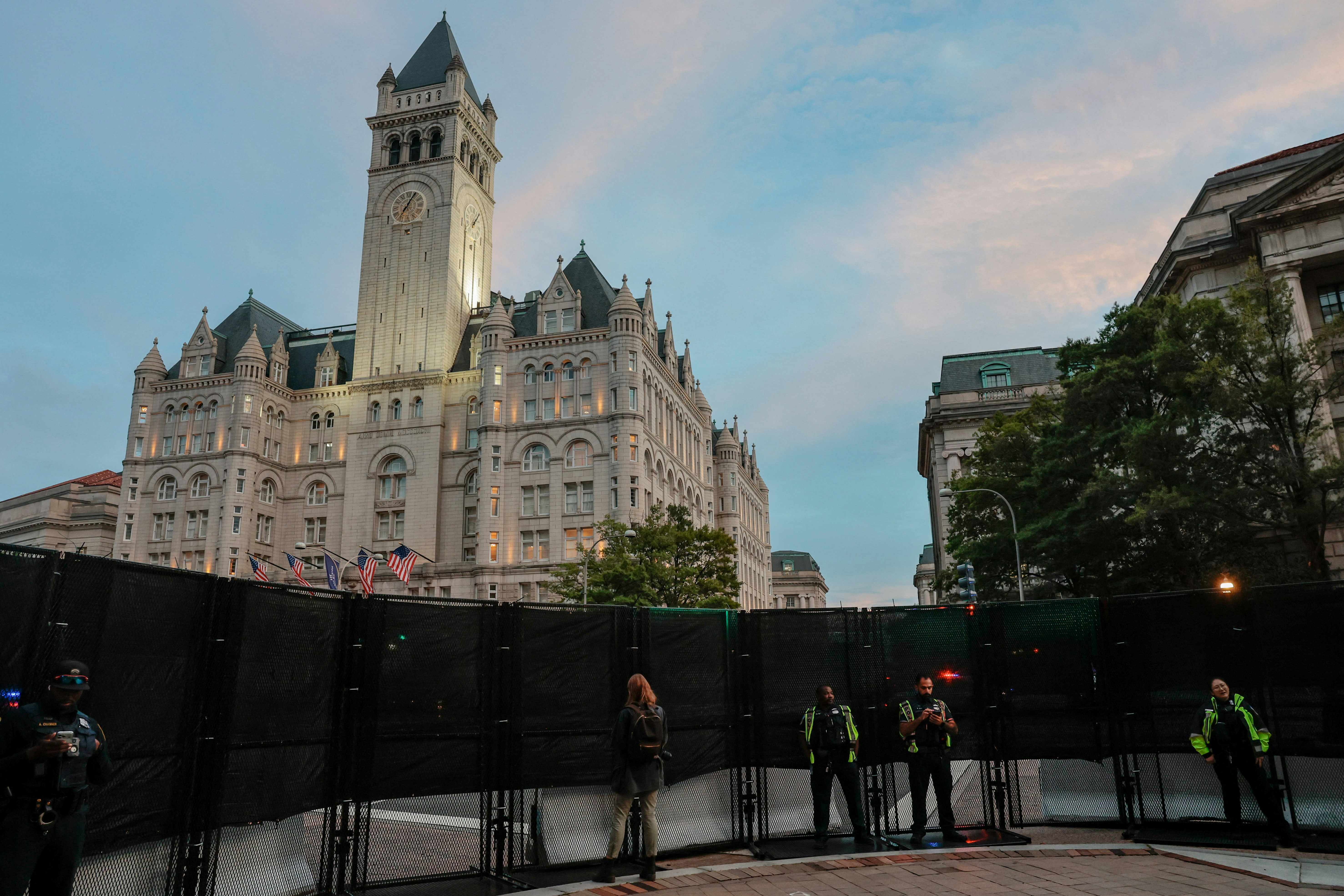
On September 23, Tibetan protesters demonstrated against Xi’s Washington visit.
On September 23, Tibetan protesters demonstrated against Xi’s Washington visit.
Footnotes[15]Evidenced relationships involving significant participants beyond the central cast.
The Event identifies Trump as its source actor and Xi Jinping as its target actor.
The Event identifies Xi Jinping as its source actor and the United States as its target.
The Event links directly to the Story about multiple points of consensus in the eighth trade talks.
The edge links these Stories as sharing an Event; it does not by itself establish that the visit caused the reported extension.
This edition freezes the complete served membership and analysis available through its UTC cutoff. Later repairs or identity changes do not rewrite what this edition showed.
Stories are reporting clusters. Events are coded occurrences within that reporting. The cast contains 86 canonical people and organizations linked to the retained evidence.
Story-to-Event edges identify supporting reporting. Entity-to-Event edges identify recorded actor or target participation. Mentions and analytical roles stay visibly distinct from recorded participation.
Core, precursor, and continuation labels organize the reading. They do not by themselves establish causation. Collapsed graph groups and paginated evidence change presentation only; counts use the complete retained edition.