
Significance
19 measured / 19 eligible · 0 missing · 0 not applicable
score (0 to 1) · Event-level distribution, not a Situation risk score.
across all 19 events
SituationFinland +5
A Russian cargo ship caught fire in the Gulf of Finland on 20 November. On 21 November, the story “Russian cargo ship attacked in the Gulf of Finland, local authorities say” covered an attack, while the event “Unidentified drone operator strikes Russian cargo ship in Gulf of Finland” names no identified attacker. The 22 November headline “Ukrainian strike sets Russian vessel ablaze in the Baltic Sea” attributes the strike to Ukraine, an attribution not settled by the unidentified-operator event. On 21 November, Estonia sent a navy vessel to assist Finland, and Antti Häkkänen warned of worsening Gulf of Finland security. On 22 November, Finland permitted the damaged ship to be towed back to Russia. Separately, “Drones attack Russia’s Kaliningrad region as Lithuania denies involvement” covered a Kaliningrad drone alert and Lithuanian Foreign Minister Kęstutis Budrys’s denial that Lithuania enabled attacks; another event describes Russia spreading claims linking Poland to the Kaliningrad attack.
Footnotes[14][5][9][1][7][13][11][2][6][12][8]The central maritime account is an attack on a Russian vessel, followed by a Finnish towing decision, but the attacker remains unresolved here: the 21 November event identifies an unknown operator, whereas the 22 November headline attributes the strike to Ukraine. Estonia’s assistance to Finland and Häkkänen’s warning establish parallel regional security activity; they do not establish who attacked the ship. The Kaliningrad alert, Budrys’s denial, and claims linking Poland to the attack are distinct developments, and do not establish a connection to the Gulf of Finland strike or identify who carried out the Kaliningrad attacks. Compared with the previous explanation, this account also includes the Kaliningrad alert and the Lithuanian and Polish information-related developments; it does not treat them as one confirmed operation.
Footnotes[9][1][7][13][6][12][8][2][4]Explanation originally captured 2026-11-23 · Evidence through 2026-11-23 UTC · Source edition sed_6582ba4cb5d40d06e06983e9d45b9e21
A 4-day Situation represented by 19 coded Events carried across 14 member Stories.
The coded activity is led by 01 · Make Public Statement (4) and 112 · Accuse (3).
Antti Häkkänen and Volodymyr Zelenskyy are prominent in the retained actor and relationship evidence.
58 canonical Entities are linked to this edition.
Metric coverage. 19 coded Events · 17 CAMEO+ · 2 conflict. The four dimensions describe the CAMEO+ subset; conflict Events do not carry these scores.
Dot = mean · shaded span = observed range · position uses each metric’s defined scale.
How the coder scored the full retained Event set
19 coded events — 17 CAMEO+ (14 political) · 2 conflict
Quad class over those 16 events · Verbal Cooperation 7 · Verbal Conflict 5 · Material Conflict 4. 3 sit outside POLITICAL, where Goldstein and quad class are undefined. The four CAMEO+ scores are over the 17 CAMEO+ events only; the 2 conflict events have no such column.
19 measured / 19 eligible · 0 missing · 0 not applicable
score (0 to 1) · Event-level distribution, not a Situation risk score.
across all 19 events
17 measured / 17 eligible · 0 missing · 2 not applicable
score (0 to 10) · Event-level distribution, not a Situation risk score.
across the 17 of 19 events coded in the CAMEO+ family; the conflict family has no such column
17 measured / 17 eligible · 0 missing · 2 not applicable
score (0 to 1) · Event-level distribution, not a Situation risk score.
across the 17 of 19 events coded in the CAMEO+ family; the conflict family has no such column
17 measured / 17 eligible · 0 missing · 2 not applicable
score (0 to 1) · Event-level distribution, not a Situation risk score.
across the 17 of 19 events coded in the CAMEO+ family; the conflict family has no such column
17 measured / 17 eligible · 0 missing · 2 not applicable
score (0 to 1) · Event-level distribution, not a Situation risk score.
across the 17 of 19 events coded in the CAMEO+ family; the conflict family has no such column
16 measured / 16 eligible · 0 missing · 3 not applicable
score (-10 to 10) · Event-level distribution, not a Situation risk score.
across the 16 of 19 events Goldstein is defined on — CAMEO+ POLITICAL and the conflict family; the other nine CAMEO+ domains have no Goldstein semantics
2 measured / 2 eligible · 0 missing · 17 not applicable
reported people · Reports may overlap; these are Event-level reports, not an additive unique human toll.
across the 2 of 19 events that report a toll — the conflict family only, and never 0 on a CAMEO+ event
19 measured / 19 eligible · 0 missing · 0 not applicable
score (0 to 1) · Event-level distribution, not a Situation risk score.
across all 19 events
This retained edition, independent of graph and page limits. Different dimensions, not a blended risk score; reported tolls may overlap.
2026-11-23from the recordslatest
Russia begins towing ship struck by drones in the Baltic Sea
7 Stories and 4 coded Events (+1 / -4 against the day before). Widest coverage: Russia begins towing ship struck by drones in the Baltic Sea (36 articles).
What kind of event · 12 coded types
over 19 coded events on this edition
Countries · where it happened
Countries · who is acting
Selected from the complete retained edition
These Stories and Events concern the Russian cargo ship, the attack accounts, the fire and Finland’s permission for a tow to Russia.
The Stories and Events cover Estonia’s assistance, Häkkänen’s warning, the Kaliningrad drone alert, Lithuania’s denial and claims involving Poland.

The event describes a Russian cargo ship catching fire in the Gulf of Finland on 20 November.
The event describes a Russian cargo ship catching fire in the Gulf of Finland on 20 November.
Footnotes[14]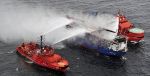
The 21 November event describes an unidentified drone operator striking a Russian cargo vessel.
The 21 November event describes an unidentified drone operator striking a Russian cargo vessel.
Footnotes[9]
On 21 November, Estonia sent a navy vessel to assist Finland.
On 21 November, Estonia sent a navy vessel to assist Finland.
Footnotes[7]On 21 November, Antti Häkkänen warned of worsening Gulf of Finland security.
On 21 November, Antti Häkkänen warned of worsening Gulf of Finland security.
Footnotes[13]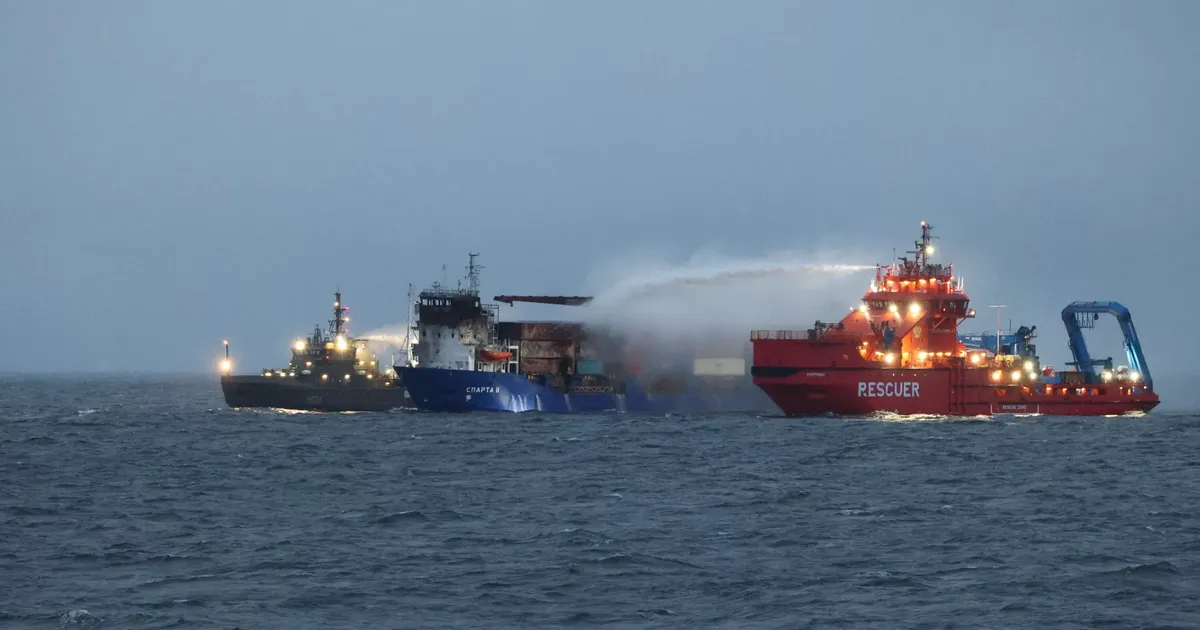
The 22 November event describes Finland permitting the damaged ship to be towed back to Russia.
The 22 November event describes Finland permitting the damaged ship to be towed back to Russia.
Footnotes[11]Evidenced relationships involving significant participants beyond the central cast.
The Story and Event are linked as coverage of the cargo-ship attack.
The Story headline attributes the strike to Ukraine, while the linked Event names an unidentified operator.
The Stories are linked as same-incident and continuation coverage.
The connection identifies Finland’s towing decision as a follow-up concerning the attacked vessel.
The Entity and Event identify Häkkänen as the warning’s actor.
This edition freezes the complete served membership and analysis available through its UTC cutoff. Later repairs or identity changes do not rewrite what this edition showed.
Stories are reporting clusters. Events are coded occurrences within that reporting. The cast contains 58 canonical people and organizations linked to the retained evidence.
Story-to-Event edges identify supporting reporting. Entity-to-Event edges identify recorded actor or target participation. Mentions and analytical roles stay visibly distinct from recorded participation.
Core, precursor, and continuation labels organize the reading. They do not by themselves establish causation. Collapsed graph groups and paginated evidence change presentation only; counts use the complete retained edition.