
Significance
55 measured / 55 eligible · 0 missing · 0 not applicable
score (0 to 1) · Event-level distribution, not a Situation risk score.
across all 55 events
Delcy Rodríguez’s September United Nations visit brought diplomatic engagement and a dispute over her participation into view: on September 22, António Guterres received Venezuela’s acting president, and Rodríguez visited the UN and asked Pedro Sánchez for a meeting to discuss Venezuela and continue talks. “Guterres meets Venezuela’s acting president at UN headquarters,” “Venezuela’s Delcy Rodríguez arrives at UN with foreign minister denying illegal arrests,” and “Delcy Rodríguez seeks meeting with Sánchez to discuss Venezuela” describe those contacts. La Causa R criticized Rodríguez’s participation, while Venezuela’s parliament backed it on September 23. “Venezuela’s Cabello dismisses opposition rejection of Delcy Rodríguez at UN” and “Venezuelan parliament backs Rodríguez’s participation at the United Nations” capture the competing responses. On September 28, Marco Rubio said the United States was working with Venezuela’s 2015 Assembly on elections. “Rubio says US is working with Venezuela’s 2015 Assembly to hold elections.” The Venezuelan government began a third dialogue cycle on October 14; Comando Con Venezuela demanded an election date on October 15, and María Corina Machado said the United States had excluded her from talks on October 16. “Venezuela begins third round of government-opposition talks on political transition,” “Venezuelan opposition coalition calls rally to demand presidential election date”.
Footnotes[38][45][42][39][41][46][36][32][45][25][28][27]The dialogue has a reported beginning and conclusion: the government began the third cycle on October 14, and the government and the 2015 National Assembly concluded a round on October 21. The government and an opposition faction also agreed to review political-disqualification rules and establish a commission concerning UK-held gold. Machado’s proposed election date and the opposition’s demands establish pressure for an electoral timetable, not an agreed date or settlement. Her exclusion account remains her attributed claim; separate U.S. statements describe progress in dialogue but do not establish who attended every negotiation. On October 22, Venezuelan protesters demonstrated for elections, while the government-opposition talks were accompanied by a reported agreement on gold and by separate opposition mobilization. Compared with the previous explanation, this account adds October 23 reporting on Rodríguez’s meeting with opposition leader Dinorah Figuera and U.S. praise for dialogue progress; those reports do not establish implementation of the agreements or an agreed election date.
Footnotes[36][34][40][35][44][31][16][6][3][5][9][14]Explanation originally captured 2026-10-24 · Evidence through 2026-10-25 UTC · Source edition sed_04a04dd5e1999e349ce10d6aea5fc6cd
A 38-day Situation represented by 55 coded Events carried across 170 member Stories.
The coded activity is led by 01 · Make Public Statement (11) and 051 · Praise or Endorse (5).
Delcy Rodríguez, María Corina Machado, and Marco Rubio are prominent in the retained actor and relationship evidence.
273 canonical Entities are linked to this edition.
Metric coverage. 55 coded Events · 50 CAMEO+ · 5 conflict. The four dimensions describe the CAMEO+ subset; conflict Events do not carry these scores.
Dot = mean · shaded span = observed range · position uses each metric’s defined scale.
How the coder scored the full retained Event set
55 coded events — 50 CAMEO+ (48 political) · 5 conflict
Quad class over those 53 events · Verbal Cooperation 37 · Verbal Conflict 12 · Material Conflict 2 · Material Cooperation 2. 2 sit outside POLITICAL, where Goldstein and quad class are undefined. The four CAMEO+ scores are over the 50 CAMEO+ events only; the 5 conflict events have no such column.
55 measured / 55 eligible · 0 missing · 0 not applicable
score (0 to 1) · Event-level distribution, not a Situation risk score.
across all 55 events
50 measured / 50 eligible · 0 missing · 5 not applicable
score (0 to 10) · Event-level distribution, not a Situation risk score.
across the 50 of 55 events coded in the CAMEO+ family; the conflict family has no such column
50 measured / 50 eligible · 0 missing · 5 not applicable
score (0 to 1) · Event-level distribution, not a Situation risk score.
across the 50 of 55 events coded in the CAMEO+ family; the conflict family has no such column
50 measured / 50 eligible · 0 missing · 5 not applicable
score (0 to 1) · Event-level distribution, not a Situation risk score.
across the 50 of 55 events coded in the CAMEO+ family; the conflict family has no such column
50 measured / 50 eligible · 0 missing · 5 not applicable
score (0 to 1) · Event-level distribution, not a Situation risk score.
across the 50 of 55 events coded in the CAMEO+ family; the conflict family has no such column
53 measured / 53 eligible · 0 missing · 2 not applicable
score (-10 to 10) · Event-level distribution, not a Situation risk score.
across the 53 of 55 events Goldstein is defined on — CAMEO+ POLITICAL and the conflict family; the other nine CAMEO+ domains have no Goldstein semantics
5 measured / 5 eligible · 0 missing · 50 not applicable
reported people · Reports may overlap; these are Event-level reports, not an additive unique human toll.
across the 5 of 55 events that report a toll — the conflict family only, and never 0 on a CAMEO+ event
55 measured / 55 eligible · 0 missing · 0 not applicable
score (0 to 1) · Event-level distribution, not a Situation risk score.
across all 55 events
This retained edition, independent of graph and page limits. Different dimensions, not a blended risk score; reported tolls may overlap.
2026-10-25from the recordslatest
U.S. Embassy staff return to Caracas as Washington seeks free Venezuelan elections
1 Story and 0 coded Events (-8 / -1 against the day before). Widest coverage: U.S. Embassy staff return to Caracas as Washington seeks free Venezuelan elections (2 articles).
What kind of event · 23 coded types
over 55 coded events on this edition
Countries · where it happened
Countries · who is acting
Selected from the complete retained edition
The third dialogue cycle, its reported conclusion and agreements, election-date demands, Machado’s attributed exclusion claim, and opposition mobilization define the central political dispute.
Rodríguez’s UN visit and diplomatic appeals were met by criticism from La Causa R and support from Venezuela’s parliament.
U.S. statements on elections and dialogue, alongside reported trade discussions, form a related but distinct strand of engagement.
The scheduled hearing and not-guilty pleas concern a separate court proceeding, not an outcome in the political dialogue.
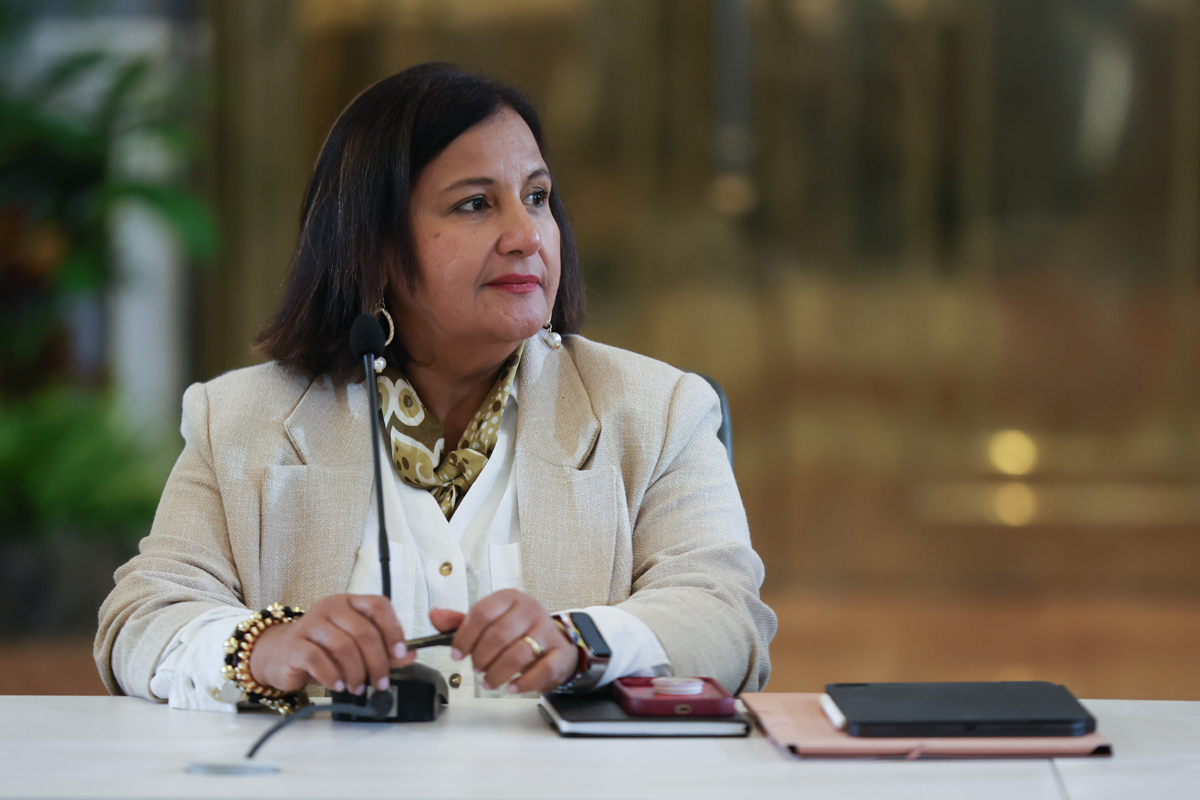
Delcy Rodríguez visited the United Nations, appealed to Pedro Sánchez to continue talks, and was the subject of both criticism and parliamentary backing over her UN participation.
María Corina Machado criticized the U.S. role in negotiations, said the United States had excluded her from talks, and urged Venezuelans to mobilize for an election date.
On September 28, Marco Rubio said the United States was working with Venezuela’s 2015 Assembly on elections.


Evidenced relationships involving significant participants beyond the central cast.
The Event identifies Rodríguez as the actor and Pedro Sánchez as the target.
The Event identifies Guterres as the actor receiving Venezuela’s acting president.
The Event identifies the United Nations as the target and Rodríguez as the actor.
Machado is identified as the speaker; the exclusion is her attributed claim.
The Event identifies Rubio as the speaker and the 2015 Assembly as the target of his statement.
This edition freezes the complete served membership and analysis available through its UTC cutoff. Later repairs or identity changes do not rewrite what this edition showed.
Stories are reporting clusters. Events are coded occurrences within that reporting. The cast contains 273 canonical people and organizations linked to the retained evidence.
Story-to-Event edges identify supporting reporting. Entity-to-Event edges identify recorded actor or target participation. Mentions and analytical roles stay visibly distinct from recorded participation.
Core, precursor, and continuation labels organize the reading. They do not by themselves establish causation. Collapsed graph groups and paginated evidence change presentation only; counts use the complete retained edition.