
Significance
48 measured / 48 eligible · 0 missing · 0 not applicable
score (0 to 1) · Event-level distribution, not a Situation risk score.
across all 48 events
On October 19, Donald Trump signaled willingness to meet Vladimir Putin and Xi Jinping, and criticized Volodymyr Zelensky over the war in Ukraine. On October 20, Putin proposed trilateral talks with Trump and Xi; “Trump open to Putin's proposed summit with China, excluding Ukraine” reported Trump’s openness to the proposal, while the Kremlin signaled readiness to resume nuclear talks with Trump. A separate dispute concerned Patriot missiles: “Trump holds up transfer of Patriot missiles to Ukraine amid tensions with Zelenskyy” reported the hold, and Zelensky accused the U.S. government of delaying paid deliveries. The U.S. also cited high demand as an explanation for arms-delivery delays. Marco Rubio denied a political directive behind the weapons delay and said Trump rejected claims that he ordered an intelligence cutoff for Ukraine. The negotiating-policy dispute also included Trump’s call for someone else to negotiate with Russia on Ukraine’s behalf; Kaja Kallas accused the U.S. of pressuring Ukraine for 18 months to accept Putin’s terms, and Zelensky urged the U.S. Senate to increase pressure on Trump. Meanwhile, “Zelensky meets Trump envoys in Oslo for Ukraine peace talks” and “US envoy Steve Witkoff plans Russia visit to meet Putin” describe engagement involving Kyiv, Trump’s envoys and Moscow. Peskov described Putin’s talks with U.S. negotiators as substantive, while Witkoff’s Russia visit was reported as planned.
Footnotes[9][10][12][2][8][1][7][11][15][17][6][3]The accounts establish concurrent diplomatic efforts and disputes over weapons support and who should negotiate for Ukraine. Putin proposed a summit framed around China and excluding Ukraine, and Trump expressed openness; neither establishes that a summit occurred. Witkoff’s Russia visit was reported as planned, while Peskov described Putin’s talks with U.S. negotiators as substantive. On weapons delays, Zelensky accused the U.S. of delaying paid deliveries, the U.S. cited high demand, and Rubio denied a political directive; these opposing statements do not establish the delay’s motive. Trump’s call for someone else to negotiate and Kallas’s attributed accusation of prolonged U.S. pressure further illustrate the dispute over negotiating policy; Zelensky’s Senate appeal and Oslo talks show additional channels of engagement, not a settlement.
Footnotes[2][12][7][1][9][3][11][15][6][13]Explanation originally captured 2026-10-21 · Evidence through 2026-10-22 UTC · Source edition sed_6d441d464c70b364c6eea924db61c902
A 4-day Situation represented by 48 coded Events carried across 52 member Stories.
The coded activity is led by 01 · Make Public Statement (10) and 036 · Intent to Meet/negotiate (6).
Donald Trump, Vladimir Putin, and Volodymyr Zelenskyy are prominent in the retained actor and relationship evidence.
135 canonical Entities are linked to this edition.
Metric coverage. 48 coded Events · 47 CAMEO+ · 1 conflict. The four dimensions describe the CAMEO+ subset; conflict Events do not carry these scores.
Dot = mean · shaded span = observed range · position uses each metric’s defined scale.
How the coder scored the full retained Event set
48 coded events — 47 CAMEO+ (45 political) · 1 conflict
Quad class over those 46 events · Verbal Cooperation 36 · Verbal Conflict 7 · Material Conflict 2 · Material Cooperation 1. 2 sit outside POLITICAL, where Goldstein and quad class are undefined. The four CAMEO+ scores are over the 47 CAMEO+ events only; the 1 conflict events have no such column.
48 measured / 48 eligible · 0 missing · 0 not applicable
score (0 to 1) · Event-level distribution, not a Situation risk score.
across all 48 events
47 measured / 47 eligible · 0 missing · 1 not applicable
score (0 to 10) · Event-level distribution, not a Situation risk score.
across the 47 of 48 events coded in the CAMEO+ family; the conflict family has no such column
47 measured / 47 eligible · 0 missing · 1 not applicable
score (0 to 1) · Event-level distribution, not a Situation risk score.
across the 47 of 48 events coded in the CAMEO+ family; the conflict family has no such column
47 measured / 47 eligible · 0 missing · 1 not applicable
score (0 to 1) · Event-level distribution, not a Situation risk score.
across the 47 of 48 events coded in the CAMEO+ family; the conflict family has no such column
47 measured / 47 eligible · 0 missing · 1 not applicable
score (0 to 1) · Event-level distribution, not a Situation risk score.
across the 47 of 48 events coded in the CAMEO+ family; the conflict family has no such column
46 measured / 46 eligible · 0 missing · 2 not applicable
score (-10 to 10) · Event-level distribution, not a Situation risk score.
across the 46 of 48 events Goldstein is defined on — CAMEO+ POLITICAL and the conflict family; the other nine CAMEO+ domains have no Goldstein semantics
1 measured / 1 eligible · 0 missing · 47 not applicable
reported people · Reports may overlap; these are Event-level reports, not an additive unique human toll.
across the 1 of 48 events that report a toll — the conflict family only, and never 0 on a CAMEO+ event
48 measured / 48 eligible · 0 missing · 0 not applicable
score (0 to 1) · Event-level distribution, not a Situation risk score.
across all 48 events
This retained edition, independent of graph and page limits. Different dimensions, not a blended risk score; reported tolls may overlap.
2026-10-22from the recordslatest
Russia launches drone and missile attack on Ukraine
19 Stories and 11 coded Events (+5 / -5 against the day before). Widest coverage: Putin signals readiness to resume Ukraine peace talks with US in November (91 articles). Recorded acting: Steve Witkoff, Kremlin, Donald Trump, Yuri Ushakov.
What kind of event · 25 coded types
over 48 coded events on this edition
Countries · where it happened
Countries · who is acting
Selected from the complete retained edition
The thread combines the reported Patriot-transfer hold, Zelensky’s accusation over delayed paid deliveries and Rubio’s denials concerning the weapons delay and intelligence cutoff.
These accounts describe Trump’s stated willingness, Putin’s trilateral proposal and Kremlin signals about resuming nuclear talks, with Ukraine excluded from the summit framing.
The Stories describe Zelensky’s Oslo talks with Trump envoys, proposals for Putin, a planned Witkoff visit to Russia and Zelensky’s appeal to the U.S. Senate.
Donald Trump signaled willingness to meet Putin and Xi, criticized Zelensky, and was named as the target of the Kremlin’s nuclear-talks signal.
Volodymyr Zelensky was the target of Trump’s criticism, accused the U.S. government of delaying paid Patriot deliveries, and gave Witkoff peace proposals for Putin.
Marco Rubio denied a political directive behind the weapons delay and said Trump rejected claims that he ordered an intelligence cutoff.

Occurred October 19: Trump signaled willingness to meet Putin and Xi; the Event codes intent, not a meeting.
Occurred October 19: Trump signaled willingness to meet Putin and Xi; the Event codes intent, not a meeting.
Footnotes[9]
Occurred October 19: Trump criticized Zelensky over the Ukraine war.
Occurred October 19: Trump criticized Zelensky over the Ukraine war.
Footnotes[10]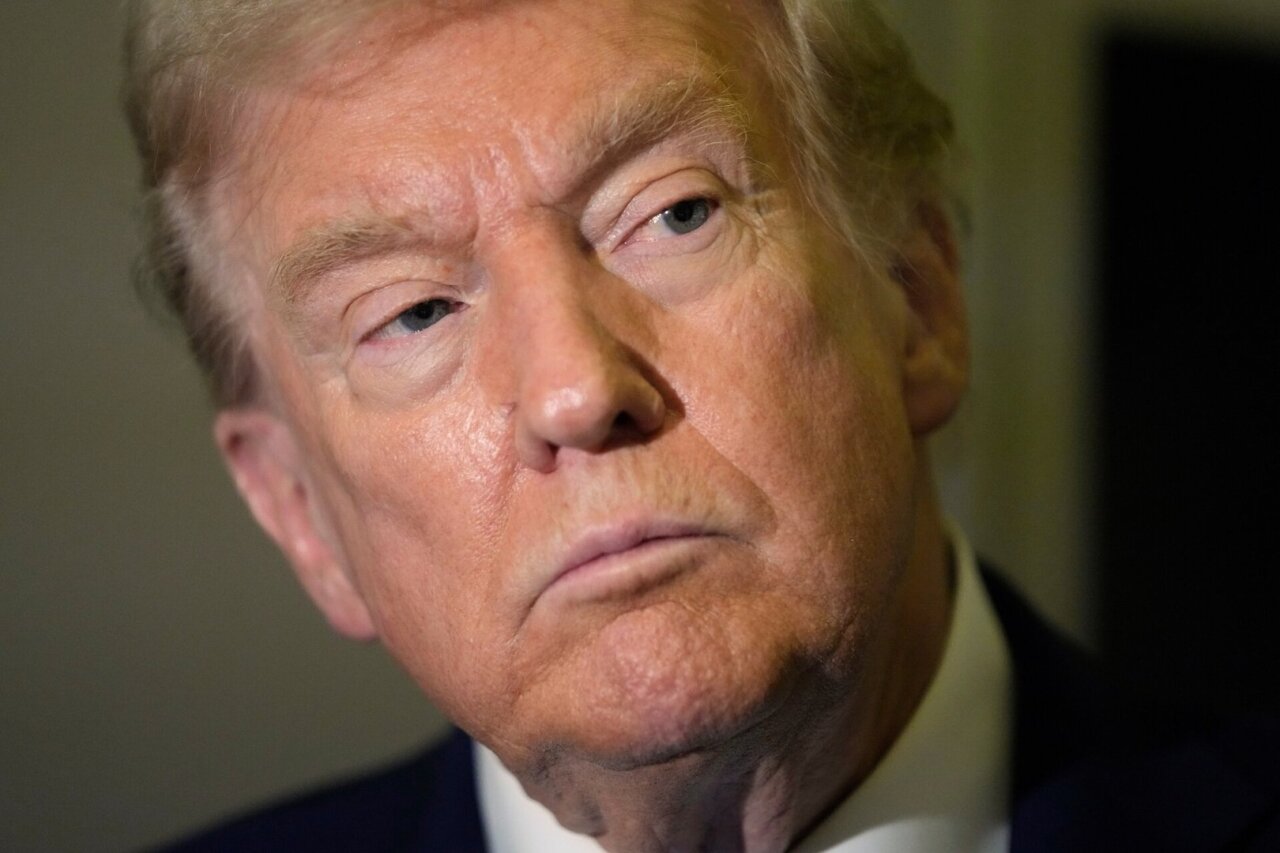
Occurred October 20: the Event describes the Trump administration withholding approval for Patriot missiles to Ukraine.
Occurred October 20: the Event describes the Trump administration withholding approval for Patriot missiles to Ukraine.
Footnotes[7]Occurred October 20: Zelensky accused the U.S. government of delaying paid Patriot deliveries.
Occurred October 20: Zelensky accused the U.S. government of delaying paid Patriot deliveries.
Footnotes[11]Occurred October 20: Putin proposed trilateral talks with Trump and Xi.
Occurred October 20: Putin proposed trilateral talks with Trump and Xi.
Footnotes[12]Evidenced relationships involving significant participants beyond the central cast.
The Event identifies Peskov as its source actor; the target is described as U.S. negotiators without a linked Entity.
This edition freezes the complete served membership and analysis available through its UTC cutoff. Later repairs or identity changes do not rewrite what this edition showed.
Stories are reporting clusters. Events are coded occurrences within that reporting. The cast contains 135 canonical people and organizations linked to the retained evidence.
Story-to-Event edges identify supporting reporting. Entity-to-Event edges identify recorded actor or target participation. Mentions and analytical roles stay visibly distinct from recorded participation.
Core, precursor, and continuation labels organize the reading. They do not by themselves establish causation. Collapsed graph groups and paginated evidence change presentation only; counts use the complete retained edition.