
Significance
6 measured / 6 eligible · 0 missing · 0 not applicable
score (0 to 1) · Event-level distribution, not a Situation risk score.
across all 6 events
On 14 September 2026, an Event attributes firing a flare at a Danish Armed Forces helicopter to the Russian Navy; “Russian frigate fires flares at Danish military helicopter” reported the incident that day. [citation omitted] The Event reports zero fatalities, while the 15 September headline “Russian frigate fires flares at Danish military helicopter off Gedser” places the incident off Gedser. [citation omitted] On 15 September, Danish political parties backed the Danish government over the helicopter case, and Andrii Sybiha urged European countries to close Russian diplomatic footholds. [citation omitted] On 17 September, “Russia honors commander who fired flares at Danish helicopter” reported an honors follow-up. [citation omitted] On 19 September, Denmark allocated a $275 million military-aid package to Ukraine; the 18 September headlines had described aid as increased or accelerated after the incident. [citation omitted]
Footnotes[10][8][7][12][9][6][11][3][4][5]The flare Event identifies the Russian Navy as actor and the Danish Armed Forces as target, but its confidence is 0.38 and its “Shelling/artillery/missile attack” subcategory does not match the flare wording in the headlines. [citation omitted] The aid headlines frame the package as following the incident, but the 19 September Event establishes Denmark’s allocation to Ukraine, not that the flare incident caused it. [citation omitted] The headlines give different descriptions of the package—$275 million, $276 million and DKK 1.8 billion—and do not reconcile those amounts. [citation omitted] Germany’s National Security Council reviewing the Leipzig drone incident is a distinct Event linked to the Gedser headline; that link does not make the Leipzig review part of the helicopter incident. [citation omitted]
Footnotes[10][8][7][11][3][4][5][13]Explanation originally captured 2026-10-30 · Evidence through 2026-10-31 UTC · Source edition sed_4dbf4be68b4721b6db09c8ea1709aee9
A 7-day Situation represented by 6 coded Events carried across 14 member Stories.
The coded activity is led by 01 · Make Public Statement (1) and 02 · Appeal (1).
Russian Navy is prominent in the retained actor and relationship evidence.
57 canonical Entities are linked to this edition.
Metric coverage. 6 coded Events · 5 CAMEO+ · 1 conflict. The four dimensions describe the CAMEO+ subset; conflict Events do not carry these scores.
Dot = mean · shaded span = observed range · position uses each metric’s defined scale.
How the coder scored the full retained Event set
6 coded events — 5 CAMEO+ (4 political) · 1 conflict
Quad class over those 5 events · Verbal Cooperation 4 · Material Conflict 1. 1 sit outside POLITICAL, where Goldstein and quad class are undefined. The four CAMEO+ scores are over the 5 CAMEO+ events only; the 1 conflict events have no such column.
6 measured / 6 eligible · 0 missing · 0 not applicable
score (0 to 1) · Event-level distribution, not a Situation risk score.
across all 6 events
5 measured / 5 eligible · 0 missing · 1 not applicable
score (0 to 10) · Event-level distribution, not a Situation risk score.
across the 5 of 6 events coded in the CAMEO+ family; the conflict family has no such column
5 measured / 5 eligible · 0 missing · 1 not applicable
score (0 to 1) · Event-level distribution, not a Situation risk score.
across the 5 of 6 events coded in the CAMEO+ family; the conflict family has no such column
5 measured / 5 eligible · 0 missing · 1 not applicable
score (0 to 1) · Event-level distribution, not a Situation risk score.
across the 5 of 6 events coded in the CAMEO+ family; the conflict family has no such column
5 measured / 5 eligible · 0 missing · 1 not applicable
score (0 to 1) · Event-level distribution, not a Situation risk score.
across the 5 of 6 events coded in the CAMEO+ family; the conflict family has no such column
5 measured / 5 eligible · 0 missing · 1 not applicable
score (-10 to 10) · Event-level distribution, not a Situation risk score.
across the 5 of 6 events Goldstein is defined on — CAMEO+ POLITICAL and the conflict family; the other nine CAMEO+ domains have no Goldstein semantics
1 measured / 1 eligible · 0 missing · 5 not applicable
reported people · Reports may overlap; these are Event-level reports, not an additive unique human toll.
across the 1 of 6 events that report a toll — the conflict family only, and never 0 on a CAMEO+ event
6 measured / 6 eligible · 0 missing · 0 not applicable
score (0 to 1) · Event-level distribution, not a Situation risk score.
across all 6 events
This retained edition, independent of graph and page limits. Different dimensions, not a blended risk score; reported tolls may overlap.
2026-09-20analystlatest
Further report on the aid package
“Denmark announces unprecedented $275 million military aid package for Ukraine” is dated 20 September and reports the package.
What kind of event · 6 coded types
over 6 coded events on this edition
Countries · where it happened
Countries · who is acting
Selected from the complete retained edition
The flare Event and the incident headlines establish the central incident; “Russia honors commander who fired flares at Danish helicopter” reports a follow-up.
The 18 September headlines describe aid as increased or accelerated after the incident; the 19 September Event describes Denmark allocating a $275 million package to Ukraine.

Dated 14 September, the Event attributes the flare firing to the Russian Navy and names the Danish Armed Forces as the target; it reports zero fatalities.
Dated 14 September, the Event attributes the flare firing to the Russian Navy and names the Danish Armed Forces as the target; it reports zero fatalities.
Footnotes[10]Dated 15 September, the Event describes Danish political parties backing their government over the helicopter case.
Dated 15 September, the Event describes Danish political parties backing their government over the helicopter case.
Footnotes[12]Dated 15 September, the Event describes Andrii Sybiha urging European countries to close Russian diplomatic footholds.
Dated 15 September, the Event describes Andrii Sybiha urging European countries to close Russian diplomatic footholds.
Footnotes[9]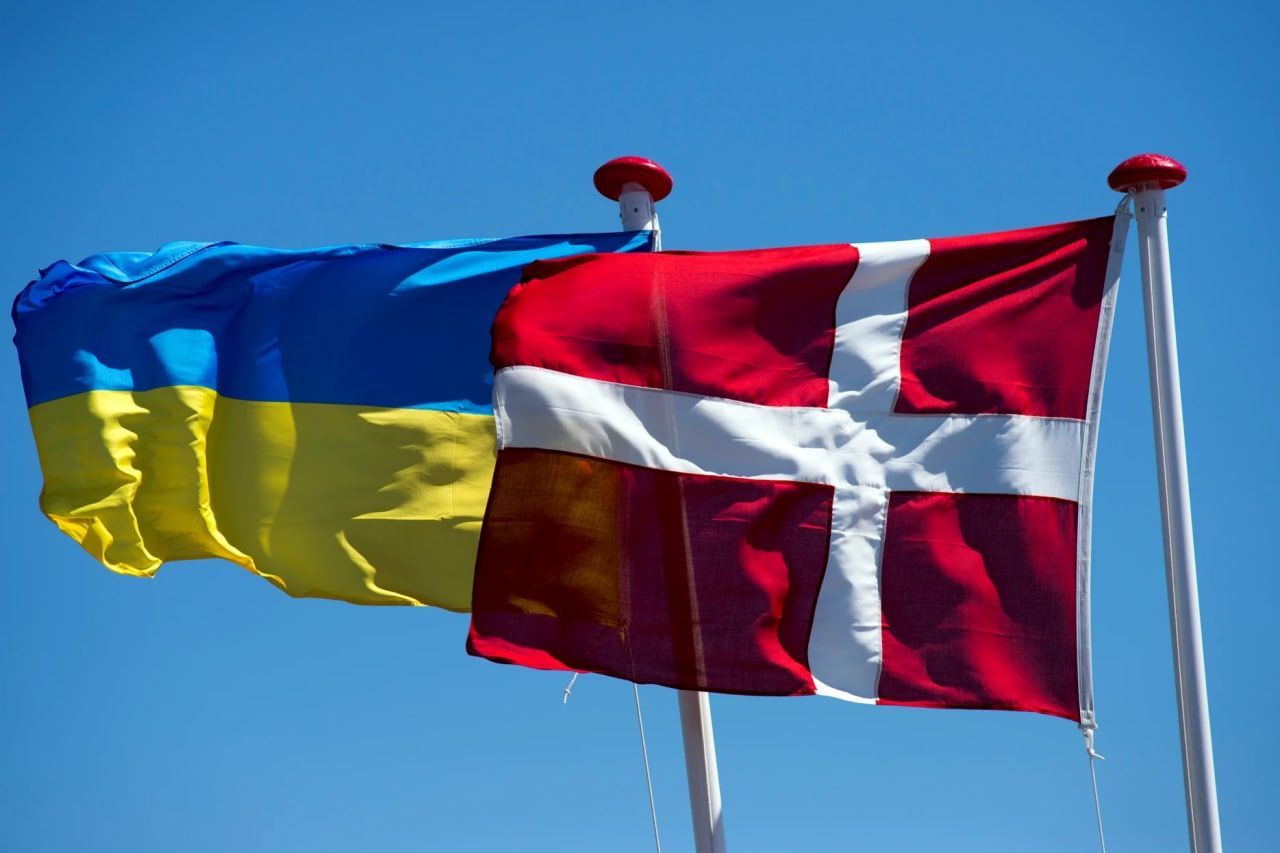
Dated 19 September, the Event describes Denmark allocating a $275 million military-aid package to Ukraine.
Dated 19 September, the Event describes Denmark allocating a $275 million military-aid package to Ukraine.
Footnotes[11]Dated 14 September, this separate Event describes Germany’s National Security Council reviewing the Leipzig drone incident.
Dated 14 September, this separate Event describes Germany’s National Security Council reviewing the Leipzig drone incident.
Footnotes[13]Evidenced relationships involving significant participants beyond the central cast.
The Event lists the headline among its linked Stories.
The duplicate link connects the two headlines.
The Event links to the 19 September aid headline.
The Event describes the Leipzig incident while linking to the Gedser headline.
This edition freezes the complete served membership and analysis available through its UTC cutoff. Later repairs or identity changes do not rewrite what this edition showed.
Stories are reporting clusters. Events are coded occurrences within that reporting. The cast contains 57 canonical people and organizations linked to the retained evidence.
Story-to-Event edges identify supporting reporting. Entity-to-Event edges identify recorded actor or target participation. Mentions and analytical roles stay visibly distinct from recorded participation.
Core, precursor, and continuation labels organize the reading. They do not by themselves establish causation. Collapsed graph groups and paginated evidence change presentation only; counts use the complete retained edition.