
Significance
9 measured / 9 eligible · 0 missing · 0 not applicable
score (0 to 1) · Event-level distribution, not a Situation risk score.
across all 9 events
On September 14, the United States Space Force revealed orbital-control weapons, while Troy Meink separately acknowledged U.S. orbital weapons; that day’s headline was “US Space Force reveals deployment of space control weapons in orbit.” (The event and headline describe the disclosure, while the acknowledgment is separately dated and separately attributed.) On September 15, Russia demanded weapons-free outer space from the United States; the September 16 headline “China defends peaceful space use after US acknowledges orbital weapons” is linked to that demand but does not establish that China made it. On September 16, Sergei Ryabkov criticized the United States over its space-weapons notification, and Gen. Dan Caine said U.S. troops must prepare for lunar combat. China denounced the militarization of outer space on September 17, while a separate September 17 event describes Caine warning that the United States must prepare for lunar conflict. The Government of Russia rejected U.S. plans on September 19, and the Russian-government event dated September 20 describes criticism; the linked September 20 headline instead says Russia “rejects” the plans.
Footnotes[15][22][14][17][11][19][23][21][16][18][20][6]The central distinction is between the Space Force’s revelation and Meink’s acknowledgment, Russia’s and China’s diplomatic statements, and Caine’s remarks about preparation for possible lunar conflict. The Space Force event is classified as political and assigned the Material Conflict quad class, while the retained event classifications also include verbal conflict and verbal cooperation; these labels do not establish that fighting took place. Caine’s statements concern preparation or warning, not combat that occurred. The September 20 Russia headline and its linked event differ in wording: the headline says “rejects,” while the event describes criticism; the separate September 19 event describes rejection. The October 3 headline, “US confirms it has weapons in orbit as Russia refuses to acknowledge them,” reports a Russian refusal but has no linked Event, so it does not resolve the separate Russian statements or independently establish the weapons’ capabilities.
Footnotes[15][22][17][19][23][16][21][18][20][6][1][27]Explanation originally captured 2026-10-31 · Evidence through 2026-11-01 UTC · Source edition sed_a8b9c80c1bcec8d16c4b15619083d06e
A 20-day Situation represented by 9 coded Events carried across 26 member Stories.
The coded activity is led by 111 · Criticize or Denounce (3) and 01 · Make Public Statement (1).
United States Space Force, Troy Meink, and Sergei Ryabkov are prominent in the retained actor and relationship evidence.
68 canonical Entities are linked to this edition.
Metric coverage. 9 coded Events · 9 CAMEO+ · 0 conflict. The four dimensions describe the CAMEO+ subset; conflict Events do not carry these scores.
Dot = mean · shaded span = observed range · position uses each metric’s defined scale.
How the coder scored the full retained Event set
9 coded events — 9 CAMEO+ (9 political)
Quad class over those 9 events · Verbal Conflict 6 · Verbal Cooperation 2 · Material Conflict 1. No conflict-family event here, so nothing carries a fatality count — a missing column, not a toll of zero.
9 measured / 9 eligible · 0 missing · 0 not applicable
score (0 to 1) · Event-level distribution, not a Situation risk score.
across all 9 events
9 measured / 9 eligible · 0 missing · 0 not applicable
score (0 to 10) · Event-level distribution, not a Situation risk score.
across all 9 events — every one of them CAMEO+
9 measured / 9 eligible · 0 missing · 0 not applicable
score (0 to 1) · Event-level distribution, not a Situation risk score.
across all 9 events — every one of them CAMEO+
9 measured / 9 eligible · 0 missing · 0 not applicable
score (0 to 1) · Event-level distribution, not a Situation risk score.
across all 9 events — every one of them CAMEO+
9 measured / 9 eligible · 0 missing · 0 not applicable
score (0 to 1) · Event-level distribution, not a Situation risk score.
across all 9 events — every one of them CAMEO+
9 measured / 9 eligible · 0 missing · 0 not applicable
score (-10 to 10) · Event-level distribution, not a Situation risk score.
across the 9 of 9 events Goldstein is defined on — CAMEO+ POLITICAL and the conflict family; the other nine CAMEO+ domains have no Goldstein semantics
9 measured / 9 eligible · 0 missing · 0 not applicable
score (0 to 1) · Event-level distribution, not a Situation risk score.
across all 9 events
This retained edition, independent of graph and page limits. Different dimensions, not a blended risk score; reported tolls may overlap.
2026-10-03from the recordslatest
US confirms it has weapons in orbit as Russia refuses to acknowledge them
1 Story and 0 coded Events (0 / 0 against the day before). Widest coverage: US confirms it has weapons in orbit as Russia refuses to acknowledge them (1 articles).
What kind of event · 7 coded types
over 9 coded events on this edition
Countries · where it happened
Countries · who is acting
Selected from the complete retained edition
The Space Force revelation and Meink acknowledgment are distinct events dated September 14. The related headlines include “US Space Force reveals deployment of space control weapons in orbit,” “US reveals deployment of space control weapons in orbit,” and “US acknowledges orbital weapons in landmark space warfare shift”; later coverage includes “US military publicly acknowledges weapons stationed in space” and the October 3 headline about Russia refusing to acknowledge the weapons.
The Space Force revelation and Meink acknowledgment are distinct events dated September 14. The related headlines include “US Space Force reveals deployment of space control weapons in orbit,” “US reveals deployment of space control weapons in orbit,” and “US acknowledges orbital weapons in landmark space warfare shift”; later coverage includes “US military publicly acknowledges weapons stationed in space” and the October 3 headline about Russia refusing to acknowledge the weapons.
Footnotes[15][22][14][12][13][4][1]Russia demanded weapons-free outer space, Sergei Ryabkov criticized the United States, China denounced outer-space militarization, and the Government of Russia separately rejected U.S. plans. The China-focused headline linked to Russia’s demand does not establish China as the speaker of that demand; the September 20 Russia headline also differs from its linked Event’s description of criticism.
Russia demanded weapons-free outer space, Sergei Ryabkov criticized the United States, China denounced outer-space militarization, and the Government of Russia separately rejected U.S. plans. The China-focused headline linked to Russia’s demand does not establish China as the speaker of that demand; the September 20 Russia headline also differs from its linked Event’s description of criticism.
Footnotes[17][19][21][18][20][11][8][6]Gen. Dan Caine’s statements concern preparation for possible lunar conflict, not combat that occurred. Related headlines include “US military prepares for potential combat in cislunar space” and “Trump adviser urges US military to prepare for warfare near the Moon.”

On September 14, the United States Space Force revealed orbital-control weapons.
On September 14, the United States Space Force revealed orbital-control weapons.
Footnotes[15]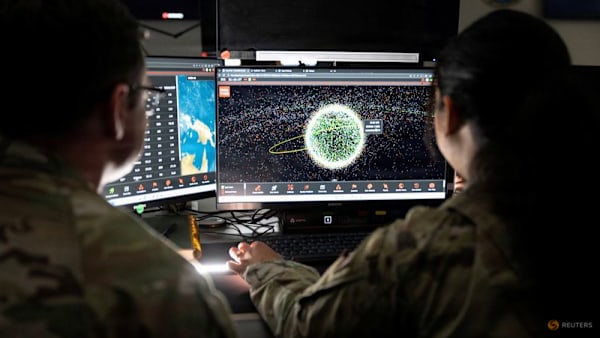
On September 14, Troy Meink acknowledged U.S. orbital weapons.
On September 14, Troy Meink acknowledged U.S. orbital weapons.
Footnotes[22]
On September 15, Russia demanded weapons-free outer space from the United States.
On September 15, Russia demanded weapons-free outer space from the United States.
Footnotes[17]On September 16, Sergei Ryabkov criticized the United States over its space-weapons notification.
On September 16, Sergei Ryabkov criticized the United States over its space-weapons notification.
Footnotes[19]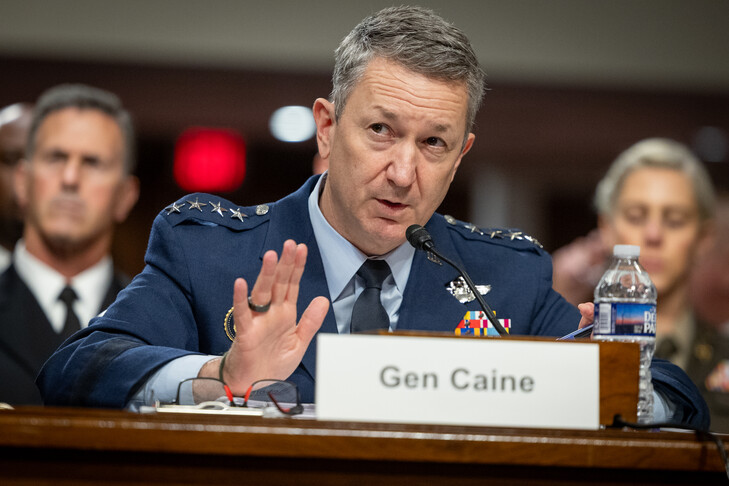
On September 16, Gen. Dan Caine said U.S. troops must prepare for lunar combat.
On September 16, Gen. Dan Caine said U.S. troops must prepare for lunar combat.
Footnotes[23]Evidenced relationships involving significant participants beyond the central cast.
The Event names the United States Space Force as its source actor.
The Event links Russia’s demand to this Story; the headline does not establish that China made the demand.
This edition freezes the complete served membership and analysis available through its UTC cutoff. Later repairs or identity changes do not rewrite what this edition showed.
Stories are reporting clusters. Events are coded occurrences within that reporting. The cast contains 68 canonical people and organizations linked to the retained evidence.
Story-to-Event edges identify supporting reporting. Entity-to-Event edges identify recorded actor or target participation. Mentions and analytical roles stay visibly distinct from recorded participation.
Core, precursor, and continuation labels organize the reading. They do not by themselves establish causation. Collapsed graph groups and paginated evidence change presentation only; counts use the complete retained edition.