
Significance
155 measured / 155 eligible · 0 missing · 0 not applicable
score (0 to 1) · Event-level distribution, not a Situation risk score.
across all 155 events
SituationDR Congo +21
On 28 October, Nigeria reported its first Ebola case in more than a decade, while the CDC introduced Ebola travel attestations for U.S.-bound travelers with travel history in the Democratic Republic of the Congo; both developments are reflected in the dated timeline. On 29 October, DRC health authorities reported that the last patient had left an Ebola treatment centre. On 14 November, the Allied Democratic Forces killed civilians in Mambasa, according to the coded event, while the African Union warned that the DRC crisis could spread continentally. On 15 November, Médecins Sans Frontières (MSF) warned that the outbreak remained uncontrolled in “MSF warns Ebola outbreak remains uncontrolled amid response failures,” and Africa CDC gave a similar assessment on 16 November in “Africa CDC says Ebola outbreak remains uncontrolled in the Democratic Republic of the Congo.” On 18 November, WHO maintained the international emergency over the outbreak, and UN Women mobilized private-sector support, as described in “UN Women mobilizes private sector to strengthen Ebola response in DR Congo.” On 20 November, MSF relocated Bunyakiri hospital activities amid clashes, as reported in “MSF relocates Ebola hospital activities amid army clashes in South Kivu.”
Footnotes[8][9][13][14][15][17][18][5][4][2][1][6]The dated developments bring together outbreak-status warnings, regional and international response measures, and security disruptions affecting health operations. Nigeria’s reported case on 28 October and DRC health authorities’ report that the last patient had left a treatment centre on 29 October describe different places and measures; neither establishes that the outbreak had ended across the DRC or the region. MSF and Africa CDC’s uncontrolled-outbreak assessments are separate statements, not evidence of coordination. The UN warning about Djugu, the attack in Mambasa, the Durba attack on response workers, and MSF’s hospital relocation describe distinct events; they do not establish that any one of them caused outbreak growth or response failures. Since the prior edition, the account extends through 22 November and includes the late-November reporting and coded events, including the WHO emergency decision and MSF relocation; the 22 November packet contains Stories but no coded Events.
Footnotes[8][9][11][13][16][17][18][19][5][4][1]Explanation originally captured 2026-11-23 · Evidence through 2026-11-23 UTC · Source edition sed_d07d357e6b2496f1b116e9853805ef01
A 57-day Situation represented by 155 coded Events carried across 482 member Stories.
The coded activity is led by HE04 · Outbreak Control or Public Health Measure (61) and HE01 · Disease Outbreak (46).
Africa Centres for Disease Control and Prevention, Nigeria Centre for Disease Control, and United Nations are prominent in the retained actor and relationship evidence.
612 canonical Entities are linked to this edition.
Metric coverage. 155 coded Events · 150 CAMEO+ · 5 conflict. The four dimensions describe the CAMEO+ subset; conflict Events do not carry these scores.
Dot = mean · shaded span = observed range · position uses each metric’s defined scale.
How the coder scored the full retained Event set
155 coded events — 150 CAMEO+ (27 political) · 5 conflict
Quad class over those 32 events · Verbal Cooperation 18 · Verbal Conflict 6 · Material Conflict 5 · Material Cooperation 3. 123 sit outside POLITICAL, where Goldstein and quad class are undefined. The four CAMEO+ scores are over the 150 CAMEO+ events only; the 5 conflict events have no such column.
155 measured / 155 eligible · 0 missing · 0 not applicable
score (0 to 1) · Event-level distribution, not a Situation risk score.
across all 155 events
150 measured / 150 eligible · 0 missing · 5 not applicable
score (0 to 10) · Event-level distribution, not a Situation risk score.
across the 150 of 155 events coded in the CAMEO+ family; the conflict family has no such column
150 measured / 150 eligible · 0 missing · 5 not applicable
score (0 to 1) · Event-level distribution, not a Situation risk score.
across the 150 of 155 events coded in the CAMEO+ family; the conflict family has no such column
150 measured / 150 eligible · 0 missing · 5 not applicable
score (0 to 1) · Event-level distribution, not a Situation risk score.
across the 150 of 155 events coded in the CAMEO+ family; the conflict family has no such column
150 measured / 150 eligible · 0 missing · 5 not applicable
score (0 to 1) · Event-level distribution, not a Situation risk score.
across the 150 of 155 events coded in the CAMEO+ family; the conflict family has no such column
32 measured / 32 eligible · 0 missing · 123 not applicable
score (-10 to 10) · Event-level distribution, not a Situation risk score.
across the 32 of 155 events Goldstein is defined on — CAMEO+ POLITICAL and the conflict family; the other nine CAMEO+ domains have no Goldstein semantics
5 measured / 5 eligible · 0 missing · 150 not applicable
reported people · Reports may overlap; these are Event-level reports, not an additive unique human toll.
across the 5 of 155 events that report a toll — the conflict family only, and never 0 on a CAMEO+ event
155 measured / 155 eligible · 0 missing · 0 not applicable
score (0 to 1) · Event-level distribution, not a Situation risk score.
across all 155 events
This retained edition, independent of graph and page limits. Different dimensions, not a blended risk score; reported tolls may overlap.
2026-11-23from the recordslatest
WHO calls for peace in Ebola-hit Democratic Republic of the Congo
3 Stories and 0 coded Events (0 / -1 against the day before). Widest coverage: WHO calls for peace in Ebola-hit Democratic Republic of the Congo (15 articles).
What kind of event · 25 coded types
over 155 coded events on this edition
Countries · where it happened
Countries · who is acting
Selected from the complete retained edition
MSF and Africa CDC described the outbreak as uncontrolled; the United Nations warned that violence threatened the response, and MSF later relocated hospital activities amid clashes. These events establish concurrent outbreak concerns and operational disruption, not that violence caused the outbreak’s status.
MSF and Africa CDC described the outbreak as uncontrolled; the United Nations warned that violence threatened the response, and MSF later relocated hospital activities amid clashes. These events establish concurrent outbreak concerns and operational disruption, not that violence caused the outbreak’s status.
Footnotes[11][14][15][18][5][4][1]The CDC introduced travel attestations for U.S.-bound travelers with DRC travel history, and airline groups urged the CDC to reconsider its rules.
Recorded as actor and target in 6 coded Events, including Africa CDC calls for tracking of Ebola response funding.
Recorded as actor and target in 6 coded Events, including Africa CDC calls for tracking of Ebola response funding.
Footnotes[?][?][?][?][?]Recorded as actor in 7 coded Events, including Nigeria's NCDC heightens Ebola vigilance after Kenya case.
Recorded as actor in 7 coded Events, including Nigeria's NCDC heightens Ebola vigilance after Kenya case.
Footnotes[?][?][?][?][?]Recorded as actor in 1 coded Event, including United Nations warns violence threatens Ebola response in Djugu.
Recorded as actor in 1 coded Event, including United Nations warns violence threatens Ebola response in Djugu.
Footnotes[?]Recorded as actor in 3 coded Events, including Aden Duale introduces Kenya's Ebola control rules.
Recorded as actor in 3 coded Events, including Aden Duale introduces Kenya's Ebola control rules.
Footnotes[?][?][?]Recorded as actor in 1 coded Event, including African Union warns Ebola crisis in DR Congo may spread continentally.
Recorded as actor in 1 coded Event, including African Union warns Ebola crisis in DR Congo may spread continentally.
Footnotes[?]
2026-11-15 · HEALTH
2026-11-15 · HEALTH
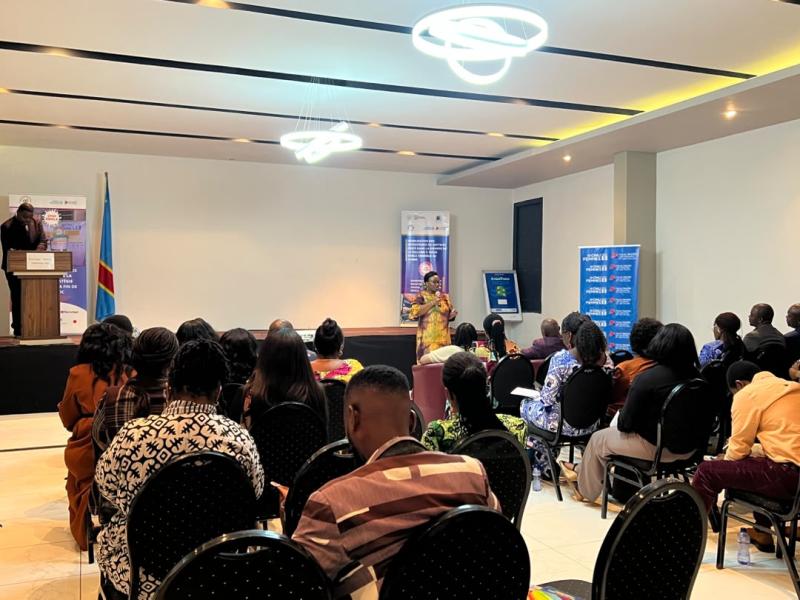
2026-11-18 · POLITICAL
2026-11-18 · POLITICAL

2026-11-20 · HEALTH
2026-11-20 · HEALTH
2026-11-14 · POLITICAL
2026-11-14 · POLITICAL
Evidenced relationships involving significant participants beyond the central cast.
The Stories report separate assessments on 15 and 16 November; this connection does not establish coordination.
The Stories describe different response developments; they do not establish a direct link between mobilization and relocation.
This edition freezes the complete served membership and analysis available through its UTC cutoff. Later repairs or identity changes do not rewrite what this edition showed.
Stories are reporting clusters. Events are coded occurrences within that reporting. The cast contains 612 canonical people and organizations linked to the retained evidence.
Story-to-Event edges identify supporting reporting. Entity-to-Event edges identify recorded actor or target participation. Mentions and analytical roles stay visibly distinct from recorded participation.
Core, precursor, and continuation labels organize the reading. They do not by themselves establish causation. Collapsed graph groups and paginated evidence change presentation only; counts use the complete retained edition.