
Significance
29 measured / 29 eligible · 0 missing · 0 not applicable
score (0 to 1) · Event-level distribution, not a Situation risk score.
across all 29 events
On 11 October, the European Commission warned the Irish presidency about proposed EU budget cuts; the next day, “EU leaders face budget deadlock as Germany leads revolt over spending plan” and “European Commission warns Ireland's budget cuts weaken the EU” described the dispute. On 13 October, Spain rejected Ireland’s proposed cuts, while France warned it might withhold support for the next EU budget; “Ireland says no EU country has rejected budget proposal ahead of summit” reported Ireland’s position. On 14 October, the European Parliament rejected the Irish Presidency proposal as a basis for a deal, and Friedrich Merz called for cuts across the EU budget. At the 15 October Brussels summit, the European Council rejected the Commission’s seven-year budget proposals and Ireland’s €140 billion proposal, while Merz demanded cuts; “EU leaders open intense budget negotiations at Brussels summit” covered the summit. On 18 October, the German federal government rejected the Irish compromise, and on 19 October EU leaders left the summit without an agreement. Stories published on 20 October reported that Merz and Emmanuel Macron agreed to advance a compromise, Ireland proposed a €159 billion cut, the EU said it needed €70 billion to fund Ukraine in 2027, and Belgian Prime Minister Bart De Wever rejected an EU asset-transfer plan. On 21 October, António Costa took over talks on the long‑
Footnotes[29][16][15][22][19][13][27][35][21][18][17][9]The budget dispute is defined by opposed positions on spending cuts, revenue and Ireland’s proposals, followed by explicit rejections and the 19 October summit’s failure to reach an agreement. Ireland’s reported pre-summit statement that no EU country had rejected its proposal sits uneasily beside Spain’s rejection; the cited accounts do not establish whether Ireland meant the same proposal terms or scope. The European Council’s rejection of a €140 billion proposal and Ireland’s later €159 billion proposal are distinct reported amounts, not evidence of one unchanged proposal. The 20 October account of a Merz–Macron compromise effort does not establish an agreed budget. Ukraine financing and De Wever’s objection concern a related funding issue, but do not establish a resolution of the long-term budget dispute.
Footnotes[26][7][13][22][18][5][4][3][25]Explanation originally captured 2026-10-22 · Evidence through 2026-10-23 UTC · Source edition sed_18836a9e7f18b38cd27c359fbc35e237
A 12-day Situation represented by 29 coded Events carried across 32 member Stories.
The coded activity is led by 12 · Reject (6) and 111 · Criticize or Denounce (5).
European Commission, European Council, and European Union are prominent in the retained actor and relationship evidence.
41 canonical Entities are linked to this edition.
Metric coverage. 29 coded Events · 29 CAMEO+ · 0 conflict. The four dimensions describe the CAMEO+ subset; conflict Events do not carry these scores.
Dot = mean · shaded span = observed range · position uses each metric’s defined scale.
How the coder scored the full retained Event set
29 coded events — 29 CAMEO+ (28 political)
Quad class over those 28 events · Verbal Conflict 16 · Verbal Cooperation 12. No conflict-family event here, so nothing carries a fatality count — a missing column, not a toll of zero. 1 sit outside POLITICAL, where Goldstein and quad class are undefined.
29 measured / 29 eligible · 0 missing · 0 not applicable
score (0 to 1) · Event-level distribution, not a Situation risk score.
across all 29 events
29 measured / 29 eligible · 0 missing · 0 not applicable
score (0 to 10) · Event-level distribution, not a Situation risk score.
across all 29 events — every one of them CAMEO+
29 measured / 29 eligible · 0 missing · 0 not applicable
score (0 to 1) · Event-level distribution, not a Situation risk score.
across all 29 events — every one of them CAMEO+
29 measured / 29 eligible · 0 missing · 0 not applicable
score (0 to 1) · Event-level distribution, not a Situation risk score.
across all 29 events — every one of them CAMEO+
29 measured / 29 eligible · 0 missing · 0 not applicable
score (0 to 1) · Event-level distribution, not a Situation risk score.
across all 29 events — every one of them CAMEO+
28 measured / 28 eligible · 0 missing · 1 not applicable
score (-10 to 10) · Event-level distribution, not a Situation risk score.
across the 28 of 29 events Goldstein is defined on — CAMEO+ POLITICAL and the conflict family; the other nine CAMEO+ domains have no Goldstein semantics
29 measured / 29 eligible · 0 missing · 0 not applicable
score (0 to 1) · Event-level distribution, not a Situation risk score.
across all 29 events
This retained edition, independent of graph and page limits. Different dimensions, not a blended risk score; reported tolls may overlap.
2026-10-22from the recordslatest
EU prepares new taxes, with new levies potentially starting in 2028
1 Story and 0 coded Events (-2 / -2 against the day before). Widest coverage: EU prepares new taxes, with new levies potentially starting in 2028 (1 articles).
What kind of event · 15 coded types
over 29 coded events on this edition
Countries · where it happened
Countries · who is acting
Selected from the complete retained edition
The thread links Ireland’s proposals to institutional and national objections, summit rejections, the reported absence of an agreement, and subsequent compromise and tax discussions.
Coverage described a stated €70 billion need to fund Ukraine in 2027 and De Wever’s rejection of an EU asset-transfer plan.
The European Commission warned the Irish presidency over proposed cuts and was the target of the European Council’s rejection of its seven-year budget proposals.
The European Council opened the Brussels summit and rejected the Commission’s seven-year proposals and Ireland’s €140 billion proposal.
The European Union was identified as the actor in the Event describing leaders leaving the summit without a budget agreement and in the appeal for Ukraine funding.
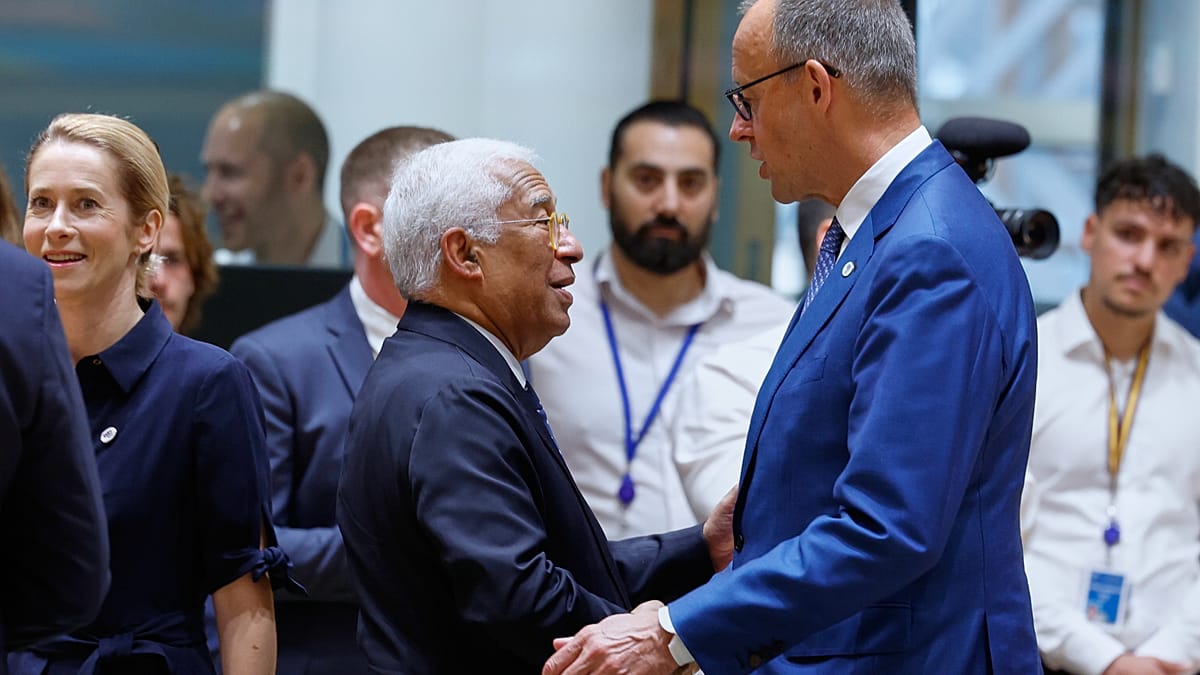
On 11 October, the European Commission warned the Irish presidency over proposed EU budget cuts.
On 11 October, the European Commission warned the Irish presidency over proposed EU budget cuts.
Footnotes[29]
On 13 October, Spain rejected Ireland’s proposed cuts to the EU budget.
On 13 October, Spain rejected Ireland’s proposed cuts to the EU budget.
Footnotes[22]
On 13 October, France warned it might withhold support for the next EU budget.
On 13 October, France warned it might withhold support for the next EU budget.
Footnotes[19]
On 14 October, the European Parliament rejected the Irish Presidency proposal as a basis for a deal.
Evidenced relationships involving significant participants beyond the central cast.
The Event identifies the European Council as actor.
The Event identifies the European Commission as target.
The Event identifies the European Parliament as actor.
This edition freezes the complete served membership and analysis available through its UTC cutoff. Later repairs or identity changes do not rewrite what this edition showed.
Stories are reporting clusters. Events are coded occurrences within that reporting. The cast contains 41 canonical people and organizations linked to the retained evidence.
Story-to-Event edges identify supporting reporting. Entity-to-Event edges identify recorded actor or target participation. Mentions and analytical roles stay visibly distinct from recorded participation.
Core, precursor, and continuation labels organize the reading. They do not by themselves establish causation. Collapsed graph groups and paginated evidence change presentation only; counts use the complete retained edition.