
Significance
91 measured / 91 eligible · 0 missing · 0 not applicable
score (0 to 1) · Event-level distribution, not a Situation risk score.
across all 91 events
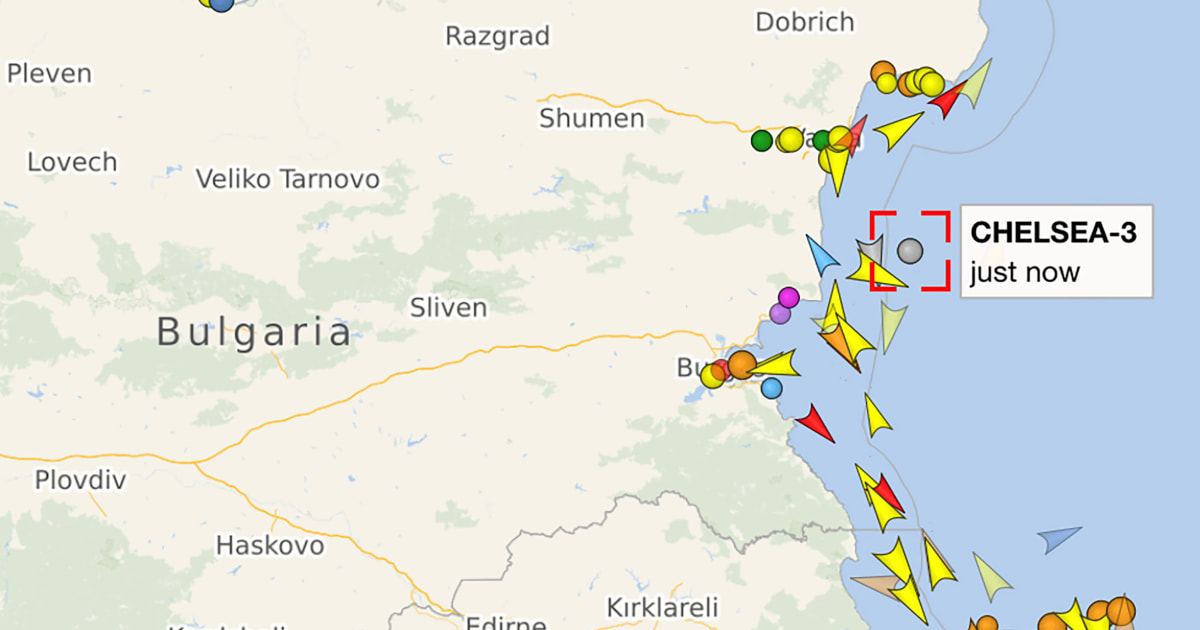
On 5 October, an unidentified drone operator struck a Turkish grain ship near the Pescarus offshore platform; the Event reports two fatalities, while “Drone strike sinks Turkish cargo ship off Romania, killing two sailors” reported the incident the next day. On 6 October, “Drone strikes sink one ship and hit another off Bulgaria’s Black Sea coast” described attacks on two vessels, and Rumen Radev said the drone origins remained unclear; the related Events differ in location and vessel descriptions. On 7 October, an Event attributed a drone strike on a Turkish-owned cargo ship to Russian forces, but Radev said on 9 October that evidence did not identify who struck the ships. Bulgaria asked the EU and NATO to help investigate on 13 October, and “Bulgaria seeks EU and NATO help probing drone attacks on two Black Sea ships” also accompanied Radev’s discussion of drone defenses with Romania’s prime minister. Turkey proposed Black Sea shipping corridors on 9 October. Romania’s joint-command proposal was reported on 18 October, though Romanian records date proposals to 14 and 15 October. On 21 October, NATO announced additional patrol aircraft and drones, and “NATO boosts Black Sea surveillance after Russian drone attacks on commercial ships” described the alliance’s surveillance response.
Footnotes[27][24][23][28][55][22][36][54][19][48][34][14]The shipping attacks and the responses by Bulgaria, Romania, Turkey and NATO form the central thread, but the vessel descriptions, locations and casualty accounts do not establish that all reports concern the same incidents. Attribution remains unsettled: an Event attributes one strike to Russian forces; Radev said the evidence did not identify who struck the ships; Bulgaria accused Russia on 13 October; and Maria Zakharova said no country was linked to the attacks. The EU/NATO investigative appeals, Turkey’s proposed corridors and Romania’s proposed joint command establish requests or proposals, not implementation. Later records describe actual patrol activity and NATO’s announcement of additional patrol aircraft and drones, but those actions do not establish responsibility for the earlier attacks. The reported tolls remain incident-specific: the 5 October Event reports two fatalities, the 13 October Event reports 12 injuries, and the 16 October Sulina Event reports two injuries. The seven missing sailors reported in “Drones hit four ships in Romanian Black Sea waters, seven sailors missing” are not established as a separate or additive toll.
Footnotes[27][23][28][36][54][53][48][43][6][2][26][39]Explanation originally captured 2026-10-22 · Evidence through 2026-10-23 UTC · Source edition sed_1a1fc9f4ab8cabd42f3417c7aa92ab56
A 19-day Situation represented by 91 coded Events carried across 130 member Stories.
The coded activity is led by AIR/DRONE STRIKE (11) and 01 · Make Public Statement (10).
Rumen Radev, NATO, and European Union are prominent in the retained actor and relationship evidence.
299 canonical Entities are linked to this edition.
Metric coverage. 91 coded Events · 78 CAMEO+ · 13 conflict. The four dimensions describe the CAMEO+ subset; conflict Events do not carry these scores.
Dot = mean · shaded span = observed range · position uses each metric’s defined scale.
How the coder scored the full retained Event set
91 coded events — 78 CAMEO+ (73 political) · 13 conflict
Quad class over those 86 events · Verbal Cooperation 51 · Material Conflict 18 · Verbal Conflict 15 · Material Cooperation 2. 5 sit outside POLITICAL, where Goldstein and quad class are undefined. The four CAMEO+ scores are over the 78 CAMEO+ events only; the 13 conflict events have no such column.
91 measured / 91 eligible · 0 missing · 0 not applicable
score (0 to 1) · Event-level distribution, not a Situation risk score.
across all 91 events
78 measured / 78 eligible · 0 missing · 13 not applicable
score (0 to 10) · Event-level distribution, not a Situation risk score.
across the 78 of 91 events coded in the CAMEO+ family; the conflict family has no such column
78 measured / 78 eligible · 0 missing · 13 not applicable
score (0 to 1) · Event-level distribution, not a Situation risk score.
across the 78 of 91 events coded in the CAMEO+ family; the conflict family has no such column
78 measured / 78 eligible · 0 missing · 13 not applicable
score (0 to 1) · Event-level distribution, not a Situation risk score.
across the 78 of 91 events coded in the CAMEO+ family; the conflict family has no such column
78 measured / 78 eligible · 0 missing · 13 not applicable
score (0 to 1) · Event-level distribution, not a Situation risk score.
across the 78 of 91 events coded in the CAMEO+ family; the conflict family has no such column
86 measured / 86 eligible · 0 missing · 5 not applicable
score (-10 to 10) · Event-level distribution, not a Situation risk score.
across the 86 of 91 events Goldstein is defined on — CAMEO+ POLITICAL and the conflict family; the other nine CAMEO+ domains have no Goldstein semantics
13 measured / 13 eligible · 0 missing · 78 not applicable
reported people · Reports may overlap; these are Event-level reports, not an additive unique human toll.
across the 13 of 91 events that report a toll — the conflict family only, and never 0 on a CAMEO+ event
91 measured / 91 eligible · 0 missing · 0 not applicable
score (0 to 1) · Event-level distribution, not a Situation risk score.
across all 91 events
This retained edition, independent of graph and page limits. Different dimensions, not a blended risk score; reported tolls may overlap.
2026-10-23from the recordslatest
European Parliament urges consideration of an EU naval operation in the Black Sea
2 Stories and 0 coded Events (-6 / -4 against the day before). Widest coverage: European Parliament urges consideration of an EU naval operation in the Black Sea (1 articles).
What kind of event · 36 coded types
over 91 coded events on this edition
Countries · where it happened
Countries · who is acting
Selected from the complete retained edition
The thread includes early reports of attacks on Turkish-owned or Turkish vessels, later reports of strikes off Bulgaria and Romania, and distinct accounts whose locations and vessel details do not establish that they describe one incident.
Bulgarian and Romanian officials sought investigative or security cooperation, Turkey proposed shipping arrangements, and later reports described patrol activity and NATO’s announced surveillance measures.
Rumen Radev said the drone origins remained unclear and later said the evidence did not identify who struck the ships; he also called for attacks on Black Sea ships to stop.
NATO was the target of Bulgaria’s Drone Edge commitment and Radev’s request for increased Black Sea presence; NATO announced additional patrol aircraft and drones on 21 October.
Bulgaria appealed to the European Union for help investigating the ship attacks, including in Events dated 12, 13 and 14 October.

On 5 October, an unidentified drone operator struck a Turkish grain ship near the Pescarus offshore platform; the Event reports two fatalities.
On 5 October, an unidentified drone operator struck a Turkish grain ship near the Pescarus offshore platform; the Event reports two fatalities.
Footnotes[27]
On 6 October, an Event described an unidentified drone operator attacking two merchant ships in Bulgaria’s exclusive economic zone.
An Event dated 7 October attributes a drone strike on a Turkish-owned cargo ship to Russian forces; Radev’s 9 October statement says the evidence did not identify who struck the ships.

Evidenced relationships involving significant participants beyond the central cast.
The Event identifies Bulgaria as the appealing actor and the European Union as the target.
The Event describes Bulgaria expressing intent to provide economic aid to NATO.
The Event identifies Rumen Radev as its source actor.
The Event lists this Story among the Stories supporting it.
The Event and Story are linked; the Event describes imagery provision to Romania.
This edition freezes the complete served membership and analysis available through its UTC cutoff. Later repairs or identity changes do not rewrite what this edition showed.
Stories are reporting clusters. Events are coded occurrences within that reporting. The cast contains 299 canonical people and organizations linked to the retained evidence.
Story-to-Event edges identify supporting reporting. Entity-to-Event edges identify recorded actor or target participation. Mentions and analytical roles stay visibly distinct from recorded participation.
Core, precursor, and continuation labels organize the reading. They do not by themselves establish causation. Collapsed graph groups and paginated evidence change presentation only; counts use the complete retained edition.