
Significance
103 measured / 103 eligible · 0 missing · 0 not applicable
score (0 to 1) · Event-level distribution, not a Situation risk score.
across all 103 events
He Lifeng visited the United States for trade talks on September 19, as “China's He Lifeng leads U.S. trade talks ahead of Xi-Trump meeting” reported; the United States and China launched talks in New York on September 20, as “China's He Lifeng leads delegation to US for trade talks” reported. On September 23, Bessent and He Lifeng negotiated outstanding issues in Washington, as “Bessent and He meet to resolve outstanding issues ahead of Xi summit” reported. Donald Trump hosted Xi Jinping at the White House on September 24, where the leaders called for “healthy” competition, as “Xi and Trump call for 'healthy' competition at White House meeting” reported. The September 25 trade-truce extension was described in September 26 summit coverage as producing “no major breakthroughs”; on September 26 Trump said he discussed Taiwan with Xi, while China’s outcome list omitted Taiwan and Taiwan accused Beijing of distorting facts after the meeting. The United States and China agreed to establish an AI incident hotline, and Taiwan said its arms-sale talks with the United States continued.
Footnotes[42][25][31][24][33][18][37][15][29][8][36][11]The summit produced reported trade understandings and an agreement to establish an AI hotline; later accounts described an incident-communications channel as established, but do not clarify its operational status or show that wider disputes were settled. Trade accounts cite $30 billion, $30 billion per side, $42 billion, $60 billion and an $86 billion low-tariff regime; their scopes are not reconciled, so the figures should not be combined into one definitive value. Trump’s account that Taiwan came up contrasts with its omission from China’s published outcome list; Taiwan’s accusation of distortion does not establish the substance of the private exchange. Taiwan’s continued arms-sale discussions and its October report that it awaited a U.S. decision describe an unresolved matter, not a completed sale.
Footnotes[34][6][5][3][36][69][44][7][35][4][1]Explanation originally captured 2026-11-08 · Evidence through 2026-11-08 UTC · Source edition sed_4199a2f21095e557646a5d0ef7927ea3
A 53-day Situation represented by 103 coded Events carried across 232 member Stories.
The coded activity is led by 01 · Make Public Statement (26) and 046 · Engage in Negotiation (11).
Donald Trump, Xi Jinping, and He Lifeng are prominent in the retained actor and relationship evidence.
318 canonical Entities are linked to this edition.
Metric coverage. 103 coded Events · 100 CAMEO+ · 3 conflict. The four dimensions describe the CAMEO+ subset; conflict Events do not carry these scores.
Dot = mean · shaded span = observed range · position uses each metric’s defined scale.
How the coder scored the full retained Event set
103 coded events — 100 CAMEO+ (97 political) · 3 conflict
Quad class over those 100 events · Verbal Cooperation 87 · Verbal Conflict 10 · Material Conflict 2 · Material Cooperation 1. 3 sit outside POLITICAL, where Goldstein and quad class are undefined. The four CAMEO+ scores are over the 100 CAMEO+ events only; the 3 conflict events have no such column.
103 measured / 103 eligible · 0 missing · 0 not applicable
score (0 to 1) · Event-level distribution, not a Situation risk score.
across all 103 events
100 measured / 100 eligible · 0 missing · 3 not applicable
score (0 to 10) · Event-level distribution, not a Situation risk score.
across the 100 of 103 events coded in the CAMEO+ family; the conflict family has no such column
100 measured / 100 eligible · 0 missing · 3 not applicable
score (0 to 1) · Event-level distribution, not a Situation risk score.
across the 100 of 103 events coded in the CAMEO+ family; the conflict family has no such column
100 measured / 100 eligible · 0 missing · 3 not applicable
score (0 to 1) · Event-level distribution, not a Situation risk score.
across the 100 of 103 events coded in the CAMEO+ family; the conflict family has no such column
100 measured / 100 eligible · 0 missing · 3 not applicable
score (0 to 1) · Event-level distribution, not a Situation risk score.
across the 100 of 103 events coded in the CAMEO+ family; the conflict family has no such column
100 measured / 100 eligible · 0 missing · 3 not applicable
score (-10 to 10) · Event-level distribution, not a Situation risk score.
across the 100 of 103 events Goldstein is defined on — CAMEO+ POLITICAL and the conflict family; the other nine CAMEO+ domains have no Goldstein semantics
3 measured / 3 eligible · 0 missing · 100 not applicable
reported people · Reports may overlap; these are Event-level reports, not an additive unique human toll.
across the 3 of 103 events that report a toll — the conflict family only, and never 0 on a CAMEO+ event
103 measured / 103 eligible · 0 missing · 0 not applicable
score (0 to 1) · Event-level distribution, not a Situation risk score.
across all 103 events
This retained edition, independent of graph and page limits. Different dimensions, not a blended risk score; reported tolls may overlap.
2026-11-08from the recordslatest
He Lifeng holds video call with Bessent and Greer
2 Stories and 1 coded Event (+1 / +1 against the day before). Widest coverage: China's He Lifeng holds video call with US Treasury chief Bessent, trade envoy Greer (6 articles). Recorded acting: He Lifeng.
What kind of event · 37 coded types
over 103 coded events on this edition
Countries · where it happened
Countries · who is acting
Selected from the complete retained edition
He Lifeng’s U.S. trade-talk visit and the Bessent–He negotiations sit alongside the White House summit and reports of a tariff-truce extension. Accounts differ on the reported tariff figures and on whether the visit delivered major breakthroughs.
Trump said Taiwan came up in his discussion with Xi, while the published outcome list omitted Taiwan and Taiwan accused Beijing of distorting facts. Taiwan’s subsequent accounts describe continuing arms discussions and an awaited U.S. decision, not a completed sale.
Trump said Taiwan came up in his discussion with Xi, while the published outcome list omitted Taiwan and Taiwan accused Beijing of distorting facts. Taiwan’s subsequent accounts describe continuing arms discussions and an awaited U.S. decision, not a completed sale.
Footnotes[36][11][69][44][7][35][4][1]The United States proposed an AI incident-alert mechanism before the summit; later accounts described an agreement to establish a hotline. The agreement does not establish that the channel became operational.

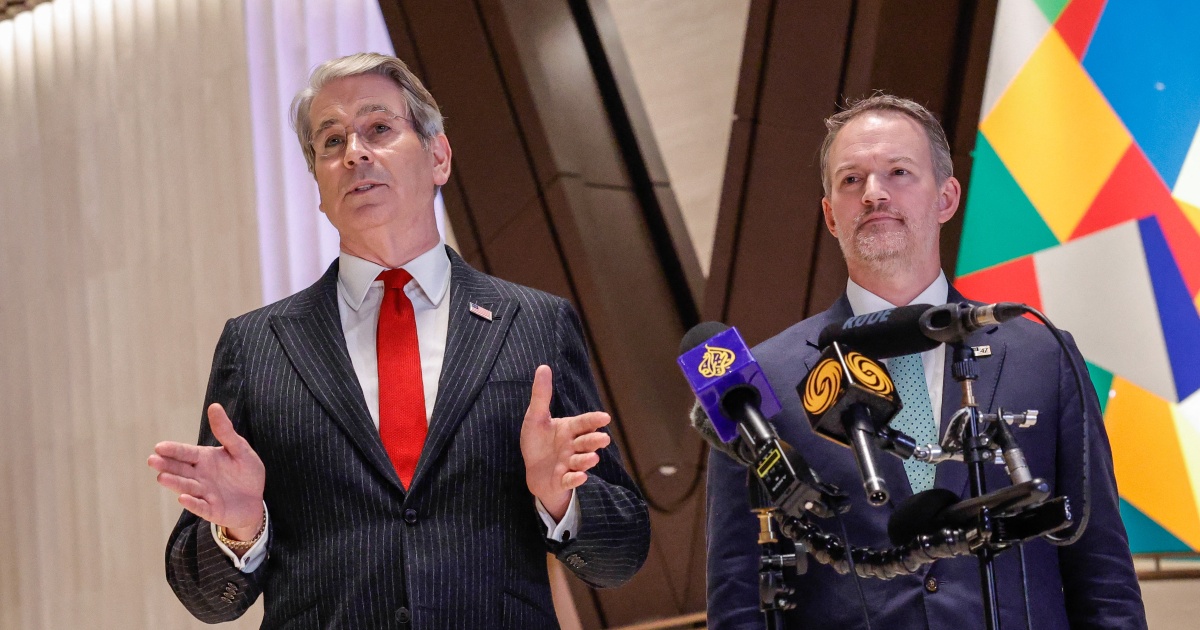
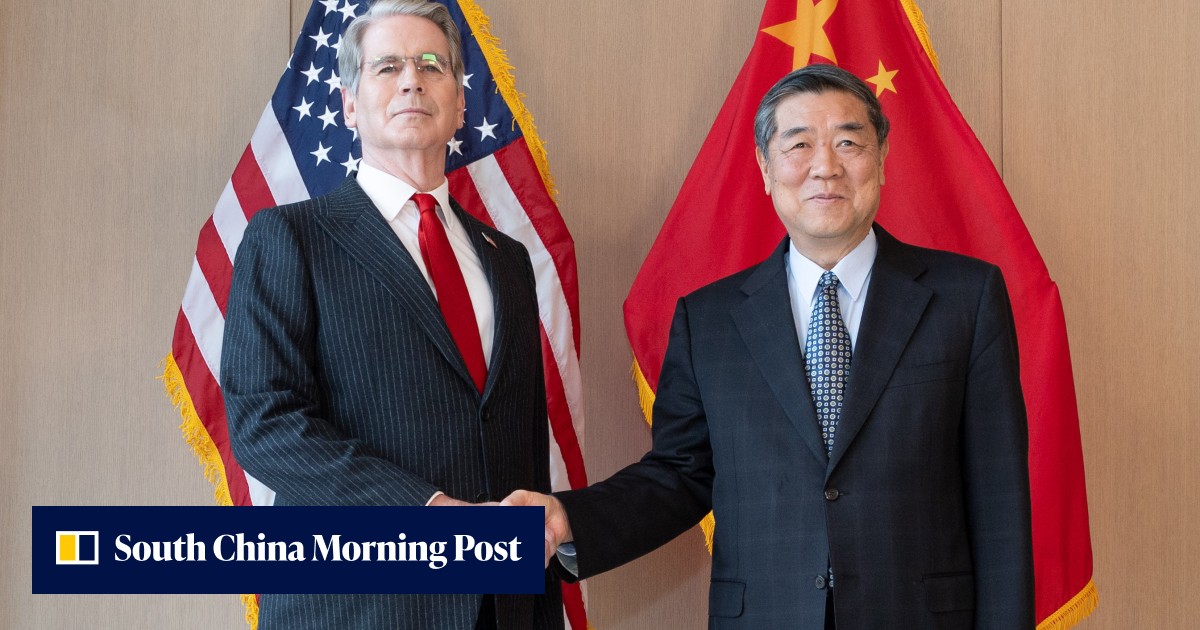


Evidenced relationships involving significant participants beyond the central cast.
This edition freezes the complete served membership and analysis available through its UTC cutoff. Later repairs or identity changes do not rewrite what this edition showed.
Stories are reporting clusters. Events are coded occurrences within that reporting. The cast contains 318 canonical people and organizations linked to the retained evidence.
Story-to-Event edges identify supporting reporting. Entity-to-Event edges identify recorded actor or target participation. Mentions and analytical roles stay visibly distinct from recorded participation.
Core, precursor, and continuation labels organize the reading. They do not by themselves establish causation. Collapsed graph groups and paginated evidence change presentation only; counts use the complete retained edition.