
Significance
3 measured / 3 eligible · 0 missing · 0 not applicable
score (0 to 1) · Event-level distribution, not a Situation risk score.
across all 3 events
On October 19, Florida Attorney General James Uthmeier secured a warrant for Raúl Castro over the 1996 killings described in “U.S. issues arrest warrant for Cuba's Raúl Castro over 1996 killings.” Cuba’s government also condemned the warrant that day, as reported in “Cuba condemns Florida warrant for Raul Castro”; that Story is dated October 20. On October 21, Cuban President Miguel Díaz-Canel denounced the warrant against Castro. A Story dated October 21, “Sheinbaum calls US Castro warrant political,” presents Sheinbaum’s response as calling the warrant political; the story connection describes her response as political fallout from the warrant.
Footnotes[5][3][4][2][6][1][10]The central development is the warrant Uthmeier secured for Raúl Castro, followed by a condemnation from Cuba’s government and a denunciation by Díaz-Canel; the Sheinbaum story adds a response described as political. The supplied facts establish those acts and the described relationship between the warrant and the reactions, but do not establish any further legal outcome or implementation of the warrant.
Footnotes[5][4][11][6][10][1]Explanation originally captured 2026-10-21 · Evidence through 2026-10-22 UTC · Source edition sed_e96ac7bc37374d9e594db2220e4a6aa3
A 3-day Situation represented by 3 coded Events carried across 5 member Stories.
The coded activity is led by 111 · Criticize or Denounce (2) and 091 · Investigate Crime/corruption (1).
🇨🇺Cuba, 🇷🇺Russia, and 🇺🇸United States are prominent in the retained actor and relationship evidence.
43 canonical Entities are linked to this edition.
Metric coverage. 3 coded Events · 3 CAMEO+ · 0 conflict. The four dimensions describe the CAMEO+ subset; conflict Events do not carry these scores.
Dot = mean · shaded span = observed range · position uses each metric’s defined scale.
How the coder scored the full retained Event set
3 coded events — 3 CAMEO+ (3 political)
Quad class over those 3 events · Verbal Conflict 3. No conflict-family event here, so nothing carries a fatality count — a missing column, not a toll of zero.
3 measured / 3 eligible · 0 missing · 0 not applicable
score (0 to 1) · Event-level distribution, not a Situation risk score.
across all 3 events
3 measured / 3 eligible · 0 missing · 0 not applicable
score (0 to 10) · Event-level distribution, not a Situation risk score.
across all 3 events — every one of them CAMEO+
3 measured / 3 eligible · 0 missing · 0 not applicable
score (0 to 1) · Event-level distribution, not a Situation risk score.
across all 3 events — every one of them CAMEO+
3 measured / 3 eligible · 0 missing · 0 not applicable
score (0 to 1) · Event-level distribution, not a Situation risk score.
across all 3 events — every one of them CAMEO+
3 measured / 3 eligible · 0 missing · 0 not applicable
score (0 to 1) · Event-level distribution, not a Situation risk score.
across all 3 events — every one of them CAMEO+
3 measured / 3 eligible · 0 missing · 0 not applicable
score (-10 to 10) · Event-level distribution, not a Situation risk score.
across the 3 of 3 events Goldstein is defined on — CAMEO+ POLITICAL and the conflict family; the other nine CAMEO+ domains have no Goldstein semantics
3 measured / 3 eligible · 0 missing · 0 not applicable
score (0 to 1) · Event-level distribution, not a Situation risk score.
across all 3 events
This retained edition, independent of graph and page limits. Different dimensions, not a blended risk score; reported tolls may overlap.
2026-10-21analystlatest
Sheinbaum story and Díaz-Canel Event
The October 21 Story presents Sheinbaum’s response as political, while the Event dated that day describes Díaz-Canel denouncing the warrant.
What kind of event · 2 coded types
over 3 coded events on this edition
Countries · where it happened
Countries · who is acting
Selected from the complete retained edition
The October 21 story presents Sheinbaum’s response as political, alongside an Event in which Díaz-Canel denounces the warrant.

The Event says Florida Attorney General James Uthmeier secured a warrant for Raúl Castro.
The Event says Florida Attorney General James Uthmeier secured a warrant for Raúl Castro.
Footnotes[5]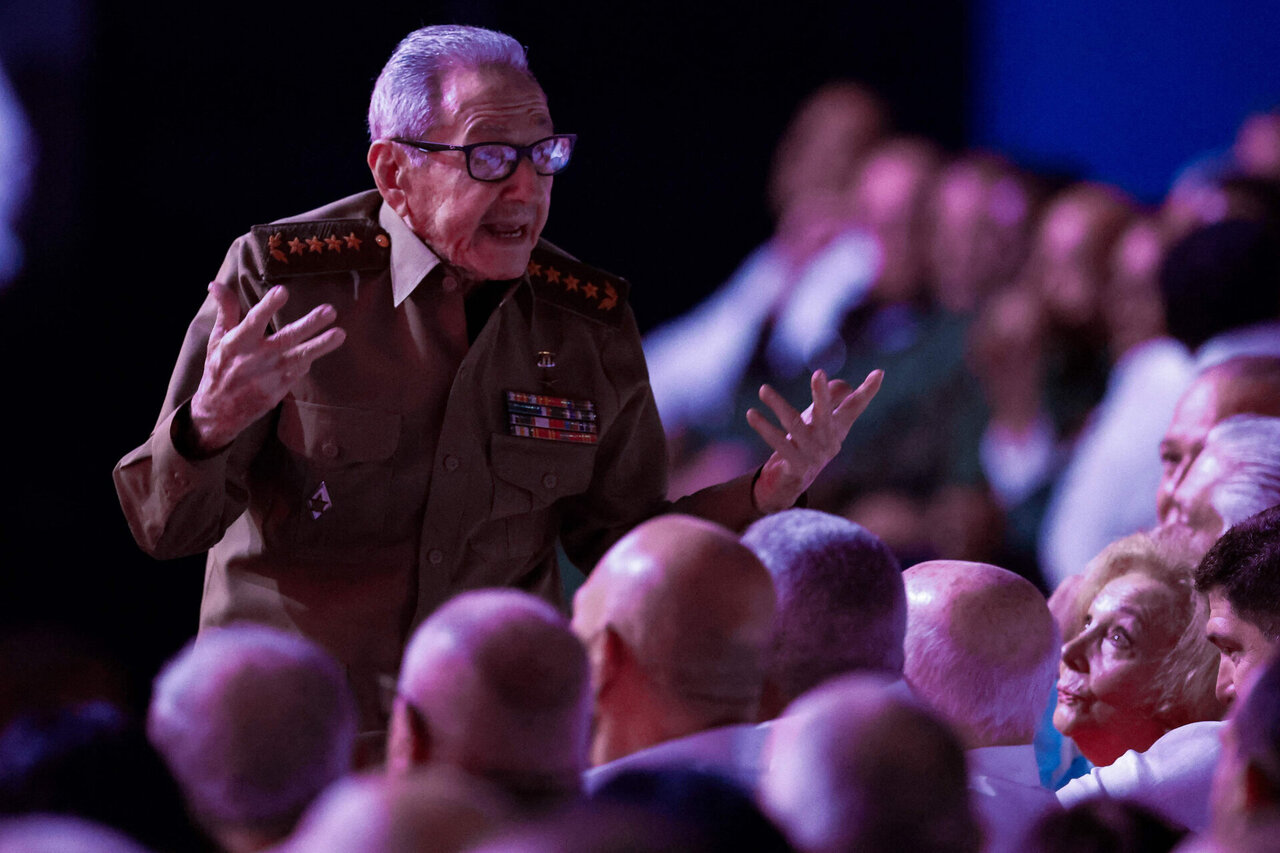
Cuba’s government condemned the Florida warrant; the connection identifies this condemnation as a reaction to the warrant.
The Event describes Díaz-Canel denouncing the warrant against Raúl Castro.
The Event describes Díaz-Canel denouncing the warrant against Raúl Castro.
Footnotes[6]Evidenced relationships involving significant participants beyond the central cast.
The connection explicitly joins the stories as coverage of the same warrant and identifies the condemnation as a reaction.
The connection explicitly joins the stories as coverage of the same warrant and identifies the condemnation as a reaction.
Footnotes[11]The connection identifies the Sheinbaum story as a consequence of the warrant story.
The connection identifies the Sheinbaum story as a consequence of the warrant story.
Footnotes[10]The Event lists this Story among its linked stories.
The Event lists this Story among its linked stories.
Footnotes[5]The Event lists this Story among its linked stories.
The Event lists this Story among its linked stories.
Footnotes[5]The Event lists this Story among its linked stories.
The Event lists this Story among its linked stories.
Footnotes[4]This edition freezes the complete served membership and analysis available through its UTC cutoff. Later repairs or identity changes do not rewrite what this edition showed.
Stories are reporting clusters. Events are coded occurrences within that reporting. The cast contains 43 canonical people and organizations linked to the retained evidence.
Story-to-Event edges identify supporting reporting. Entity-to-Event edges identify recorded actor or target participation. Mentions and analytical roles stay visibly distinct from recorded participation.
Core, precursor, and continuation labels organize the reading. They do not by themselves establish causation. Collapsed graph groups and paginated evidence change presentation only; counts use the complete retained edition.