
Significance
26 measured / 26 eligible · 0 missing · 0 not applicable
score (0 to 1) · Event-level distribution, not a Situation risk score.
across all 26 events
On 19 October, Russian Armed Forces struck Khmelnytskyi, damaging businesses and energy infrastructure; the Event is linked to “Russia launches air attack on Ukraine, prompting Polish alert in Lublin region.” [Cite: no record IDs in prose] On the same reporting date, “Russia launches ballistic attack on at least 10 energy targets in Ukraine” and “Russian attacks damage 28 substations and energy facilities in Ukraine” described damage at broader scales. On 20 October, Events named Russian Armed Forces in attacks on Rivne, Prykarpattia, Izyaslav and Ternopil; “Zelenskyy says Russian missiles struck Ukraine without warning” is linked to the Event reporting four deaths and 27 injuries. On 19 October, Volodymyr Zelensky reproached Ukraine’s allies over warnings, while the Kremlin had said on 18 October that Ukrainian attacks would not change Moscow’s war aims. On 18 October, the Polish Armed Forces Operational Command raised air-defense readiness and the Polish Air Navigation Services Agency suspended flights at eastern airports; the linked Story was “Russia launches air attack on Ukraine, prompting Polish alert in Lublin region.” On 22 October, “Ukraine's heating season begins as electricity situation worsens” and “Naftogaz prepares 24 winter scenarios accounting for attacks” described winter and energy preparations. The Poltava railway-strike Event is dated 22 October; its supporting Story, “Russian drones strike railway infrastructure in Poltava, Ukraine,” was reported on 23 October.
Footnotes[21][11][10][13][22][25][26][20][17][4][27][29]The main through-line is damage to Ukrainian energy and other infrastructure, alongside reported civilian harm and later coverage of energy repair, heating and winter preparation. The “at least 10 energy targets” and “28 substations and energy facilities” headlines give different scopes and do not establish a single combined total. The Event account of four deaths and 27 injuries is distinct from “Strike on Kyiv kills one, damages medical center and schools”; these accounts do not support a reconciled overall toll. Zelensky’s reproach and the Kremlin’s statement establish attributed public positions, not independent verification of the claims behind them. The Polish readiness increase and flight suspensions are described actions, but the linked Stories do not establish that a particular Ukrainian strike caused either measure. Naftogaz’s winter scenarios explicitly account for attacks, but the available claims do not tie a specific strike to a particular outage or preparation.
Footnotes[10][13][17][4][9][27][29][18][19][2]Explanation originally captured 2026-10-24 · Evidence through 2026-10-25 UTC · Source edition sed_6470f060473d7c99c46a6ad65f53d7aa
A 13-day Situation represented by 26 coded Events carried across 43 member Stories.
The coded activity is led by AIR/DRONE STRIKE (13) and IN02 · Transport Disruption (3).
Russian Armed Forces, Volodymyr Zelenskyy, and Kremlin are prominent in the retained actor and relationship evidence.
148 canonical Entities are linked to this edition.
Metric coverage. 26 coded Events · 9 CAMEO+ · 17 conflict. The four dimensions describe the CAMEO+ subset; conflict Events do not carry these scores.
Dot = mean · shaded span = observed range · position uses each metric’s defined scale.
How the coder scored the full retained Event set
26 coded events — 9 CAMEO+ (5 political) · 17 conflict
Quad class over those 22 events · Material Conflict 16 · Verbal Conflict 4 · Verbal Cooperation 2. 4 sit outside POLITICAL, where Goldstein and quad class are undefined. The four CAMEO+ scores are over the 9 CAMEO+ events only; the 17 conflict events have no such column.
26 measured / 26 eligible · 0 missing · 0 not applicable
score (0 to 1) · Event-level distribution, not a Situation risk score.
across all 26 events
9 measured / 9 eligible · 0 missing · 17 not applicable
score (0 to 10) · Event-level distribution, not a Situation risk score.
across the 9 of 26 events coded in the CAMEO+ family; the conflict family has no such column
9 measured / 9 eligible · 0 missing · 17 not applicable
score (0 to 1) · Event-level distribution, not a Situation risk score.
across the 9 of 26 events coded in the CAMEO+ family; the conflict family has no such column
9 measured / 9 eligible · 0 missing · 17 not applicable
score (0 to 1) · Event-level distribution, not a Situation risk score.
across the 9 of 26 events coded in the CAMEO+ family; the conflict family has no such column
9 measured / 9 eligible · 0 missing · 17 not applicable
score (0 to 1) · Event-level distribution, not a Situation risk score.
across the 9 of 26 events coded in the CAMEO+ family; the conflict family has no such column
22 measured / 22 eligible · 0 missing · 4 not applicable
score (-10 to 10) · Event-level distribution, not a Situation risk score.
across the 22 of 26 events Goldstein is defined on — CAMEO+ POLITICAL and the conflict family; the other nine CAMEO+ domains have no Goldstein semantics
17 measured / 17 eligible · 0 missing · 9 not applicable
reported people · Reports may overlap; these are Event-level reports, not an additive unique human toll.
across the 17 of 26 events that report a toll — the conflict family only, and never 0 on a CAMEO+ event
26 measured / 26 eligible · 0 missing · 0 not applicable
score (0 to 1) · Event-level distribution, not a Situation risk score.
across all 26 events
This retained edition, independent of graph and page limits. Different dimensions, not a blended risk score; reported tolls may overlap.
2026-10-24from the recordslatest
Russia launches 126 drones in overnight attack on Ukraine
2 Stories and 1 coded Event (0 / +1 against the day before). Widest coverage: Russia’s October 23–24 drone attack hits 14 locations in Ukraine (1 articles). Recorded acting: Russian Armed Forces.
What kind of event · 11 coded types
over 26 coded events on this edition
Countries · where it happened
Countries · who is acting
Selected from the complete retained edition
Groups the reported energy and infrastructure damage, regional strikes and civilian-impact accounts, including the later railway-infrastructure report.
Brings together the Moscow and Rostov-region drone Events, reporting on Russian air defenses in Leningrad Oblast, and the Polish readiness and aviation measures.
Russian Armed Forces are named as the source actor in Events concerning strikes in Khmelnytskyi, Rivne, Prykarpattia and Poltava. The Ternopil Event also names them as the source actor.
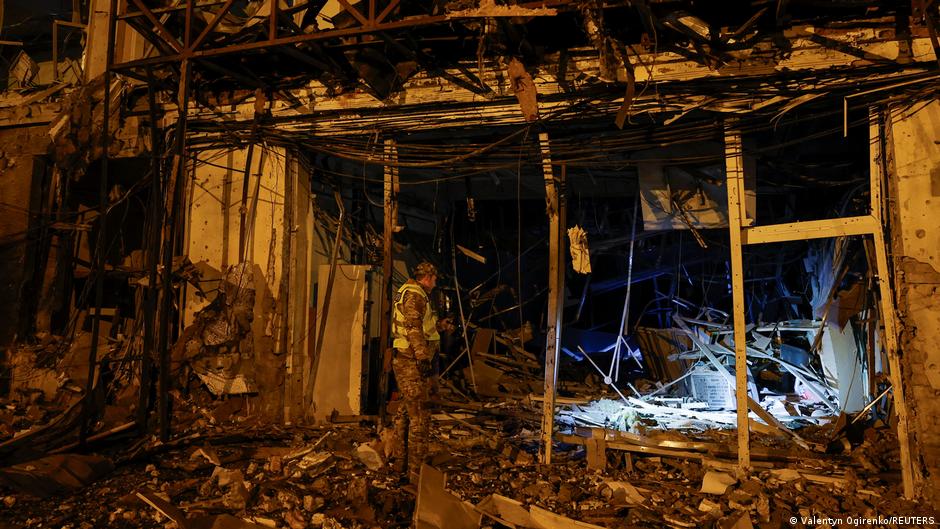
The Event names Russian Armed Forces in a Khmelnytskyi strike that damaged businesses and energy infrastructure.
The Event names Russian Armed Forces in a Khmelnytskyi strike that damaged businesses and energy infrastructure.
Footnotes[21]
The Event attributes four deaths and 27 injuries in a Ukraine strike to Russian Armed Forces.
The Event attributes four deaths and 27 injuries in a Ukraine strike to Russian Armed Forces.
Footnotes[17]The Event describes damage to three energy facilities in Ternopil region.
The Event describes damage to three energy facilities in Ternopil region.
Footnotes[20]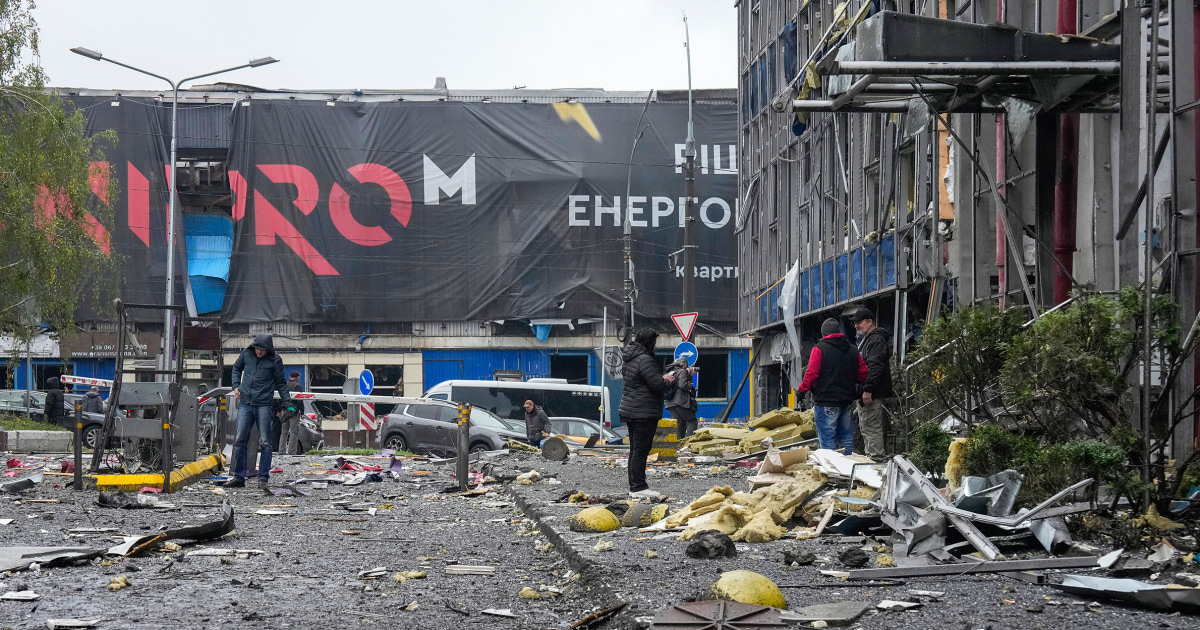
The Event describes Zelensky reproaching Ukraine’s allies over warnings.
The Event describes Zelensky reproaching Ukraine’s allies over warnings.
Footnotes[27]The Event describes the Polish Armed Forces Operational Command raising air-defense readiness near Ukraine.
The Event describes the Polish Armed Forces Operational Command raising air-defense readiness near Ukraine.
Footnotes[18]Evidenced relationships involving significant participants beyond the central cast.
The Event names Russian Armed Forces as its source actor.
The Event names Russian Armed Forces as its source actor.
The Event names Volodymyr Zelensky as its source actor.
The Event names the Kremlin as the source actor for the statement.
The Event lists this Story as supporting coverage.
This edition freezes the complete served membership and analysis available through its UTC cutoff. Later repairs or identity changes do not rewrite what this edition showed.
Stories are reporting clusters. Events are coded occurrences within that reporting. The cast contains 148 canonical people and organizations linked to the retained evidence.
Story-to-Event edges identify supporting reporting. Entity-to-Event edges identify recorded actor or target participation. Mentions and analytical roles stay visibly distinct from recorded participation.
Core, precursor, and continuation labels organize the reading. They do not by themselves establish causation. Collapsed graph groups and paginated evidence change presentation only; counts use the complete retained edition.