SituationUnited States +4

U.S.–China Summit, Trade and Taiwan Disputes

Developing · Day 61Updated Nov 18, 13:25 UTC248 connections
Stories
248
Events
107
Entities
333
Countries
5
BLUFLiveUpdated Nov 18, 13:25 UTCDay 61
Evidence so far on 2026-11-18 UTC · updated 2026-11-18 13:25 UTC · analysis as of 2026-11-18 07:29 UTCSign in for the live Situation ↗
Narrative

As-of analysis

Carried forward
Situation at a glance

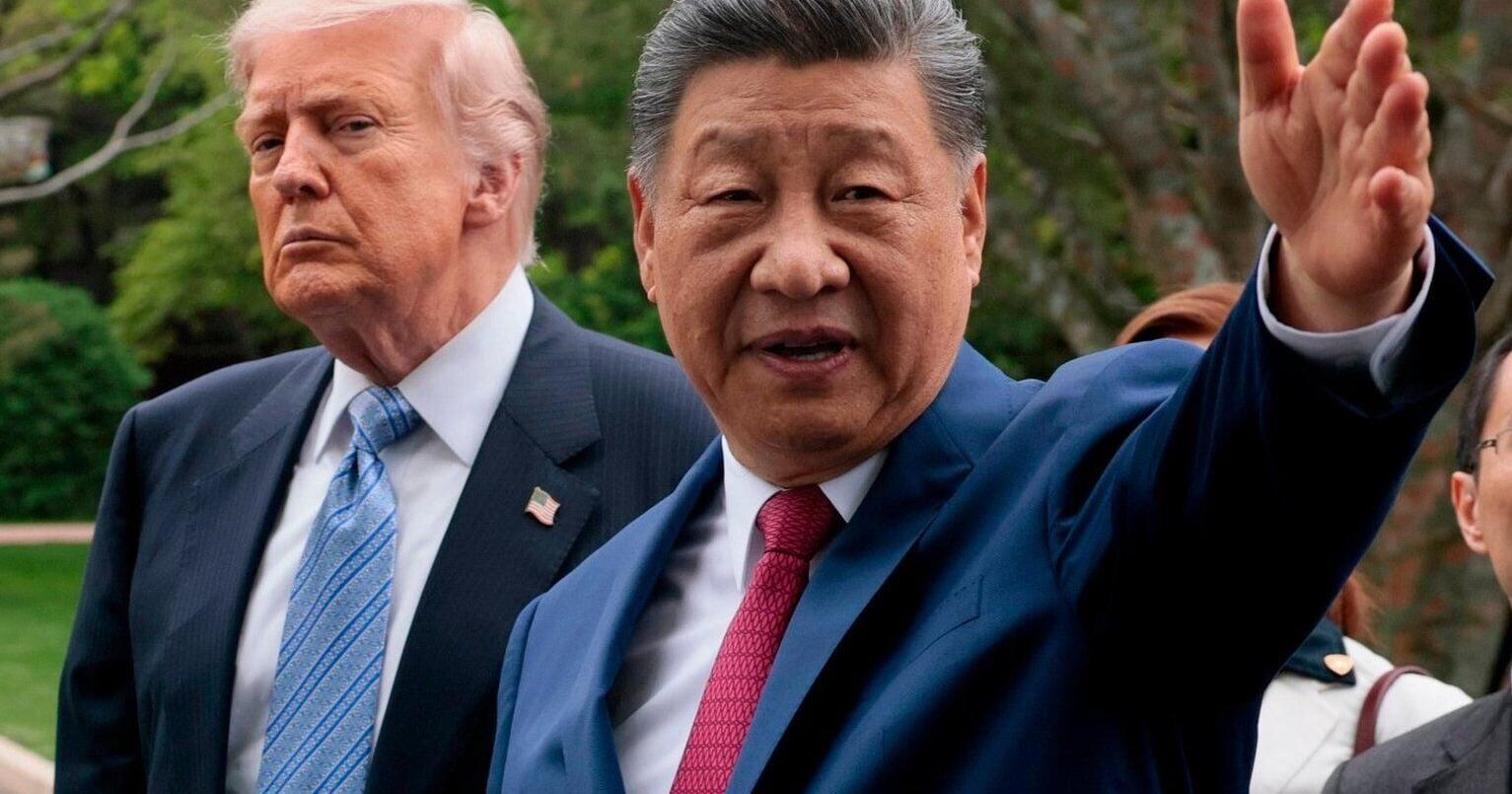
He Lifeng visited the United States for trade talks on September 19, as “China's He Lifeng leads U.S. trade talks ahead of Xi-Trump meeting” reported; the United States and China launched talks in New York on September 20, as “China's He Lifeng leads delegation to US for trade talks” reported. On September 24, “Xi and Trump call for 'healthy' competition at White House meeting” described Donald Trump and Xi Jinping meeting at the White House. The United States and China concluded trade talks with a tariff-truce extension in an Event dated September 25; “Trump and Xi conclude US state visit with trade truce, no major breakthroughs” described the visit’s outcome. The United States proposed a bilateral AI incident-alert system on September 22, while a later Story reported an AI dialogue and incident-communication channel; another account said Donald Trump rejected integrating U.S. and Chinese AI efforts. Trump said he discussed Taiwan with Xi, and “Taiwan accuses Beijing of distorting facts after Trump–Xi meeting” reported Taiwan’s objection to Beijing’s account. In November, He Lifeng held a video call with Bessent and Greer, and China and the United States held a trade-council meeting.

Footnotes[47][32][39][31][24][37][18][28][14][15][42][21]
Assessment

The truce extension and November consultations establish continued trade engagement, not a comprehensive settlement: “Trump-Xi summit in Washington leaves key US-China disputes unresolved” characterized the gains as limited. Tariff accounts give different figures and scopes, including $42 billion in cuts, $60 billion in goods, and reciprocal product lists covering $30 billion on each side; these accounts do not establish a single reconciled framework or implementation. AI accounts include a proposed incident-alert system and reports that the two countries agreed to establish an incident-communication channel; they do not establish that the channel became operational or that broader AI integration resulted. Trump was reported to reject integrating U.S. and Chinese AI efforts. Taiwan remained contested: Trump said he discussed the issue with Xi, while Taiwan accused Beijing of distorting the facts. Although a September 22 account/event placed a Trump–Xi meeting in Beijing, coverage of Xi’s September 23–25 U.S. visit and the September 24 White House meeting clarifies the meeting’s date and location.

Footnotes[9][16][10][13][12][28][14][15][42][21][17][29]

Explanation originally captured 2026-11-18 · Evidence through 2026-11-18 UTC · Source edition sed_f268b46cc1b92f178ddc898d4b94c6af

What informs this explanation
  • Complete retained Story and Event membership
  • Daily reporting and coded-occurrence time steps
  • Event taxonomies, metrics, units, and denominators
  • Canonical Entities and recorded actor/target bindings
  • Typed reporting, membership, and incident edges
  • Changes against the preceding retained edition
  • Permitted macro, public-record, and asset facts only when they were retained with an explicit source and observation date
Quantitative

Evidence in numbers

This retained edition
  • Scope

    A 61-day Situation represented by 107 coded Events carried across 248 member Stories.

  • Coded activity

    The coded activity is led by 01 · Make Public Statement (26) and 046 · Engage in Negotiation (12).

  • Prominent subjects

    Donald Trump, Xi Jinping, and He Lifeng are prominent in the retained actor and relationship evidence.

  • Entity coverage

    333 canonical Entities are linked to this edition.

Metric coverage. 107 coded Events · 104 CAMEO+ · 3 conflict. The four dimensions describe the CAMEO+ subset; conflict Events do not carry these scores.

Magnitude2.6
min 2max 7
104 measured
Systemic importance0.18
min 0.05max 0.67
104 measured
Propagation potential0.29
min 0max 0.5
104 measured
Market sensitivity0.07
min 0.05max 0.47
104 measured

Dot = mean · shaded span = observed range · position uses each metric’s defined scale.

All 8 scores, distributions & definitions

How the coder scored the full retained Event set

107 coded events — 104 CAMEO+ (98 political) · 3 conflict

  • Significance · 1070.27
    min 0.14max 0.51
  • Magnitude · 1042.6
    min 2max 7
  • Systemic · 1040.18
    min 0.05max 0.67
  • Propagation · 1040.29
    min 0max 0.5
  • Market · 1040.07
    min 0.05max 0.47
  • Goldstein · 1011.7
    min -7.5max 7
  • Fatalities · 30
    min 0max 0
  • Confidence · 1070.67
    min 0.23max 0.98

Quad class over those 101 events · Verbal Cooperation 88 · Verbal Conflict 10 · Material Conflict 2 · Material Cooperation 1. 6 sit outside POLITICAL, where Goldstein and quad class are undefined. The four CAMEO+ scores are over the 104 CAMEO+ events only; the 3 conflict events have no such column.

Significance

107 measured / 107 eligible · 0 missing · 0 not applicable

score (0 to 1) · Event-level distribution, not a Situation risk score.

across all 107 events

Magnitude

104 measured / 104 eligible · 0 missing · 3 not applicable

score (0 to 10) · Event-level distribution, not a Situation risk score.

across the 104 of 107 events coded in the CAMEO+ family; the conflict family has no such column

Systemic

104 measured / 104 eligible · 0 missing · 3 not applicable

score (0 to 1) · Event-level distribution, not a Situation risk score.

across the 104 of 107 events coded in the CAMEO+ family; the conflict family has no such column

Propagation

104 measured / 104 eligible · 0 missing · 3 not applicable

score (0 to 1) · Event-level distribution, not a Situation risk score.

across the 104 of 107 events coded in the CAMEO+ family; the conflict family has no such column

Market

104 measured / 104 eligible · 0 missing · 3 not applicable

score (0 to 1) · Event-level distribution, not a Situation risk score.

across the 104 of 107 events coded in the CAMEO+ family; the conflict family has no such column

Goldstein

101 measured / 101 eligible · 0 missing · 6 not applicable

score (-10 to 10) · Event-level distribution, not a Situation risk score.

across the 101 of 107 events Goldstein is defined on — CAMEO+ POLITICAL and the conflict family; the other nine CAMEO+ domains have no Goldstein semantics

Fatalities

3 measured / 3 eligible · 0 missing · 104 not applicable

reported people · Reports may overlap; these are Event-level reports, not an additive unique human toll.

across the 3 of 107 events that report a toll — the conflict family only, and never 0 on a CAMEO+ event

Confidence

107 measured / 107 eligible · 0 missing · 0 not applicable

score (0 to 1) · Event-level distribution, not a Situation risk score.

across all 107 events

Metric definitions and limitations

This retained edition, independent of graph and page limits. Different dimensions, not a blended risk score; reported tolls may overlap.

Day by day32 reporting days · click a day to open or close it

2026-11-16from the recordslatest

China and US hold first trade council meeting under economic consultation mechanism

1 Story and 0 coded Events (0 / 0 against the day before). Widest coverage: China and US hold first trade council meeting under economic consultation mechanism (3 articles).

10
Stories · vs day before
00
Events · vs day before
3
articles
The lay of the land

Situation timeline

Threads
All 32 daysarticlesstoriesevents
09-1709-2309-2910-0611-0911-16
Loading Situation timeline…

What kind of event · 37 coded types

over 107 coded events on this edition

  • Political98
    • 01 · Make Public Statement26
    • 046 · Engage in Negotiation12
    • 042 · Make A Visit5
    • 111 · Criticize or Denounce5
    • 032 · Intent for Diplomatic Cooperation4
    • 043 · Host A Visit4
    • 019 · Express Accord3
Salient structure

What holds this Situation together

Selected from the complete retained edition

Key threads

  1. core
    AnalystSummit diplomacy and trade understandings

    He Lifeng’s trade-talk visit, the U.S.–China negotiations, the Trump–Xi White House meeting, and the tariff-truce accounts form the central diplomatic and trade thread.

    He Lifeng’s trade-talk visit, the U.S.–China negotiations, the Trump–Xi White House meeting, and the tariff-truce accounts form the central diplomatic and trade thread.

    Footnotes[47][32][39][31][24][37][18]
  2. development
    AnalystTaiwan, summit accounts and arms discussions

    Trump said he discussed Taiwan with Xi; Taiwan challenged Beijing’s account, and separate Stories describe continuing Taiwan–U.S. arms discussions.

    Trump said he discussed Taiwan with Xi; Taiwan challenged Beijing’s account, and separate Stories describe continuing Taiwan–U.S. arms discussions.

    Footnotes[42][21][17][11][8]
  3. development
    AnalystAI dialogue and incident communications

    The United States proposed an AI incident-alert system; later accounts described an incident-communication channel as well as Trump’s rejection of AI cooperation with China.

    The United States proposed an AI incident-alert system; later accounts described an incident-communication channel as well as Trump’s rejection of AI cooperation with China.

    Footnotes[28][27][14][15]
  4. development
    AnalystTrade follow-up and November consultations

    November accounts describe pauses or extensions of trade measures, a He Lifeng video call with Bessent and Greer, and U.S.–China trade-council consultations.

    November accounts describe pauses or extensions of trade measures, a He Lifeng video call with Bessent and Greer, and U.S.–China trade-council consultations.
    Footnotes[4][5][2][51][6][40][1]

Key actors

  1. DT
    AnalystDonald Trump

    Donald Trump said he discussed Taiwan with Xi and said the United States and China opposed AI restrictions.

    Donald Trump said he discussed Taiwan with Xi and said the United States and China opposed AI restrictions.

    Footnotes[54][42][53]
  2. XJ
    AnalystXi Jinping

    Xi Jinping was the target of Trump’s reported Taiwan discussion and was hosted by the United States during his visit.

    Xi Jinping was the target of Trump’s reported Taiwan discussion and was hosted by the United States during his visit.

    Footnotes[55][42][48]
  3. HL
    AnalystHe Lifeng

    He Lifeng visited the United States for trade talks and later held a video call with Bessent and Greer.

    He Lifeng visited the United States for trade talks and later held a video call with Bessent and Greer.

    Footnotes[56][47][32][51][6]
  4. MR
    AnalystMarco Rubio

    Marco Rubio was the target of Wang Yi’s phone talks and said U.S. arms sales depended on defense needs.

    Marco Rubio was the target of Wang Yi’s phone talks and said U.S. arms sales depended on defense needs.

    Footnotes[61][49][50]
  5. K
    AnalystKuomintang

    The Kuomintang questioned the strength of U.S. ties before the summit.

    The Kuomintang questioned the strength of U.S. ties before the summit.

    Footnotes[60][44][30]

Key Events

  1. contextAnalystWang Yi and Rubio hold China-US phone talks

    Wang Yi and Marco Rubio held China–U.S. phone talks on September 17.

    Wang Yi and Marco Rubio held China–U.S. phone talks on September 17.

    Footnotes[63][49][33]
  2. contextAnalystHe Lifeng visits United States for trade talks

    He Lifeng visited the United States for trade talks on September 19.

    He Lifeng visited the United States for trade talks on September 19.

    Footnotes[64][47][32]
  3. contextAnalystUnited States and China launch talks in New York

    The United States and China launched talks in New York on September 20.

    The United States and China launched talks in New York on September 20.

    Footnotes[65][39][31]
  4. contextAnalystUnited States and China discuss AI security hotline

    The United States and China discussed an AI security hotline on September 22.

    The United States and China discussed an AI security hotline on September 22.

    Footnotes[66][35][28][27]
  5. contextAnalystTrump and Xi meet in Beijing to review unfinished agreements

    A September 22 Story and Event place a Trump–Xi meeting in Beijing.

    A September 22 Story and Event place a Trump–Xi meeting in Beijing.

    Footnotes[66][36][29]

Notable connections

Evidenced relationships involving significant participants beyond the central cast.

  1. He Lifeng was the actor in the U.S. trade-talk visit. · recorded participationAnalystHe Lifeng visits United States for trade talks → He Lifeng

    The Event identifies He Lifeng as its actor.

    The Event identifies He Lifeng as its actor.

    Footnotes[47][56]
  2. Donald Trump was the actor in the reported Taiwan discussion. · recorded participationAnalystTrump discusses Taiwan with Xi during leaders’ meeting → Donald Trump

    The Event identifies Trump as its actor.

    The Event identifies Trump as its actor.

    Footnotes[42][54]
  3. Xi Jinping was the target of the reported Taiwan discussion. · recorded participationAnalystTrump discusses Taiwan with Xi during leaders’ meeting → Xi Jinping

    The Event identifies Xi Jinping as its target.

    The Event identifies Xi Jinping as its target.

    Footnotes[42][55]
  4. The Kuomintang was the actor questioning the strength of U.S. ties. · recorded participationAnalystTaiwan KMT questions strength of US ties before summit → Kuomintang

    The Event identifies the Kuomintang as its actor.

    The Event identifies the Kuomintang as its actor.

    Footnotes[44][60][30]
  5. The Office of the United States Trade Representative acted on the maritime-fee pause for Chinese ships. · recorded participationAnalystUSTR extends pause on maritime fees for Chinese ships → Office of the United States Trade Representative

    The Event identifies the Office of the United States Trade Representative as its actor.

    The Event identifies the Office of the United States Trade Representative as its actor.

    Footnotes[41][62][3]
U.S.–China Summit, Trade and Taiwan Disputes share card
Share · 18 Nov 2026

U.S.–China Summit, Trade and Taiwan Disputes, in one card

How a Situation is put together248 Stories · 107 Events · 248 membership connections · 2,758 graph edges

A retained time step

This edition freezes the complete served membership and analysis available through its UTC cutoff. Later repairs or identity changes do not rewrite what this edition showed.

Stories, Events, and cast

Stories are reporting clusters. Events are coded occurrences within that reporting. The cast contains 333 canonical people and organizations linked to the retained evidence.

Typed connections

Story-to-Event edges identify supporting reporting. Entity-to-Event edges identify recorded actor or target participation. Mentions and analytical roles stay visibly distinct from recorded participation.

Core, precursor, and continuation labels organize the reading. They do not by themselves establish causation. Collapsed graph groups and paginated evidence change presentation only; counts use the complete retained edition.