
Significance
14 measured / 14 eligible · 0 missing · 0 not applicable
score (0 to 1) · Event-level distribution, not a Situation risk score.
across all 14 events
On September 22, Iranian Foreign Minister Araghchi arrived in New York for UN meetings, as “Iranian foreign minister visits New York as Pezeshkian is expected” reports. [No inline citations permitted] On September 24, the United States rejected Iran’s proposal during New York talks; “US dismisses Iran’s proposal to reopen the Strait of Hormuz, citing lack of control” identifies the proposal and the US objection. On September 25, Russian Foreign Minister Sergey Lavrov and Iranian Foreign Minister Abbas Araqchi held talks in New York and backed diplomacy, according to “Lavrov and Araqchi back diplomacy to resolve Iran-US conflict.” Iran said reopening Hormuz would not bring nuclear-program concessions in “Iran says reopening Strait of Hormuz won't bring nuclear program concessions,” while “Vance says Iran must cut uranium enrichment, not rely on promises” reports Vance’s stated demand. “US and Iran make no progress in negotiations, Axios reports” described no progress on September 30; on October 9, Araghchi said Iran would respond soon to a US peace proposal. On October 14, a report said an Iran–Oman agreement on a temporary Strait route was near, not completed. On October 20, Trump said the United States maintained intense military pressure on Iran; on October 21, Iran told Pakistan’s army chief it would stand by its terms before talks, while Trump called a deal “extremely difficult.” On October 8, US Central Command denied that Iran’s Revolutionary Guard controlled the Strait. Later reports said Qalibaf vowed a response to an attack on October 25 and that a US envoy…
Footnotes[27][21][25][20][24][19][18][8][13][6][3][2]Araghchi’s New York visit, the US rejection of Iran’s Hormuz proposal, and Lavrov and Araqchi’s talks establish diplomatic activity, but not an Iran–US agreement or agreed terms for reopening the Strait. Iran’s stated position on nuclear concessions and Vance’s reported enrichment demand describe competing terms, while Axios’s account of no progress describes an impasse at that point. Iran’s October 9 statement that it would respond soon does not establish that a response or agreement followed. The October 14 report said an Iran–Oman temporary route arrangement was near, not complete. Iran’s October 21 stated position and Trump’s assessment that a deal was extremely difficult likewise do not establish a settled outcome. CENTCOM’s denial and the Iranian navy’s claim of control are opposing statements, not independent confirmation of control. Trump’s October 20 statement about military pressure and reports of possible strikes or threatened action through October 21 do not establish that those threatened actions occurred. Later headlines reported Qalibaf vowing a response to an attack on October 25 and a US envoy claiming another strike might occur on October 26; those reports do not independently verify the attack or establish that the anticipated strike happened.
Footnotes[27][25][24][18][8][13][6][2][1][6][7][28]Explanation originally captured 2026-10-26 · Evidence through 2026-10-26 UTC · Source edition sed_6429587b018c5deae09a6af03e482a1f
A 53-day Situation represented by 14 coded Events carried across 81 member Stories.
The coded activity is led by 01 · Make Public Statement (4) and 046 · Engage in Negotiation (2).
Donald Trump, United Nations General Assembly, and United States Central Command are prominent in the retained actor and relationship evidence.
515 canonical Entities are linked to this edition.
Metric coverage. 14 coded Events · 13 CAMEO+ · 1 conflict. The four dimensions describe the CAMEO+ subset; conflict Events do not carry these scores.
Dot = mean · shaded span = observed range · position uses each metric’s defined scale.
How the coder scored the full retained Event set
14 coded events — 13 CAMEO+ (12 political) · 1 conflict
Quad class over those 13 events · Verbal Cooperation 9 · Verbal Conflict 2 · Material Conflict 1 · Material Cooperation 1. 1 sit outside POLITICAL, where Goldstein and quad class are undefined. The four CAMEO+ scores are over the 13 CAMEO+ events only; the 1 conflict events have no such column.
14 measured / 14 eligible · 0 missing · 0 not applicable
score (0 to 1) · Event-level distribution, not a Situation risk score.
across all 14 events
13 measured / 13 eligible · 0 missing · 1 not applicable
score (0 to 10) · Event-level distribution, not a Situation risk score.
across the 13 of 14 events coded in the CAMEO+ family; the conflict family has no such column
13 measured / 13 eligible · 0 missing · 1 not applicable
score (0 to 1) · Event-level distribution, not a Situation risk score.
across the 13 of 14 events coded in the CAMEO+ family; the conflict family has no such column
13 measured / 13 eligible · 0 missing · 1 not applicable
score (0 to 1) · Event-level distribution, not a Situation risk score.
across the 13 of 14 events coded in the CAMEO+ family; the conflict family has no such column
13 measured / 13 eligible · 0 missing · 1 not applicable
score (0 to 1) · Event-level distribution, not a Situation risk score.
across the 13 of 14 events coded in the CAMEO+ family; the conflict family has no such column
13 measured / 13 eligible · 0 missing · 1 not applicable
score (-10 to 10) · Event-level distribution, not a Situation risk score.
across the 13 of 14 events Goldstein is defined on — CAMEO+ POLITICAL and the conflict family; the other nine CAMEO+ domains have no Goldstein semantics
1 measured / 1 eligible · 0 missing · 13 not applicable
reported people · Reports may overlap; these are Event-level reports, not an additive unique human toll.
across the 1 of 14 events that report a toll — the conflict family only, and never 0 on a CAMEO+ event
14 measured / 14 eligible · 0 missing · 0 not applicable
score (0 to 1) · Event-level distribution, not a Situation risk score.
across all 14 events
This retained edition, independent of graph and page limits. Different dimensions, not a blended risk score; reported tolls may overlap.
2026-10-26from the recordslatest
Trump warns Iran as military action and a deal remain possible
3 Stories and 0 coded Events (+2 / 0 against the day before). Widest coverage: Trump warns Iran as military action and a deal remain possible (3 articles).
What kind of event · 10 coded types
over 14 coded events on this edition
Countries · where it happened
Countries · who is acting
Selected from the complete retained edition
The New York visit, US rejection of Iran’s Hormuz proposal, and Lavrov–Araqchi talks establish diplomatic activity. Later reports describe continuing disagreement over nuclear terms and negotiations, rather than agreed terms.
CENTCOM denied that Iran’s Revolutionary Guard controlled the Strait; the Iranian navy later claimed control. Those statements do not independently establish who controls the waters.
Trump said the United States maintained intense military pressure on Iran, while other reports described warnings and possible strikes. The reports do not establish that threatened actions occurred.
Iran said an agreement with Oman on a temporary Strait route was near. The report does not establish that the arrangement was completed.
Iran said an agreement with Oman on a temporary Strait route was near. The report does not establish that the arrangement was completed.
Footnotes[6]Trump urged Americans to endure high fuel prices, according to the headline “Trump urges Americans to endure high fuel prices as Iran war continues.”
Donald Trump urged Americans to endure high fuel prices and was the target of Iran’s statement calling his claim about attacks on US cities fabricated.
CENTCOM was named as the target of the Iranian navy’s statement claiming control of Strait waters; that binding does not establish the claim’s truth.
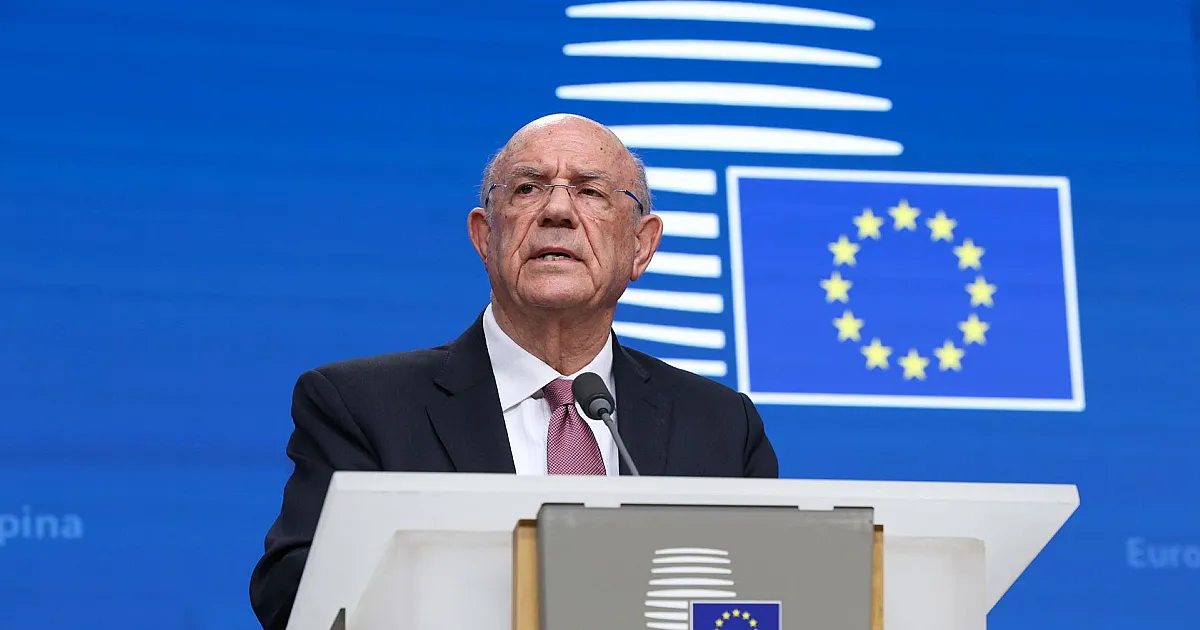
Occurred September 22: Iranian Foreign Minister Araghchi arrived in New York for UN meetings, as “Iranian foreign minister visits New York as Pezeshkian is expected” reports.

Occurred September 24: the United States rejected Iran’s proposal during New York talks, as “US dismisses Iran’s proposal to reopen the Strait of Hormuz, citing lack of control” reports.
Occurred September 25: Russian Foreign Minister Sergey Lavrov and Iranian Foreign Minister Abbas Araqchi held talks in New York; “Lavrov and Araqchi back diplomacy to resolve Iran-US conflict” says they backed diplomacy.

Occurred October 11: Iran called Trump’s claim about attacks on US cities fabricated, as “Iran accuses Trump of pursuing a politics of fear” reports.

Occurred October 16: the Iranian navy claimed control of Strait of Hormuz waters, as “Iran claims full control of the Strait of Hormuz” reports.
Evidenced relationships involving significant participants beyond the central cast.
The Story is linked to the Event describing Araghchi’s visit.
The Story is linked to the Event describing the United States’ rejection of Iran’s proposal.
The Story is linked to the Event describing Lavrov and Araqchi’s talks.
The Event names the General Assembly as the target of Araghchi’s visit.
The Event names Central Command as the target of the statement; the binding does not establish the truth of the claim.
This edition freezes the complete served membership and analysis available through its UTC cutoff. Later repairs or identity changes do not rewrite what this edition showed.
Stories are reporting clusters. Events are coded occurrences within that reporting. The cast contains 515 canonical people and organizations linked to the retained evidence.
Story-to-Event edges identify supporting reporting. Entity-to-Event edges identify recorded actor or target participation. Mentions and analytical roles stay visibly distinct from recorded participation.
Core, precursor, and continuation labels organize the reading. They do not by themselves establish causation. Collapsed graph groups and paginated evidence change presentation only; counts use the complete retained edition.