
Significance
25 measured / 25 eligible · 0 missing · 0 not applicable
score (0 to 1) · Event-level distribution, not a Situation risk score.
across all 25 events
SituationUnited States +12
On September 22, Iranian Foreign Minister Araghchi arrived in New York for UN meetings, as “Iranian foreign minister visits New York as Pezeshkian is expected” reports. Two days later, the United States rejected Iran’s proposal during New York talks; “US dismisses Iran’s proposal to reopen the Strait of Hormuz, citing lack of control” identifies it as a Hormuz proposal. On September 25, Russian Foreign Minister Sergey Lavrov and Iranian Foreign Minister Abbas Araqchi held talks in New York and backed diplomacy, according to “Lavrov and Araqchi back diplomacy to resolve Iran-US conflict.” Hormuz remained contested: on October 8 CENTCOM denied that Iran’s Revolutionary Guard controlled the Strait, while on October 16 Iran’s navy claimed control of Strait waters in “Iran claims full control of the Strait of Hormuz.” On October 31, Iran’s parliament put forward proposals to leave the nuclear treaty, as “Iranian parliament proposes 10-point plan to withdraw from nuclear treaty” reports. Qatar-related headlines described differing developments: an October 29 headline said Iran rejected proposals for Qatari mediation; a November 3 headline reported Qatar mediating new US–Iran talks; and a November 10 headline described the Qatari prime minister’s talks with Trump and Vance as positive without establishing that they were US–Iran negotiations. On November 13, a headline said the United States had reportedly told Israel to prepare for a “
Footnotes[24][18][21][17][20][16][51][25][12][30][10][8]renewed war with Iran; that headline reports an attributed account, not a strike or a settled policy. The central picture is diplomacy alongside pressure and unresolved disputes: the New York rejection and Lavrov–Araqchi talks establish contact and disagreement, not agreed terms. CENTCOM’s denial and the Iranian navy’s claim conflict, and neither establishes who controlled the Strait; Iran’s parliament’s proposals do not establish withdrawal from the nuclear treaty. Qatar-related headlines report both Iran’s October 29 rejection of mediation proposals and a later Qatar-mediated-talks account; they do not establish a concluded US–Iran channel. The Qatari prime minister’s positive description of talks with Trump and Vance does not establish that those talks were US–Iran negotiations. Nor do the November 13 report or November 15 headline “Israel weighs renewed war with Iran as Mossad chief visits Washington” establish that renewed hostilities occurred; the November 15 story is linked to an unrelated court-sentencing Event. Several other prominent Iran headlines also have mismatched linked Events, so their titles should not be treated as independently corroborated developments.
Footnotes[21][17][20][16][51][25][12][30][10][8][4][2]Explanation originally captured 2026-11-16 · Evidence through 2026-11-16 UTC · Source edition sed_046a4380c6641edd440e016e2bb6d713
A 75-day Situation represented by 25 coded Events carried across 136 member Stories.
The coded activity is led by 01 · Make Public Statement (4) and 046 · Engage in Negotiation (4).
Donald Trump, United Nations General Assembly, and United States Central Command are prominent in the retained actor and relationship evidence.
720 canonical Entities are linked to this edition.
Metric coverage. 25 coded Events · 24 CAMEO+ · 1 conflict. The four dimensions describe the CAMEO+ subset; conflict Events do not carry these scores.
Dot = mean · shaded span = observed range · position uses each metric’s defined scale.
How the coder scored the full retained Event set
25 coded events — 24 CAMEO+ (20 political) · 1 conflict
Quad class over those 21 events · Verbal Cooperation 16 · Verbal Conflict 3 · Material Conflict 1 · Material Cooperation 1. 4 sit outside POLITICAL, where Goldstein and quad class are undefined. The four CAMEO+ scores are over the 24 CAMEO+ events only; the 1 conflict events have no such column.
25 measured / 25 eligible · 0 missing · 0 not applicable
score (0 to 1) · Event-level distribution, not a Situation risk score.
across all 25 events
24 measured / 24 eligible · 0 missing · 1 not applicable
score (0 to 10) · Event-level distribution, not a Situation risk score.
across the 24 of 25 events coded in the CAMEO+ family; the conflict family has no such column
24 measured / 24 eligible · 0 missing · 1 not applicable
score (0 to 1) · Event-level distribution, not a Situation risk score.
across the 24 of 25 events coded in the CAMEO+ family; the conflict family has no such column
24 measured / 24 eligible · 0 missing · 1 not applicable
score (0 to 1) · Event-level distribution, not a Situation risk score.
across the 24 of 25 events coded in the CAMEO+ family; the conflict family has no such column
24 measured / 24 eligible · 0 missing · 1 not applicable
score (0 to 1) · Event-level distribution, not a Situation risk score.
across the 24 of 25 events coded in the CAMEO+ family; the conflict family has no such column
21 measured / 21 eligible · 0 missing · 4 not applicable
score (-10 to 10) · Event-level distribution, not a Situation risk score.
across the 21 of 25 events Goldstein is defined on — CAMEO+ POLITICAL and the conflict family; the other nine CAMEO+ domains have no Goldstein semantics
1 measured / 1 eligible · 0 missing · 24 not applicable
reported people · Reports may overlap; these are Event-level reports, not an additive unique human toll.
across the 1 of 25 events that report a toll — the conflict family only, and never 0 on a CAMEO+ event
25 measured / 25 eligible · 0 missing · 0 not applicable
score (0 to 1) · Event-level distribution, not a Situation risk score.
across all 25 events
This retained edition, independent of graph and page limits. Different dimensions, not a blended risk score; reported tolls may overlap.
2026-11-16from the recordslatest
Iran reveals stance on US responses and nuclear facility inspections
1 Story and 1 coded Event (0 / 0 against the day before). Widest coverage: Iran reveals stance on US responses and nuclear facility inspections (345 articles).
What kind of event · 18 coded types
over 25 coded events on this edition
Countries · where it happened
Countries · who is acting
Selected from the complete retained edition
Araghchi’s New York visit, the United States’ rejection of Iran’s Hormuz proposal, and Lavrov and Araqchi’s talks document diplomatic contact alongside disagreement. Later Qatar-related headlines describe mediation and positive talks, but do not establish a settled US–Iran negotiating channel or agreement.
Araghchi’s New York visit, the United States’ rejection of Iran’s Hormuz proposal, and Lavrov and Araqchi’s talks document diplomatic contact alongside disagreement. Later Qatar-related headlines describe mediation and positive talks, but do not establish a settled US–Iran negotiating channel or agreement.
Footnotes[24][18][21][17][20][16][8][4]The US rejection of Iran’s Hormuz proposal, CENTCOM’s denial of Iranian Revolutionary Guard control, Iran’s navy’s later control claim, and the Iranian parliament’s proposals on the nuclear treaty are distinct positions and proposals. They do not settle Strait control or establish treaty withdrawal.
The US rejection of Iran’s Hormuz proposal, CENTCOM’s denial of Iranian Revolutionary Guard control, Iran’s navy’s later control claim, and the Iranian parliament’s proposals on the nuclear treaty are distinct positions and proposals. They do not settle Strait control or establish treaty withdrawal.
Footnotes[21][17][51][25][12][30][10]Donald Trump urged Americans to endure high fuel prices, and Iran criticized his claim about attacks on US cities. Later headlines report differing military signals, including a reported US message to Israel about preparing for renewed war; these accounts do not establish a strike or a settled policy.
Donald Trump urged Americans to endure high fuel prices, and Iran criticized his claim about attacks on US cities. Later headlines report differing military signals, including a reported US message to Israel about preparing for renewed war; these accounts do not establish a strike or a settled policy.
Footnotes[26][14][27][13][11][6][2][1]Donald Trump urged Americans to endure high fuel prices and was the target of Iran’s criticism of his claim about attacks on US cities.
CENTCOM was named as the target of the Iranian navy’s Strait-control claim; that participation does not establish whether the claim was accurate.
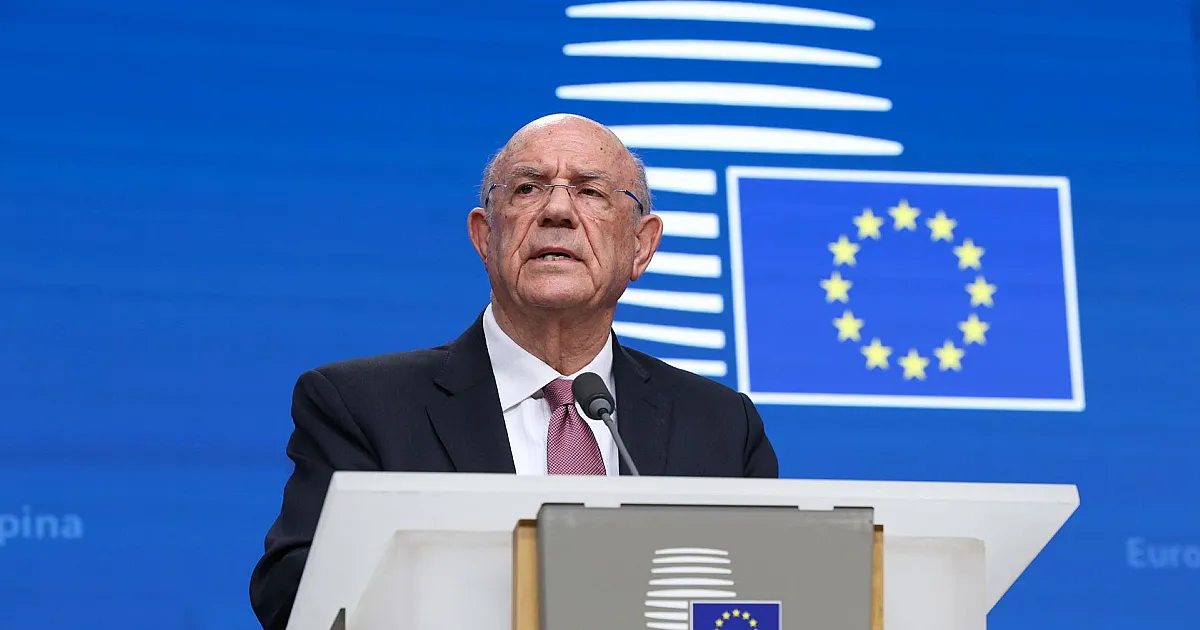
Occurred September 22: Iranian Foreign Minister Araghchi arrived in New York for UN meetings, as “Iranian foreign minister visits New York as Pezeshkian is expected” reports.

Occurred September 24: the United States rejected Iran’s proposal during New York talks; the linked headline identifies the proposal as concerning reopening the Strait of Hormuz.
Occurred September 25: Sergey Lavrov and Abbas Araqchi held talks in New York; “Lavrov and Araqchi back diplomacy to resolve Iran-US conflict” says they backed diplomacy.

Occurred October 16: Iran’s navy claimed control of Strait waters, as “Iran claims full control of the Strait of Hormuz” reports; the claim does not independently establish control.

Occurred October 31: Iran’s parliament put forward proposals to leave the nuclear treaty; the headline describes proposals, not completed withdrawal.
Evidenced relationships involving significant participants beyond the central cast.
The Story is linked to the Event describing Araghchi’s visit.
The Story is linked to the Event describing the rejection.
The Story is linked to the Event describing the talks.
The Story is linked to the Event describing the claim.
The Event names the General Assembly as the visit’s target.
This edition freezes the complete served membership and analysis available through its UTC cutoff. Later repairs or identity changes do not rewrite what this edition showed.
Stories are reporting clusters. Events are coded occurrences within that reporting. The cast contains 720 canonical people and organizations linked to the retained evidence.
Story-to-Event edges identify supporting reporting. Entity-to-Event edges identify recorded actor or target participation. Mentions and analytical roles stay visibly distinct from recorded participation.
Core, precursor, and continuation labels organize the reading. They do not by themselves establish causation. Collapsed graph groups and paginated evidence change presentation only; counts use the complete retained edition.